









مقارنة الأداء في درجات الحرارة المنخفضة: بطاريات الحالة الصلبة مقابل بطاريات الليثيوم مقابل بطاريات الرصاص الحمضية
تاريخ الإصدار: 22 يوليو 2026
جدول المحتويات
As global industries expand into more extreme climates and consumer reliance on portable energy storage grows, the demand for reliable power in sub-zero conditions has never been higher. From electric vehicles (EVs) navigating the freezing winters of Northern Europe to off-grid telecom towers in the Arctic Circle, energy storage systems are constantly being pushed to their thermal limits. Finding the ideal بطارية للبيئات ذات درجات الحرارة المنخفضة has become a primary focus for engineers, researchers, and consumers alike.
The cold is notorious for sapping energy, slowing down chemical reactions, and severely limiting overall capacity. Historically, industries relied heavily on legacy technologies. However, the rapid advancement of materials science has introduced revolutionary alternatives. This comprehensive guide provides an in-depth technical and practical comparison of three major technologies: traditional lead-acid systems, the currently dominant lithium-ion cells, and the emerging بطارية الحالة الصلبة. By examining their chemical behaviors, capacity retention, safety profiles, and cost-effectiveness in freezing conditions, we will determine which technology holds the key to the future of cold-weather energy storage.
The Physics and Chemistry of Cold-Weather Degradation
To truly understand how different energy storage systems perform in the cold, we must first examine the fundamental physics and thermodynamics of electrochemical cells. All electrical cells operate on the principle of converting chemical energy into electrical energy through controlled chemical reactions. These reactions involve the movement of ions between an anode and a cathode, facilitated by an electrolyte.
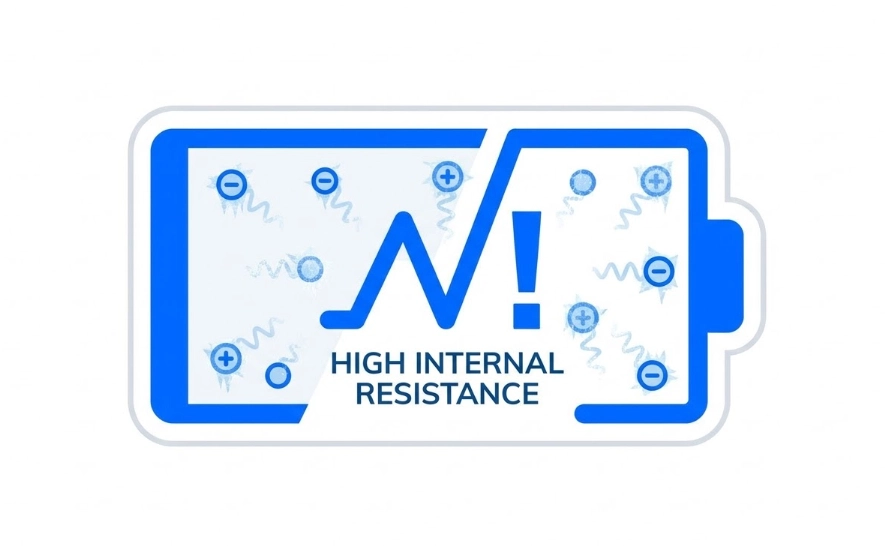
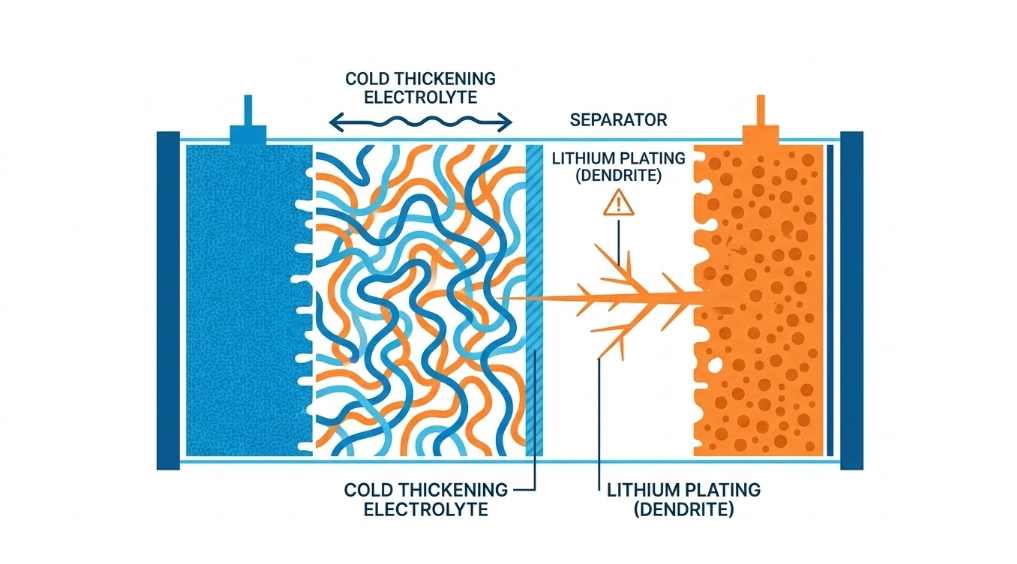
Temperature acts as a catalyst for these reactions. According to the Arrhenius equation, as the temperature drops, the kinetic energy of the molecules within the cell decreases. This reduction in kinetic energy leads to sluggish chemical kinetics. Furthermore, extreme cold significantly increases the internal resistance of the cell. The electrolyte, which is typically a liquid or gel in conventional systems, becomes highly viscous. This heightened viscosity impedes the flow of ions, forcing the system to work harder to deliver the same amount of power.
The immediate result is a severe voltage drop under load and a temporary loss of usable capacity. If you have ever experienced your smartphone shutting down unexpectedly in the snow despite showing a 30% charge, you have witnessed this phenomenon firsthand. Overcoming these thermodynamic bottlenecks is the core challenge in developing موثوق بطاريات مقاومة لدرجات الحرارة المنخفضة.
Lead-Acid Technology
Invented in 1859, the lead-acid system is the oldest rechargeable energy storage technology. It consists of lead dioxide as the positive plate, sponge lead as the negative plate, and an electrolyte solution of sulfuric acid and water. Due to their low cost, high surge current capabilities, and established recycling infrastructure, they remain ubiquitous in traditional automotive starter motors and heavy-duty industrial applications.
Performance in Sub-Zero Conditions
In cold climates, lead-acid systems exhibit significant vulnerabilities. Their performance is highly dependent on their State of Charge (SoC).
- Capacity Loss: At freezing temperatures (0°C / 32°F), a standard lead-acid unit loses approximately 20% of its rated capacity. At -20°C (-4°F), this capacity drops by a staggering 50%.
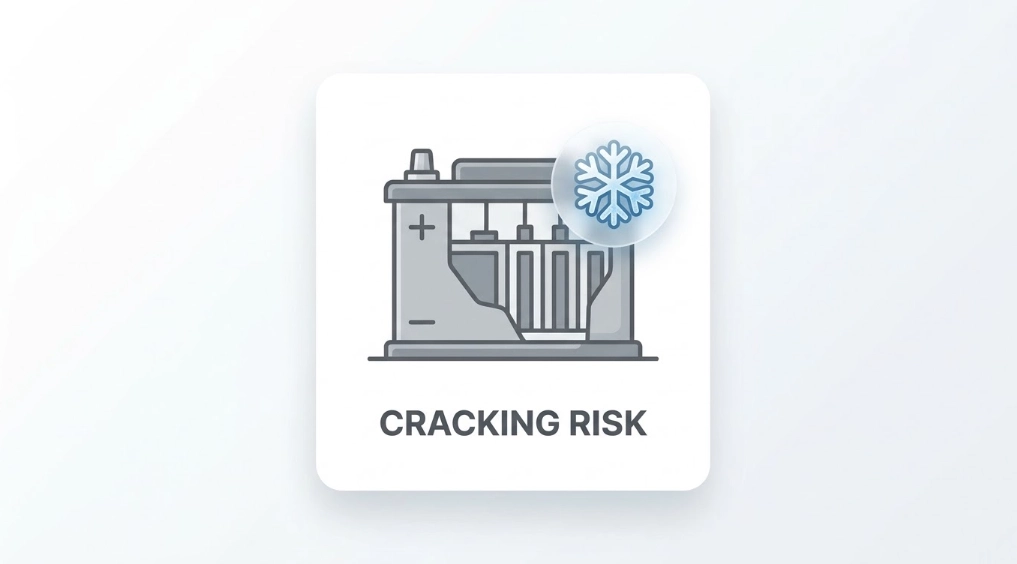
- The Freezing Risk: The most critical issue with lead-acid chemistry in the cold is the freezing point of its electrolyte. When fully charged, the sulfuric acid concentration is high, and the electrolyte acts as an antifreeze, capable of withstanding temperatures as low as -50°C (-58°F). However, as the unit discharges, the sulfuric acid is consumed, and the electrolyte turns mostly into water. A deeply discharged lead-acid unit can freeze solid at just -1°C (30°F). When the water freezes, it expands, which can crack the plastic casing and buckle the internal lead plates, permanently destroying the unit.
Pros and Cons for Cold Climates
الإيجابيات:
- Exceptionally low initial purchase cost.
- High Cold Cranking Amps (CCA) when fully charged, making them suitable for short, high-power bursts (like starting an internal combustion engine).
- Wide availability and robust recycling ecosystems.
السلبيات:
- Severe capacity degradation in deep cold.
- Catastrophic failure risk if left discharged in freezing weather.
- Extremely heavy and low energy density.
- Very slow charging acceptance at low temperatures.
Lithium-Ion Technology
Lithium-ion (Li-ion) technology revolutionized portable electronics and enabled the modern electric vehicle industry. These systems rely on lithium ions moving from the negative electrode (usually graphite) to the positive electrode (like lithium iron phosphate or lithium nickel manganese cobalt oxide) during discharge, and back when charging. The electrolyte is typically a liquid organic solvent containing dissolved lithium salts.
The Sub-Zero Bottleneck: Viscosity and Plating
While Li-ion systems generally outperform legacy technologies, they are far from immune to the biting cold.
- Liquid Electrolyte Viscosity: As temperatures drop below 0°C, the liquid organic solvent becomes highly viscous, similar to molasses. This drastically slows down the transport of lithium ions. At -20°C, a standard Li-ion cell may only deliver 40% to 50% of its room-temperature capacity.
- The Danger of Lithium Plating: The most severe limitation of Li-ion in the cold occurs during the charging phase. When trying to charge a Li-ion cell below freezing, the lithium ions move too slowly to successfully intercalate (embed) into the graphite matrix of the anode. Instead, they accumulate on the surface of the anode, forming metallic lithium. This process, known as lithium plating, permanently reduces the capacity of the cell. Worse, it can lead to the formation of dendrites—sharp, needle-like metallic structures that can pierce the separator, causing a catastrophic internal short circuit and potentially leading to thermal runaway (fire).
To mitigate these issues, modern EVs must employ complex, heavy, and expensive active Thermal Management Systems (TMS) to physically heat the battery pack before and during charging in winter conditions.
Pros and Cons for Cold Climates
الإيجابيات:
- Much higher energy density than legacy systems (lighter and more compact).
- Better cycle life and voltage stability.
- Does not freeze and crack under normal environmental extremes like discharged aqueous systems.
السلبيات:
- Charging is strictly prohibited or severely limited below 0°C to prevent dendrite formation.
- Requires expensive active thermal management systems.
- Capacity still drops significantly without external heating.
Solid-State Innovations: Breaking the Cold Barrier
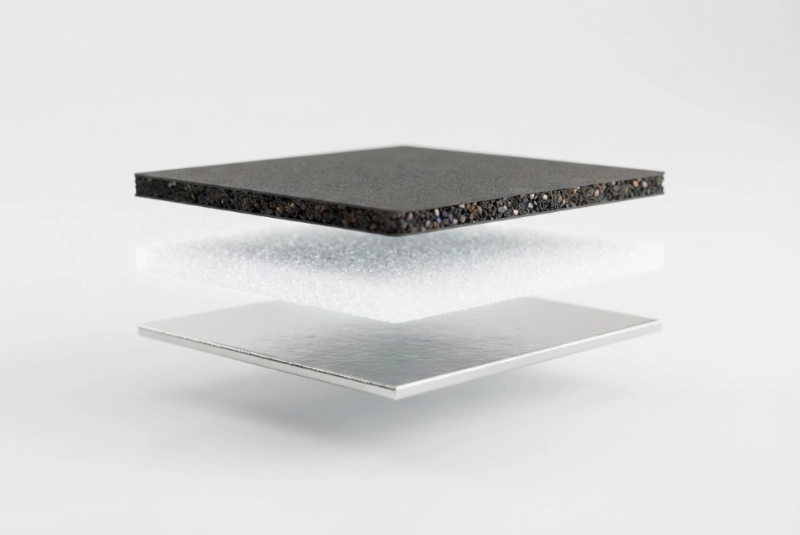
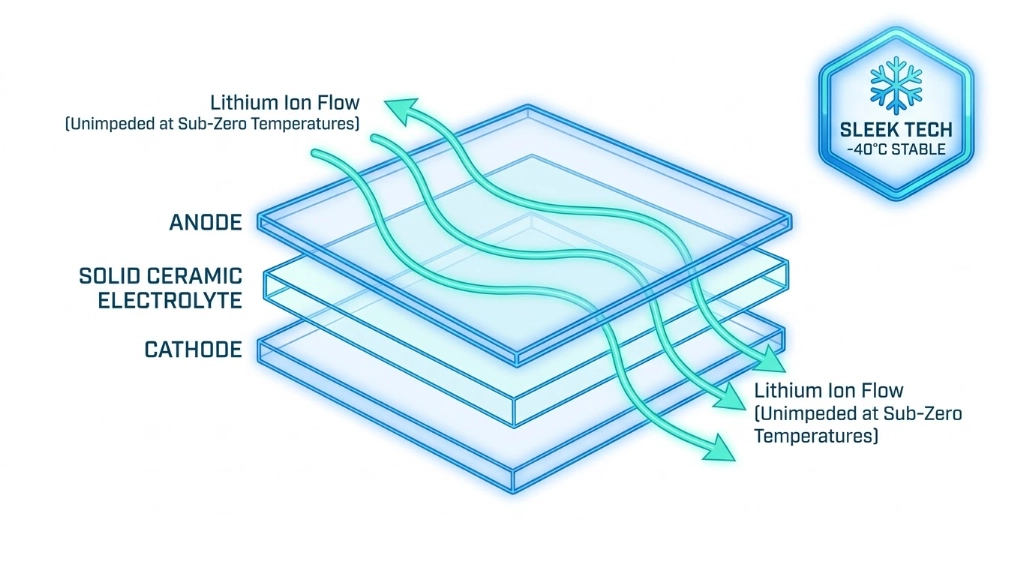
The most anticipated breakthrough in energy storage involves replacing the liquid organic electrolyte with a solid conductive material. These solid electrolytes can be made from ceramics (like LLZO), sulfides, or solid polymers. By eliminating the liquid component entirely, engineers are addressing the fundamental root causes of cold-weather degradation.
Why Solid Electrolytes Excel in the Cold
The transition to solid architectures offers unparalleled advantages for extreme environments:
- Stable Conductivity: Unlike liquids that thicken and freeze, solid electrolytes maintain their structural integrity and a much more consistent level of ionic conductivity across a wide temperature spectrum. Certain sulfide-based solid electrolytes actually exhibit ionic conductivities comparable to, or even exceeding, liquid electrolytes at sub-zero temperatures.
- Elimination of Lithium Plating: Because the solid boundary is mechanically rigid, it severely inhibits the growth of lithium dendrites. This allows for safe, rapid charging even at temperatures well below freezing, a feat impossible with current Li-ion chemistry.
- مستوى أمان غير مسبوق: Without the volatile, flammable liquid organic solvents, the risk of thermal runaway is virtually eliminated. This inherent safety allows for tighter packaging of cells, further increasing volumetric energy density.
While still in the advanced stages of commercialization and scaling, the بطارية الحالة الصلبة represents the ultimate solution for aerospace, military, and next-generation automotive applications operating in harsh winters. They can routinely operate in environments down to -40°C (-40°F) with minimal capacity loss and no requirement for heavy, parasitic thermal heating systems.
Comprehensive Data Comparison
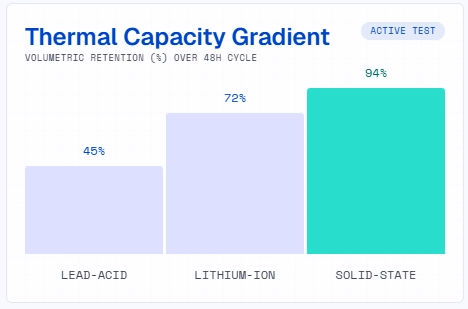
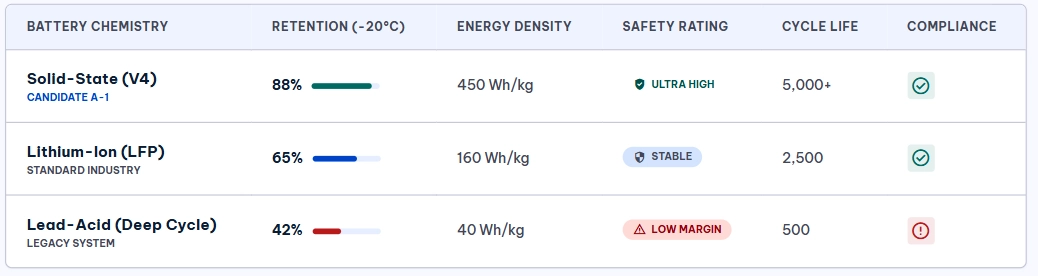
To provide a clear perspective on how these three technologies stack up against each other in extreme conditions, refer to the comparative analysis table below.
| الميزة / المقياس | Lead-Acid (AGM/Flooded) | Lithium-Ion (NMC/LFP) | تكنولوجيا الحالة الصلبة |
|---|---|---|---|
| حالة الإلكتروليت | Liquid (Sulfuric Acid/Water) | سائل (مذيبات عضوية) | Solid (Ceramic/Sulfide/Polymer) |
| Capacity at -20°C (-4°F) | ~50% of nominal | ~40% – 60% of nominal | ~80% – 90% of nominal |
| Sub-Zero Charging | Extremely slow; risk of freezing if discharged | Severely restricted; high risk of lithium plating/dendrites | Excellent; high charge acceptance without plating |
| كثافة الطاقة | Low (30-50 Wh/kg) | High (150-250 Wh/kg) | Ultra-High (300-500+ Wh/kg) |
| Thermal Management | Passive | Active heating required in winter | الحد الأدنى من المتطلبات أو لا شيء منها |
| Safety Risk in Cold | Freezing, casing cracks | Internal shorts from dendrites | Inherently safe, non-flammable |
| التكلفة السوقية الحالية | منخفض جداً | Moderate to High ~ Very High (Pre-commercial) | |
| أفضل تطبيق | ICE starting, stationary backup | Current EVs, consumer electronics | Future EVs, aerospace, polar exploration |
Industry Applications
The implications of this technological evolution are profound across multiple global industries.
Automotive and Electric Vehicles: Range anxiety during winter is currently one of the largest barriers to widespread EV adoption in regions like Scandinavia, Canada, and the Northern United States. Because current liquid-based systems must use their own stored energy to heat themselves, EVs can lose up to 30% of their driving range in freezing weather. The integration of solid architectures will eliminate this parasitic drain, offering true year-round range parity with internal combustion engines.
Off-Grid and Remote Infrastructure: For scientific research stations in Antarctica, remote telecommunication towers, and off-grid solar cabins, reliability is a matter of survival. These applications desperately require the ultimate بطارية للبيئات ذات درجات الحرارة المنخفضة that can be left in the bitter cold for months, deeply discharged, and still readily accept a charge from solar panels when the sun returns, without the risk of freezing or dendrite failure.
Aerospace and Defense: High-altitude drones and low-earth orbit satellites operate in environments where temperatures plunge below -60°C. The lightweight, high-density, and temperature-resilient nature of solid electrolytes is currently driving massive military and aerospace investment.
While manufacturing complexities and high production costs currently limit solid technology to niche commercial applications, massive investments from global automotive giants indicate that mass production is on the horizon. Within the next decade, the paradigm will shift entirely.
خاتمة
Navigating the challenges of extreme climates requires a deep understanding of electrochemical limitations. Lead-acid systems, while cheap and reliable for simple tasks, are too heavy and vulnerable to freezing for advanced modern needs. Lithium-ion systems bridged the gap, providing high energy density, but their reliance on viscous liquid electrolytes and susceptibility to dangerous lithium plating in the cold necessitate expensive heating workarounds.
Ultimately, the future belongs to solid-state innovations. By completely engineering out the liquid vulnerabilities, these next-generation cells provide the safety, capacity retention, and charging capabilities required to conquer sub-zero environments. For consumers and industries heavily impacted by harsh winters, the transition to these advanced بطاريات مقاومة لدرجات الحرارة المنخفضة will soon redefine what is possible in cold-weather energy storage.
الأسئلة الشائعة
Why does my current energy storage system lose power so quickly in the winter?
Traditional electrochemical cells rely on liquid electrolytes. When temperatures drop, this liquid becomes highly viscous, similar to thick syrup. This slows down the chemical reactions and severely increases internal electrical resistance. The system has to expend more energy just to push the ions through the cold liquid, resulting in a sudden drop in voltage and noticeable capacity loss.
Can I safely charge high-capacity power banks or EVs below freezing?
With standard liquid-based lithium systems, charging below 0°C (32°F) is highly dangerous and usually blocked by the internal software. Charging in the cold causes lithium ions to stack up on the anode surface (lithium plating) instead of absorbing into it, which permanently damages the cell and creates fire hazards. However, if you are using advanced بطاريات مقاومة لدرجات الحرارة المنخفضة featuring solid electrolytes, you can charge them safely in sub-zero conditions because the solid barrier prevents this hazardous plating process.
Is a commercially viable solid-state battery available for everyday consumers right now?
Currently, they are mostly in the prototype, testing, and early-commercial phases, largely restricted to specialized aerospace, medical, or high-end military applications due to complex manufacturing costs. However, major automotive manufacturers are investing billions into scaling this technology, and we expect to see them integrated into premium consumer electric vehicles within the next few years.