










Understanding Solid-state Battery Parameters
Release time: 2026-05-04
The global energy landscape is undergoing a seismic shift. As we transition away from fossil fuels, the demand for high-density, safe, and reliable energy storage has never been higher. While traditional lithium-ion batteries have served us well for decades, they are approaching their theoretical limits. Enter the next frontier: the Solid-State Battery (SSB).
To truly evaluate this technology, one must look beyond the hype and delve into the technical specifications. Understanding solid-state battery parameters is not just for engineers; it is essential for procurement specialists, automotive designers, and tech enthusiasts. In this comprehensive guide, we will explore the critical metrics that define SSB performance, with a specific focus on structural innovations like the Pouch-Type Laminated Solid-State Battery and the Cylindrical Solid-State Battery, as well as safety benchmarks such as Explosion-Proof Solid-State Battery and Fire-Resistant Solid-State Battery certifications.
1. The Core Architecture: Solid vs. Liquid
The fundamental difference in solid-state technology lies in the electrolyte. Conventional batteries use a liquid organic electrolyte, which is flammable and requires bulky cooling systems. Solid-state batteries replace this with a solid ceramic, glass, or polymer electrolyte.
This change alters the primary parameters of the battery:
- Energy Density (Wh/kg and Wh/L): Solid electrolytes allow for the use of lithium metal anodes, which can potentially double the energy density compared to graphite-anode liquid batteries.
- Operating Temperature Range: Without a liquid that can freeze or boil, SSBs function more efficiently in extreme environments.
- Safety Profile: The removal of flammable liquids leads to the development of the Fire-Resistant Solid-State Battery, a standard that is nearly impossible for traditional lithium-ion cells to meet without heavy shielding.
2. Structural Parameters: Form Factors Matter
How a battery is built significantly impacts its energy distribution and thermal management. Two dominant architectures have emerged in the solid-state sector.
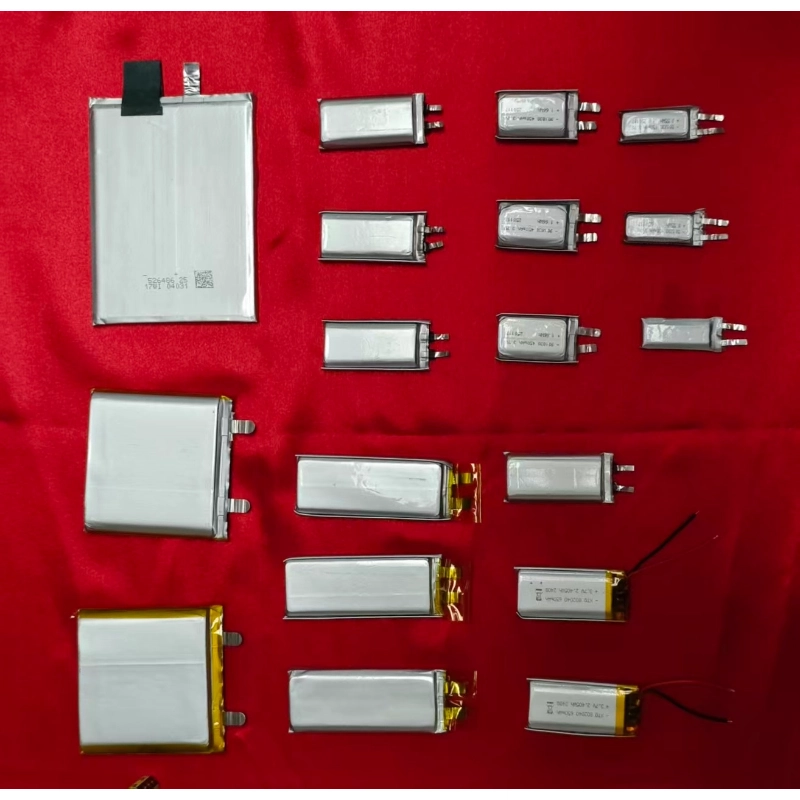
The Pouch-Type Laminated Solid-State Battery
The Pouch-Type Laminated Solid-State Battery is often considered the “gold standard” for electric vehicles (EVs) and consumer electronics. Unlike traditional winding methods, the laminated process involves stacking individual layers of anodes, solid electrolytes, and cathodes on top of one another.
Key Parameters of Pouch-Type Lamination:
- Stacking Pressure: Solid-state materials require constant pressure to maintain contact between the solid layers. Laminated structures allow for uniform pressure distribution across the entire surface area.
- Volumetric Efficiency: By eliminating the “dead space” found in the center of wound cells, the Pouch-Type Laminated Solid-State Battery maximizes Wh/L.
- Heat Dissipation: The large surface area of a pouch cell allows for faster heat transfer, which is critical during high-speed charging.
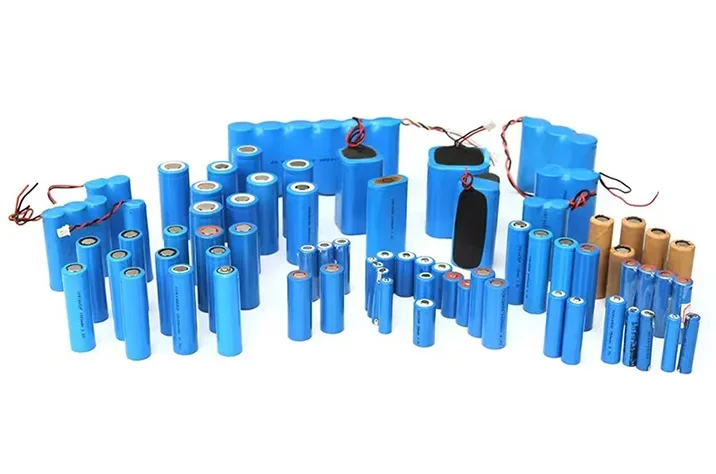
The Cylindrical Solid-State Battery
While pouch cells dominate high-end EVs, the Cylindrical Solid-State Battery is gaining traction due to its manufacturing maturity. Companies are adapting the 2170 and 4680 formats to accommodate solid-state chemistry.
Key Parameters of Cylindrical Designs:
- Mechanical Strength: The rigid outer shell provides inherent protection against external impacts.
- Internal Resistance: Managing the interface between the solid electrolyte and the electrode in a curved, wound structure is challenging. Current research focuses on specialized coatings to ensure that a Cylindrical Solid-State Battery maintains low internal resistance over thousands of cycles.
- Scalability: Since many existing battery factories are optimized for cylindrical production, this form factor offers a lower entry barrier for mass-market adoption.
3. Safety Parameters: Defining the “Unstoppable” Battery
Safety is perhaps the most significant parameter for solid-state technology. The goal is to move from “managed risk” to “inherent safety.”
Explosion-Proof Solid-State Battery Standards
An Explosion-Proof Solid-State Battery is defined by its ability to undergo extreme physical trauma—such as nail penetration, crushing, or high-velocity impact—without resulting in a catastrophic release of energy.
In traditional batteries, a short circuit causes a “thermal runaway” where the liquid electrolyte vaporizes and ignites. In an Explosion-Proof Solid-State Battery, the solid electrolyte acts as a physical barrier. Even if the cell is punctured, there is no volatile liquid to leak or spray, preventing the chain reaction that leads to explosions.
Fire-Resistant Solid-State Battery Characteristics
Fire resistance is measured through standardized tests (such as UL 9540A). A Fire-Resistant Solid-State Battery must demonstrate that it will not support combustion even when exposed to external flame or internal temperatures exceeding 200°C.
Because solid electrolytes (especially sulfide and oxide-based ones) are non-flammable, they provide a level of thermal stability that allows battery packs to be designed with less complex fire-suppression systems, ultimately reducing the overall weight of the vehicle or storage unit.
4. Technical Performance Metrics: The “Hard” Data
When reading a technical datasheet for a solid-state cell, several parameters are paramount:
Ionic Conductivity (S/cm)
This measures how fast lithium ions can move through the solid electrolyte. For a solid-state battery to compete with liquid cells, the ionic conductivity needs to be in the range of $10^{-3}$ to $10^{-2}$ S/cm. Sulfide-based electrolytes currently lead in this parameter.
Interface Resistance ($\Omega \cdot cm^2$)
Because the “contact” is solid-to-solid rather than liquid-to-solid, the resistance at the boundary of the electrolyte and the electrode can be high. Low interface resistance is the “Holy Grail” of SSB research, often achieved through nano-scale buffer layers.
Cycle Life and Degradation Rate
How many times can the battery be charged before its capacity drops to 80%? While traditional batteries manage 1,000–3,000 cycles, high-quality Pouch-Type Laminated Solid-State Battery prototypes are aiming for 5,000+ cycles, thanks to the chemical stability of the solid medium.
C-Rate (Charge/Discharge Speed)
The C-rate defines how fast the battery can be charged. A 1C rate means a full charge in one hour. Solid-state batteries often face challenges with high C-rates due to “dendrite growth” (microscopic lithium spikes). However, modern Cylindrical Solid-State Battery designs use advanced composite electrolytes to mitigate this, aiming for 4C or even 6C (10-minute charging) capabilities.
5. Environmental and Economic Parameters
Beyond the physics, the “GEO” of solid-state batteries includes their environmental footprint and cost-to-scale.
- Resource Intensity: Does the solid electrolyte require rare-earth materials? Oxide-based batteries often use LLZO (Lithium Lanthanum Zirconium Oxide), which involves more complex sourcing than traditional LFP (Lithium Iron Phosphate) chemistries.
- Manufacturing Throughput: The lamination process for a Pouch-Type Laminated Solid-State Battery is currently slower than the high-speed winding used for liquid cells. Improving this throughput is a key economic parameter.
- Recyclability: Solid-state batteries are potentially easier to recycle because the absence of toxic liquid electrolytes simplifies the disassembly and material recovery process.
6. The Future Outlook
The transition to solid-state is not an “if,” but a “when.” For industries ranging from aerospace to medical devices, the combination of a high-density Pouch-Type Laminated Solid-State Battery and the safety of an Explosion-Proof Solid-State Battery creates a value proposition that is impossible to ignore.
As manufacturing techniques for the Cylindrical Solid-State Battery mature, we expect to see these cells trickle down from luxury EVs to mass-market electronics. The ultimate goal remains a Fire-Resistant Solid-State Battery that can be integrated into the very structure of vehicles (structural batteries), saving space and maximizing efficiency.
Conclusion
Understanding solid-state battery parameters requires a multi-faceted approach. We must evaluate the internal chemistry (ionic conductivity, interface resistance), the physical form factor (Pouch-Type Laminated vs. Cylindrical), and the safety thresholds (Explosion-Proof and Fire-Resistant). As these technologies move from the lab to the production line, these parameters will become the standard by which all energy storage is measured.
Frequently Asked Questions (FAQ)
Q1: Why is the Pouch-Type Laminated Solid-State Battery preferred for EVs over other shapes?
The laminated structure is preferred because it allows for superior “stacking density” and more uniform pressure. In solid-state chemistry, maintaining physical contact between layers is vital. The flat, stacked nature of the Pouch-Type Laminated Solid-State Battery minimizes internal gaps and allows for more efficient cooling and space utilization within a vehicle’s flat “skateboard” chassis.
Q2: What makes a battery truly “Explosion-Proof” and “Fire-Resistant”?
A battery earns these titles by eliminating the primary cause of fire: the flammable liquid electrolyte. In an Explosion-Proof Solid-State Battery, even under extreme mechanical stress, there are no volatile gases to ignite. Similarly, a Fire-Resistant Solid-State Battery uses solid ceramic or polymer materials that do not catch fire even when exposed to external heat sources, providing a critical safety margin for homes and transport.
Q3: Can a Cylindrical Solid-State Battery be as efficient as a liquid-based one?
Currently, Cylindrical Solid-State Battery designs are catching up. The main challenge is ensuring that the solid electrolyte maintains good contact with the electrodes when they are wound into a cylinder. However, new flexible solid electrolytes and specialized coating technologies are closing the gap, offering the durability and ease of manufacturing of the cylindrical format with the enhanced safety and energy density of solid-state tech.