









Battery Safety for Micro-Mobility Brands
Release time: 2026-07-10
Tabla de contenido
The global micro-mobility revolution has transformed urban transportation, providing efficient, low-carbon alternatives to traditional passenger vehicles. E-bikes, e-scooters, and shared mobility fleets have become foundational to smart city ecosystems. However, as the market expands, the industry faces a critical technical and reputational bottleneck: battery safety.
High-profile thermal runaway incidents, media coverage of battery fires, and tightening municipal regulations have thrust battery reliability into the spotlight. For micro-mobility brands, ensuring robust battery safety is no longer just a regulatory checkbox—it is a core brand pillar, a legal necessity, and a primary differentiator in a crowded market.
This guide provides an in-depth analysis of battery safety engineering, key global compliance standards, and strategic action plans for micro-mobility product managers, engineers, and brand owners.
1. The Anatomy of Micro-Mobility Battery Packs
To design and market a reliable product, brands must understand the underlying physics and chemistry of the lithium-ion batteries that power their fleets. Micro-mobility vehicles typically run on battery packs composed of dozens of individual cylindrical lithium-ion cells (typically 18650 or 21700 formats) configured in series and parallel to achieve the desired voltage and capacity.
Cell Chemistries: NMC vs. LFP
The choice of battery chemistry dictates the energy density, lifespan, cost, and safety profile of the vehicle.
- Nickel Manganese Cobalt (NMC): Historically the dominant chemistry in micro-mobility due to its high energy density, allowing for lighter packs and longer ranges. However, NMC has a lower thermal runaway onset temperature (approximately 150°C to 180°C), requiring sophisticated thermal management.
- Lithium Iron Phosphate (LFP): Increasingly popular for shared fleets and utility e-bikes. LFP offers a significantly higher thermal runaway threshold (around 270°C) and boasts an impressive cycle life (often exceeding 2,000 to 3,000 cycles). The trade-off is lower energy density, which translates to a heavier pack for the same range.
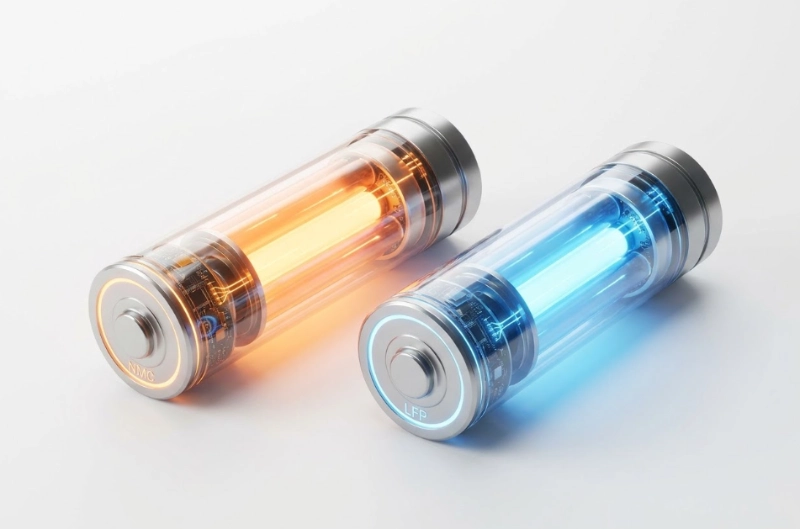
Choosing the right chemistry for a mobility battery requires balancing energy density with inherent safety, taking into account the vehicle’s specific use case and operational environment.
Understanding Thermal Runaway
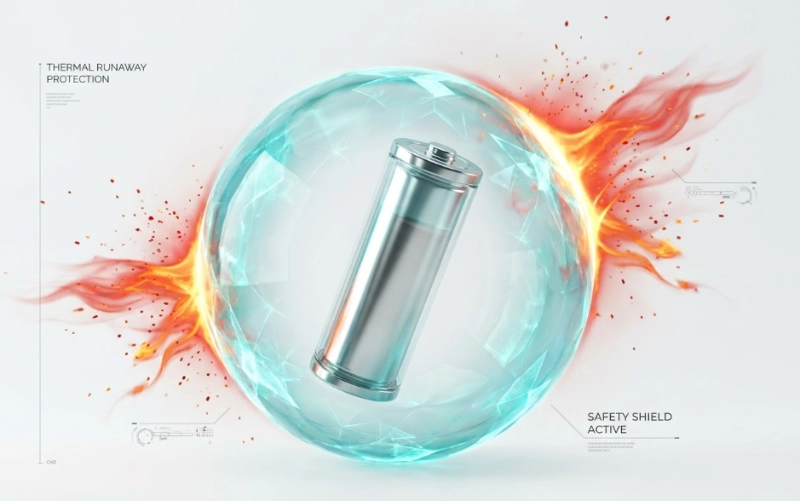
Thermal runaway is the chain reaction that leads to battery fires. It occurs when an internal or external anomaly generates heat faster than the pack can dissipate it. This elevation in temperature triggers exothermic chemical reactions within the cell, leading to gas buildup, venting, and eventually, intense combustion.
Thermal runaway is generally triggered by three types of abuse:
- Thermal Abuse: Exposure to extreme ambient heat or heat from adjacent failing cells.
- Mechanical Abuse: Physical damage from crashes, drops, punctures, or prolonged vibrations.
- Electrical Abuse: Overcharging, over-discharging, or external short circuits.
2. The Role of the Battery Management System (BMS)
The Battery Management System (BMS) acts as the brain of the battery pack, continuously monitoring state variables and enforcing operational limits to keep the cells within their Safe Operating Area (SOA). A passive or poorly designed BMS is one of the most common points of failure in low-cost micro-mobility products.
A critical component of e-scooter battery safety is active cell balancing within the management system, which prevents individual cells from becoming overcharged or deeply discharged.
Essential BMS Safeguards
To guarantee safety, a robust BMS must execute several critical functions:
- Individual Cell Monitoring: Tracking the voltage of each parallel group to detect cell imbalance.
- Multi-Point Temperature Sensing: Utilizing multiple Negative Temperature Coefficient (NTC) thermistors distributed throughout the pack to identify localized hot spots before they escalate.
- Overcurrent and Short-Circuit Protection: Instantaneous electronic disconnection of the pack in the event of an external short or drawing current beyond safe specifications.
- Smart Communication Protocols: Integrating communication channels like CAN bus or SMBus to allow the vehicle controller and charger to dynamically adjust performance and charging rates based on the battery’s real-time health data.
3. Industry Standards and Certification Frameworks
To navigate global markets, micro-mobility brands must comply with a complex web of international standards. Certifications are the most objective proof of safety and are increasingly mandated by retailers, insurance underwriters, and municipal transport authorities.
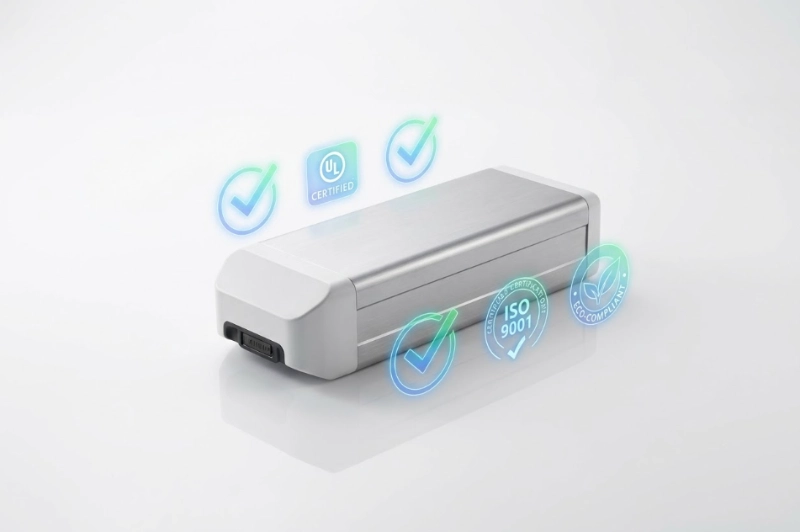
The table below outlines the primary safety standards governing micro-mobility batteries globally:
| Estándar | Target Market | Scope & Focus | Key Testing Parameters |
|---|---|---|---|
| UL 2271 | North America | Light Electric Vehicle (LEV) batteries (e-bikes, e-scooters). | Heavy vibration, mechanical shock, crash/drop tests, water immersion, overcharge resistance, short-circuit testing. |
| UL 2849 | North America | Complete electrical system of e-bikes (battery, charger, motor, controller). | Systems-level integration testing, electrical shock prevention, thermal loop safety assessments. |
| EN 15194 | Europa | European standard for Electronically Power Assisted Cycles (EPACs). | Mechanical structural strength, electrical circuit safety, moisture resistance, electromagnetic compatibility (EMC). |
| UN 38.3 | Global | Safety requirements for the air, sea, and land transport of lithium batteries. | Altitude simulation, thermal cycling, vibration, impact, external short circuit, overcharge, forced discharge. |
Designing a safe e-bike battery requires adherence to rigorous testing procedures like UL 2849, ensuring that the electrical drive train, charger, and battery pack function in harmony without systemic risk.
Navigating these standards can be complex, but obtaining third-party certification from accredited laboratories (such as UL Solutions, TÜV SÜD, or Intertek) is the single most effective way to mitigate liability and build consumer trust.
4. Best Practices for Micro-Mobility Brands
For brands sourcing or developing battery packs, safety must be designed in from day one. Here is a practical roadmap for ensuring the highest levels of quality control and product safety.
Step 1: Cell Selection and Traceability
Never compromise on cell quality. Tier 1 cell manufacturers (such as Panasonic, LG Chem, Samsung SDI, and Murata) utilize highly automated production processes with extremely low defect rates (measured in parts per billion).
- Avoid Generic Cells: Off-brand cells are prone to internal defects, such as microscopic metallic contaminants, which can cause internal short circuits over time.
- Establish Traceability: Implement a system where every batch of cells can be traced back to its specific production run and manufacturing date.
To market a safe e-bike battery, brands must collaborate with certified Tier 1 cell manufacturers to secure components that feature internal safety devices, such as current interrupt devices (CIDs) and positive temperature coefficient (PTC) thermistors.
Step 2: Mechanical Design and Thermal Isolation
Cells must be mechanically protected from the harsh operating conditions of urban environments.
- Cell Spacing: Avoid packing cells tightly together with zero clearance. Utilize cell holders made of flame-retardant plastics (UL 94 V-0 rated) to maintain physical separation.
- Thermal Barriers: Integrate thermal insulation materials, such as aerogel sheets or phase-change materials (PCMs), between cell groups. This prevents thermal runaway in one cell from propagating to adjacent cells.
- Vibration Dampening: Micro-mobility vehicles encounter constant vibrations from uneven roads. Incorporate shock-absorbing silicone pads or potting compounds to secure the cells and prevent weld-joint fatigue on nickel connection strips.
Step 3: Enclosure and Ingress Protection (IP Rating)
Water ingress is a primary cause of battery short circuits and corrosion.
- Target IP67 or Higher: The battery enclosure should feature a high Ingress Protection rating to prevent rain, puddles, and high-pressure washdowns from compromising the internal electronics.
- Pressure Relief Valves: Sealed enclosures should include a breathable, waterproof vent (e.g., Gore vent) to equalize pressure and safely vent gases in the highly unlikely event of cell venting, preventing an explosive pressure buildup inside the casing.
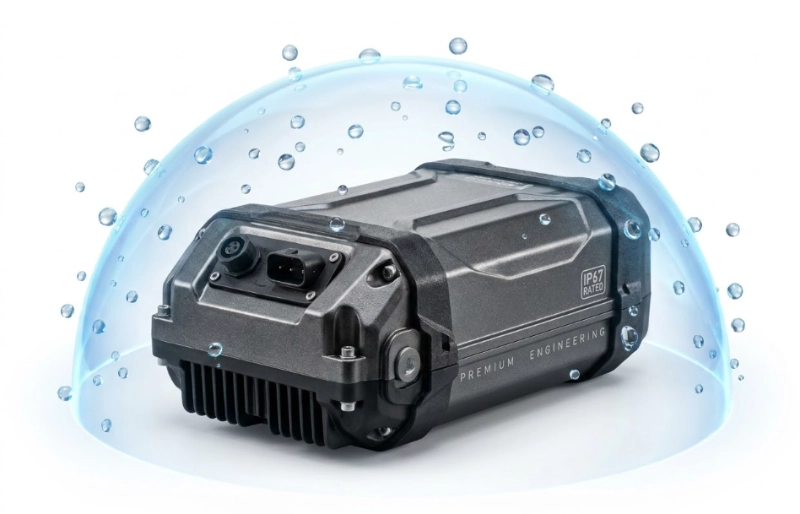
Selecting a comprehensive micro-mobility battery solution means looking beyond the hardware, ensuring that the mechanical housing, sealing gaskets, and internal layout are engineered for real-world environmental stress.
5. Future Trends in Battery Safety Technology
The micro-mobility landscape is rapidly evolving, with material science and software innovations promising even higher levels of safety in the coming years.
AI-Driven Cloud BMS and Predictive Maintenance
Modern micro-mobility fleets are utilizing cloud-connected BMS networks. By streaming real-time operational telemetry (voltage, temperature, impedance) to cloud analytics platforms, machine learning models can detect subtle anomalies—such as a cell group discharging slightly faster than others—long before it poses a physical hazard. This allows fleet operators to proactively pull a vehicle for maintenance.
Baterías de estado sólido
Solid-state batteries replace the volatile liquid organic electrolyte found in conventional lithium-ion cells with a solid, non-flammable inorganic electrolyte. This technology virtually eliminates the risk of thermal runaway, while simultaneously boosting energy density. While currently cost-prohibitive for mass-market micro-mobility, solid-state technology is poised to reshape how we think about mobility battery performance and safety over the next decade.
Sodium-Ion Technology
Sodium-ion batteries represent a promising alternative for budget-friendly micro-mobility vehicles. Sodium is highly abundant and cheap, but more importantly, sodium-ion cells are inherently safer than lithium-ion cells. They perform exceptionally well in extreme temperatures, have excellent thermal stability, and can be completely discharged to 0 volts for safe transport without damaging the cell chemistry.
Conclusión
As micro-mobility integrates further into urban infrastructure, safety remains the ultimate metric of a brand’s viability. Cutting corners on cell selection, BMS engineering, or safety certifications presents a severe threat to consumer safety, brand reputation, and corporate longevity. By prioritizing rigorous design methodologies, adhering to global standards like UL 2271 and UL 2849, and embracing emerging safety technologies, brands can protect their customers and establish themselves as trusted leaders in the clean energy transition.
Ultimately, investing in a premium micro-mobility battery solution is no longer a luxury but a fundamental business necessity that ensures long-term market success.
Preguntas frecuentes
Q1: What are the main warning signs that a micro-mobility battery is failing or unsafe?
Consumers and fleet operators should look out for several key warning signs:
- Excessive Heat: The battery pack feeling unusually hot to the touch during charging or immediate use.
- Physical Swelling: Any deformation, swelling, or cracking of the battery enclosure.
- Unusual Odors or Hissing Sounds: Sweets-smelling chemical odors or venting noises are clear indicators of internal cell damage.
- Erratic Charging Behavior: The battery taking unusually long to charge, failing to hold a charge, or sudden drops in state-of-charge (SoC) during operation. If any of these signs occur, the battery should be immediately isolated in a non-combustible area and inspected by a professional.
Q2: Why is cheap charging equipment dangerous for e-bikes and e-scooters?
A battery pack is only as safe as the system charging it. Low-cost, uncertified chargers often lack precise voltage regulation and automatic shutoff protocols. If a charger continues to push current into a fully charged pack, it can cause lithium plating on the anodes, leading to internal short circuits and eventual thermal runaway. Furthermore, cheap chargers lack thermal overload protection, increasing the risk of electrical fires at the wall outlet. Brands should always supply and recommend certified chargers configured specifically for their battery packs’ BMS.
Q3: How do temperature extremes affect micro-mobility battery safety and life?
Extreme temperatures degrade battery health and elevate safety risks:
- Cold Weather (Below 0°C/32°F): Charging lithium-ion cells in freezing temperatures causes “lithium plating” on the anode. This permanently damages the cell and creates metallic dendrites that can eventually puncture the internal separator, causing a catastrophic short circuit.
- Hot Weather (Above 45°C/113°F): Operating or storing batteries in high heat accelerates chemical degradation and brings the cells closer to their thermal runaway threshold. Smart BMS units will temporarily disable charging or discharging in extreme thermal conditions to preserve safety.