









Why Are LiFePO4 Batteries Becoming Increasingly Common in the Modern Energy Landscape?
Release time: 2026-08-04
Table des matières
The global transition toward electrification and renewable power generation has sparked a relentless pursuit of the perfect power storage solution. For years, the industry was captivated by cells that prioritized maximum power in the smallest possible footprint. However, a significant paradigm shift is occurring. Today, engineers, manufacturers, and consumers are increasingly turning their attention to a specific chemistry: Lithium Iron Phosphate (often abbreviated as LFP or LiFePO4).
From residential solar systems to massive grid-scale installations, and from entry-level commuter cars to heavy-duty machinery, this particular chemical composition is rapidly capturing market share. But what exactly is driving this monumental shift? To understand why this technology is becoming the ubiquitous choice for modern power demands, we must delve deep into its fundamental chemical architecture, its economic advantages, and the practical realities of large-scale electrification. This comprehensive guide explores the multi-faceted rise of LFP technology, examining its core strengths, its comparative advantages, its inherent limitations, and what the future holds for the broader industry.
1. Why the Market is Focusing More on LFP Technology
The sudden and massive pivot toward LFP by leading global manufacturers is not a coincidence; it is a calculated response to the maturing needs of the global energy market. In the early days of electrification, the primary goal was to conquer “range anxiety” and space constraints, leading to a heavy reliance on nickel and cobalt-heavy chemistries. Today, the market’s priorities have evolved significantly.
First and foremost is the issue of safety. As power packs grow larger and are deployed in closer proximity to human habitats—such as in home garages or densely packed urban charging stations—the tolerance for thermal runaway incidents has plummeted. The market now demands inherently stable chemistries that minimize catastrophic fire risks.
Secondly, the longevity of the investment has become paramount. Consumers and grid operators alike expect their power systems to last for decades, not just a few years. The financial models for renewable integration rely heavily on assets that do not require frequent replacement.
Finally, the economics of raw materials have forced the industry’s hand. Cobalt and nickel are characterized by volatile pricing and complex, often controversial, supply chains. By utilizing iron and phosphate—materials that are abundant, cheap, and easily sourced globally—manufacturers can achieve unprecedented cost-effectiveness. This economic advantage allows for cheaper end-products, democratizing access to clean technology and enabling manufacturers to protect their profit margins against commodity shocks.
2. Core Advantages: The Pillars of LFP Superiority
To truly grasp why this chemistry is dominating, one must look at the structural level of the cathode. The olivine crystal structure of Lithium Iron Phosphate creates a robust framework that yields three critical advantages.
Unmatched Thermal Stability
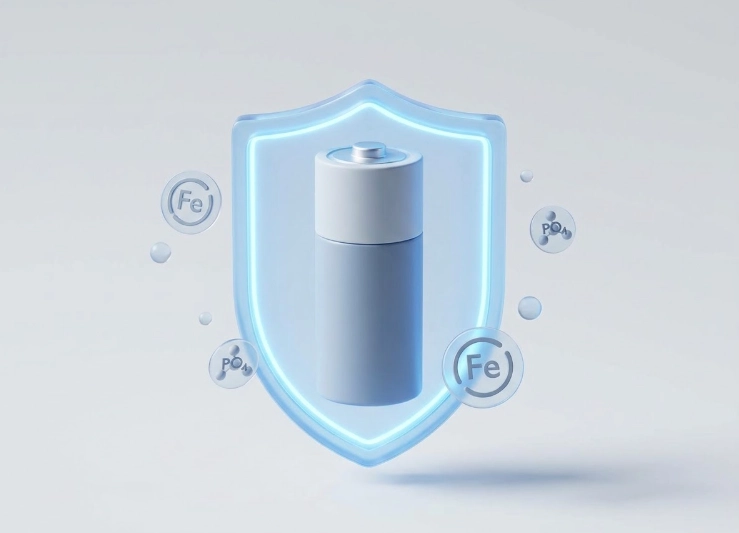
The most celebrated attribute of this chemistry is its inherent safety profile. The phosphorus-oxygen bond in the cathode is incredibly strong. Unlike other chemistries that release oxygen when they get too hot—essentially providing fuel for their own fires—LFP remains chemically intact even at extraordinarily high temperatures. This exceptional thermal stability means that in the event of a short circuit, physical puncture, or extreme overcharging, the cell is highly unlikely to ignite or explode. For regulators and safety engineers, this characteristic alone often dictates the choice of chemistry.
Exceptional Cycle Life
When we talk about the longevity of a rechargeable power source, we measure it in charge and discharge cycles. The rigid molecular structure of LFP suffers very little degradation as lithium ions move in and out of the cathode during operation. As a result, users can expect an astonishing cycle life from these units. While older chemistries might degrade significantly after 1,000 to 2,000 cycles, a well-managed LFP pack can easily surpass 5,000 to 8,000 cycles, and sometimes even more, before experiencing a noticeable drop in capacity. This translates to a decade or more of reliable daily use.
A Broad Spectrum of Applicability
Because these units are incredibly safe and last for a very long time, they can be deployed in environments where other power sources would be too risky or too fragile. They can tolerate being discharged completely (to 0% depth of discharge) without suffering immediate, catastrophic damage, making them incredibly robust for varied and unpredictable daily use.
3. LFP vs. Traditional Lithium-Ion: Understanding the Differences
To appreciate the current market dynamics, it is crucial to understand the distinct performance philosophies separating LFP from traditional lithium-ion alternatives, such as Nickel Manganese Cobalt (NMC) or Nickel Cobalt Aluminum (NCA).
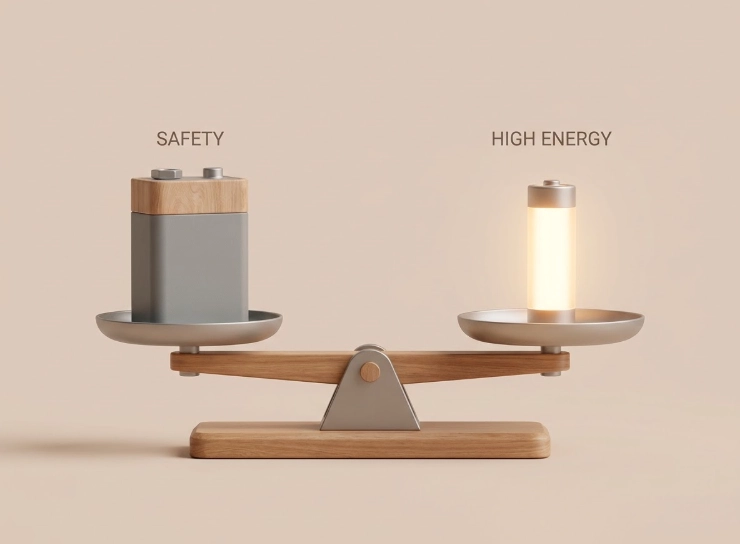
The difference essentially boils down to a trade-off between energy concentration and structural resilience. NMC and NCA chemistries are designed for extreme energy concentration; they pack as many electrons into as small and light a space as possible. This makes them ideal for high-performance sports cars or ultra-thin consumer electronics where every gram and millimeter counts.
However, this high concentration comes at a cost. The structural integrity of the cathode degrades faster over time, and the oxygen-rich chemistry is far more volatile if the system fails. LFP takes the opposite approach. It sacrifices absolute energy concentration in favor of maximum safety, longevity, and economic viability.
Comparative Analysis Table
| Feature / Characteristic | LFP (Phosphate de lithium et de fer) | NMC / NCA (Nickel-Based) |
|---|---|---|
| Primary Focus | Safety, Longevity, Economy | Maximum Range, Lightweight, Compactness |
| Cathode Materials | Iron, Phosphate (Abundant, Cheap) | Nickel, Cobalt, Manganese/Aluminum (Expensive) |
| Profil de sécurité | Extremely High (No oxygen release) | Moderate (Requires complex management systems) |
| Average Lifespan | 5,000 – 8,000+ Cycles | 1,000 – 2,500 Cycles |
| Densité volumétrique | Lower (Requires more physical space) | Higher (More power in less space) |
| Cost per kWh | Low and continually decreasing | High, subject to raw material market volatility |
| Toxicity / Ethics | Non-toxic, ethical supply chain | Cobalt mining poses severe ethical & toxic challenges |
4. Most Common Application Sectors Powering the Boom
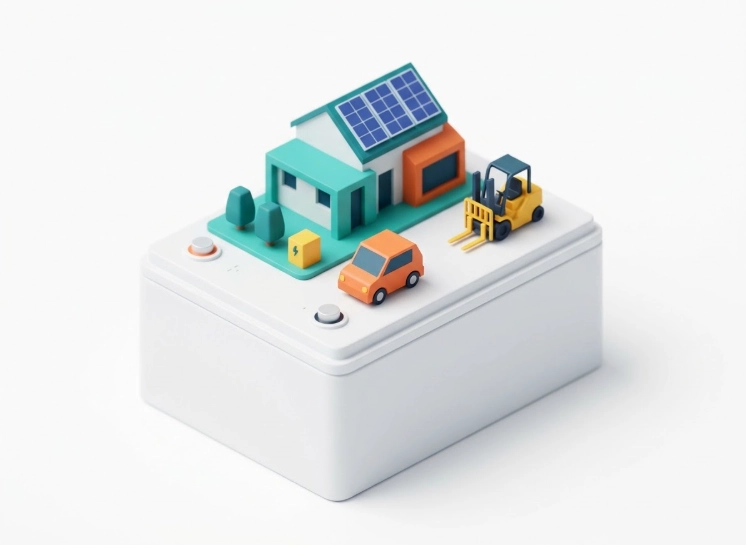
The unique attributes of this chemistry have perfectly aligned with the needs of several rapidly expanding global industries.
Utility and Residential Energy Storage
As the world shifts to solar and wind power, the grid requires massive buffers to store power when the sun is shining and release it when demand peaks at night. For grid-scale energy storage, physical size and weight are largely irrelevant. What matters is safety (preventing massive facility fires), low cost per kilowatt-hour, and the ability to cycle daily for 20 years. LFP is the undisputed king of this sector.
The Evolution of Electric Vehicles (EVs)
While luxury, long-range cars still use nickel-based chemistries, the mass market for electric vehicles has wholeheartedly embraced iron-phosphate. For the average commuter who drives less than 50 miles a day, a 250-mile range is more than sufficient. Automakers are using LFP to build affordable, entry-level models that are robust enough that owners are encouraged to charge them to 100% daily without fear of premature degradation—a practice strictly warned against with older chemistries.
Mission-Critical Backup Power
Hospitals, data centers, and telecommunications towers cannot afford a second of downtime. Historically, these facilities relied on toxic lead-acid arrays or noisy diesel generators. Today, iron-phosphate modules are rapidly replacing them as the premier solution for backup power. Their lack of maintenance requirements, incredibly low self-discharge rate, and absence of toxic off-gassing make them ideal for indoor, critical environments.
Heavy-Duty Industrial Equipment
Forklifts, automated guided vehicles (AGVs), scissor lifts, and mining machinery operate in harsh, demanding environments. This type of industrial equipment requires power sources that can withstand physical vibrations, complete daily depletion, and rapid recharging between shifts. The robust nature of the iron-phosphate crystal structure handles these grueling commercial environments far better than more fragile chemistries.
5. Why LFP is the Ideal Choice for Mass Deployment
When transitioning from pilot projects to global, mass-scale deployment, operational predictability becomes the most important metric for any technology. This is where iron-phosphate truly shines.
At a fleet or grid level, unpredictable failures destroy financial models. Because LFP cells are chemically inert compared to their nickel-based cousins, they require far less complex thermal management systems. You do not need to engineer highly intricate, heavy, and expensive liquid cooling loops just to prevent the cells from catching fire during standard operation.
Furthermore, the degradation curve of iron-phosphate is incredibly predictable and slow. Fleet managers for bus companies or delivery logistics can confidently project their operational expenses a decade into the future, knowing exactly how the battery capacity will perform. Because the cells rarely fail catastrophically and do not require watering or constant voltage balancing like older industrial solutions, the ongoing maintenance costs are reduced to near zero. This combination of reliable, stable operation and rock-bottom upkeep expenses makes it the only logical choice for large-scale infrastructure projects and commercial fleets.
6. Acknowledging the Limitations: It Is Not a Silver Bullet
Despite its overwhelming popularity, it is crucial for a balanced analysis to acknowledge that this chemistry is not the perfect solution for every single application. It comes with distinct physical and chemical compromises.
The most obvious limitation is physical bulk. Because the chemistry has a lower energy density, you need a physically larger and heavier pack to achieve the same amount of power storage as a nickel-cobalt equivalent. This makes LFP entirely unsuitable for weight-sensitive applications like aviation, electric motorcycles, or high-performance sports cars where aerodynamics and weight distribution are paramount.
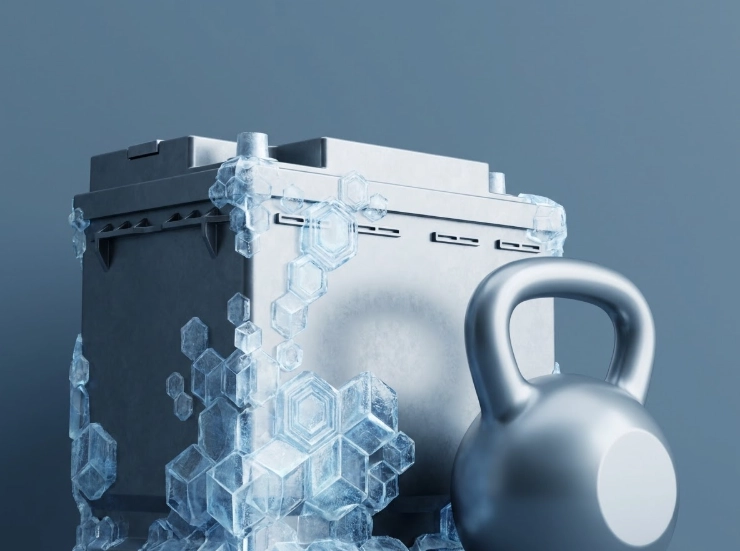
Another significant hurdle is chemical sluggishness in freezing conditions. The movement of lithium ions within the iron-phosphate structure slows down dramatically when temperatures drop below freezing. Consequently, the low-temperature performance of these cells is noticeably inferior. An EV powered by this chemistry might see a much larger percentage drop in its driving range during a severe winter compared to other chemistries, and the cells cannot be fast-charged when frozen without causing permanent internal damage. While modern engineering uses built-in heaters to mitigate this, it remains an inherent chemical limitation.
7. The Road Ahead: Why Next-Generation Technology is Worth Watching
While iron-phosphate currently rules the mass market and stationary storage sectors, the global research and development community is not standing still. The limitations mentioned above have spurred billions of dollars in investment toward the next quantum leap in power storage.
Engineers are looking toward entirely new architectures to solve the density and cold-weather dilemmas without sacrificing the safety gains we have achieved today. This brings us to the frontier of batteries à semi-conducteurs. By replacing the liquid electrolyte—the flammable liquid that transports ions inside current cells—with a solid, non-flammable ceramic or polymer material, manufacturers aim to achieve the holy grail of power storage.
This upcoming technology promises to drastically shrink the size and weight of power packs while offering absolute immunity to fire, even if the cell is completely crushed. Furthermore, solid electrolytes are expected to operate much more efficiently at extreme temperatures, completely eliminating winter range anxiety. As this next-generation technology moves from the laboratory to commercial production lines over the coming years, it represents a massive evolutionary upgrade that will redefine the boundaries of what electric mobility and portable power can achieve.
FAQ
Can I safely charge my LFP battery to 100% every day?
Yes. Unlike other lithium chemistries where frequent 100% charging can accelerate chemical degradation, LFP cells are highly resilient. In fact, many manufacturers of products utilizing this chemistry actively recommend charging to 100% at least once a week to help the Battery Management System (BMS) properly calibrate and balance the cells.
How long will a Lithium Iron Phosphate power system realistically last?
Under normal operating conditions and standard room temperatures, these cells typically offer between 5,000 and 8,000 charge cycles before their capacity degrades to 80% of its original state. For a solar storage wall or an everyday commuter vehicle cycled once daily, this equates to a functional lifespan of roughly 13 to over 20 years.
Are these batteries safer for indoor residential installation?
Absolutely. Because their internal chemistry does not release oxygen during high-heat events, they are virtually immune to thermal runaway and explosive fires under normal failure conditions. They also do not off-gas toxic fumes like traditional lead-acid systems, making them the safest available choice for indoor installation in basements or garages.