









Why Lithium Metal Needs Careful Engineering
Release time: 2026-07-15
Isi Kandungan
The global transition toward electrification demands energy storage solutions that far exceed the capabilities of modern lithium-ion systems. As electric vehicles (EVs), electric vertical takeoff and landing (eVTOL) aircraft, and grid-scale storage systems push the boundaries of range and power, researchers and manufacturers are looking toward the next frontier of electrochemical cells. At the heart of this quest is the transition to a lithium metal battery architecture.
By replacing the traditional graphite or silicon-composite anodes with pure lithium metal, the battery industry stands on the precipice of a theoretical leap in energy density. Lithium metal boasts a remarkable theoretical specific capacity of 3,860 mAh/g and the lowest electrochemical reduction potential of any candidate material (-3.04 V vs. standard hydrogen electrode).
However, translating these stellar laboratory metrics into commercially viable, safe, and long-lasting energy storage devices is one of the most formidable engineering challenges of our time. Pure lithium is highly reactive, mechanically soft, and prone to severe volumetric changes during charging and discharging cycles. Without careful structural, chemical, and thermal engineering, the promise of this next-generation technology will remain unfulfilled due to fundamental safety and degradation barriers.
1. The Physics of the Hostless Anode
To understand why pure lithium anodes require such meticulous engineering, one must first look at how they differ from conventional battery systems. In standard lithium-ion batteries, the anode consists of a host material—typically graphite, and increasingly, silicon oxides. During charging, lithium ions intercalate (insert themselves) into the atomic galleries of the graphite host.
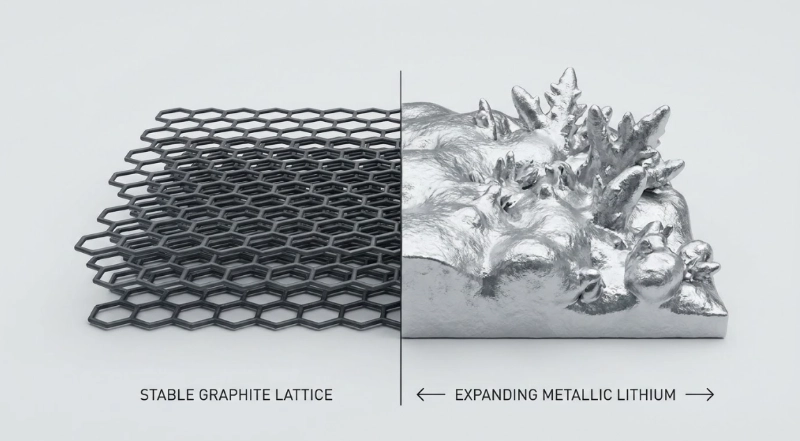
This host framework provides structural stability. Although silicon hosts experience significant volume expansion (up to 300%), they still operate on an absorption-desorption mechanism within a defined particulate structure.
Pure lithium anodes, by contrast, are completely “hostless.”
During the charging phase, lithium ions in the electrolyte migrate to the negative current collector and electroplate directly onto its surface as pure metallic lithium. During discharge, this plated metal stripping process occurs, dissolving the metal back into ions. This dynamic, phase-change plating and stripping process presents several severe physical challenges:
- Infinite Volume Expansion: Because there is no host structure, the thickness of the anode changes from zero (in an “anode-free” state) to several tens of micrometers with every cycle. This causes massive macroscopic “breathing” of the entire cell package.
- High Spatial Heterogeneity: Lithium ions do not deposit in perfect, atom-thin sheets naturally. Instead, variations in electric field concentration, ion flux, and surface roughness cause preferential deposition at localized sites.
- Mechanical Softness: Metallic lithium is extremely soft and ductile. Under localized stresses, it deforms easily, which can compromise internal pressure distributions and cell architecture.
2. Unraveling the Solid Electrolyte Interphase (SEI)
Whenever metallic lithium comes into contact with a liquid organic electrolyte, a spontaneous reduction reaction occurs. This reaction forms a passivation layer on the lithium surface known as the Solid Electrolyte Interphase (SEI).
In an ideal scenario, the SEI acts as an electronic insulator but an ionic conductor, allowing lithium ions to pass through while preventing further reduction of the electrolyte. In conventional graphite anodes, a stable SEI forms during the first cycle and remains largely intact.
In a pure lithium system, however, the SEI is far from stable. Due to the infinite volume expansion and contraction during cycling, the underlying lithium metal substrate constantly stretches and cracks. The fragile, brittle inorganic-organic SEI layer cracks along with it.
When the SEI ruptures, fresh, highly reactive metallic lithium is exposed directly to the liquid electrolyte. This triggers immediate, secondary chemical reactions to repair the SEI, continuously consuming both active lithium and the liquid electrolyte solvent.
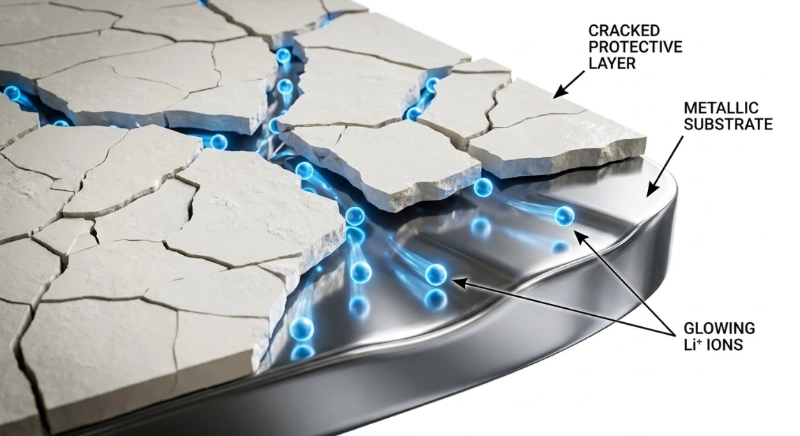
This ongoing chemical degradation leads directly to:
- Rapid Capacity Fade: Active lithium is locked up permanently in the chemical compounds of the newly formed SEI, reducing the amount of cyclable energy.
- Impedance Growth: The SEI layer becomes increasingly thick and resistive, limiting the rate at which the battery can charge or discharge.
- Dry-Out of the Electrolyte: Liquid electrolyte is steadily consumed by these side reactions, eventually leading to premature cell failure due to a lack of ionic transport medium.
Consequently, managing the chemistry, mechanical flexibility, and ionic conductivity of the SEI is a major pillar of battery stability research. Without an engineered interface that can dynamically adapt to the physical shifts of the anode, the cell will fail within a few dozen cycles.
3. The Dendrite Menace and Internal Short Circuits
The most famous and hazardous of all lithium metal battery issues is the formation of lithium dendrites. Dendrites are microscopic, needle-like crystalline structures of lithium that grow outward from the current collector during the plating process.
Dendrite formation is driven by a self-reinforcing electrochemical loop. Initially, minor physical or chemical irregularities on the lithium surface create areas of localized high electric fields. Since lithium ions migrate along electric field lines, they preferentially deposit onto these sharp peaks rather than the flat valleys.
As more lithium plates onto these localized tips, they grow longer, sharper, and closer to the cathode. This geometric progression creates highly concentrated “hot spots” of ion flux.
If left unchecked, these dendritic needles will grow straight through the porous polymeric separator dividing the anode and cathode. Once a dendrite physically bridges the gap between the two electrodes, a catastrophic internal short circuit occurs.
Because metallic lithium and the typical cathode materials are highly conductive, this short circuit allows an massive, uncontrolled flow of electrical current through a microscopic point. The resulting localized Joule heating can easily exceed the thermal tolerance of the separator, melting it and triggering a cascade of thermal runaway reactions throughout the cell.
4. Engineering Risks in Next-Generation Cell Design
Developing a commercial product around this highly reactive chemistry introduces a multi-layered battery design risk that engineers must mitigate at every stage of the lifecycle. The risks span chemical, thermal, and mechanical vectors, each of which can compound the others if not addressed systematically.
Mechanical Pressure Dynamics
Because lithium is hostless and exhibits localized plating, keeping the anode flat requires the application of external pressure. Engineers must design battery packs with integrated spring systems or compliant foams that apply a highly precise stack pressure (typically between 50 kPa and 5 MPa depending on the design).
- Too little pressure allows dendrites to grow freely through void spaces, accelerating short circuits.
- Too much pressure can squeeze the porous separator, blocking ion pathways, or cause plastic deformation of the lithium metal, leading to internal mechanical failures.
Thermal Runaway Cascades
Lithium metal has a low melting point of approximately 180.5°C. When a cell experiences localized heating (from high C-rate operation, external heat, or minor micro-short circuits), it can rapidly approach this threshold.
If the lithium melts, it becomes highly mobile and reacts violently with organic solvents and cathode oxygen, releasing toxic gases, intense heat, and sparks. Designing robust thermal management networks that can isolate thermal events at the single-cell level is critical.
Manufacturing and Processing Complexity
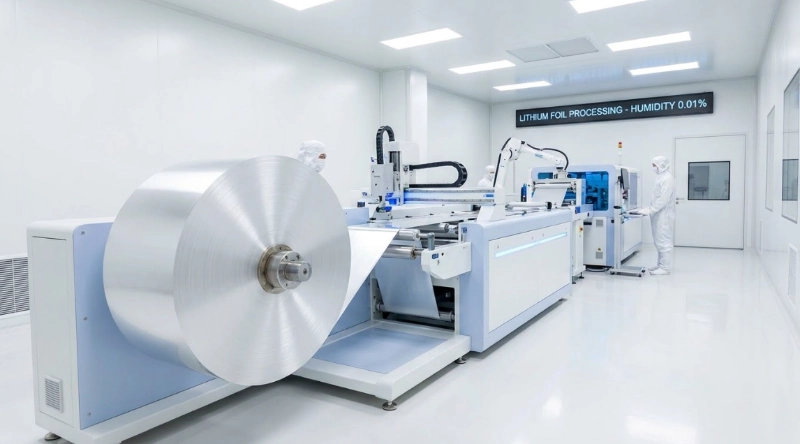
Unlike conventional materials, pure lithium cannot be processed in standard dry rooms. It requires an ultra-dry atmosphere (dew point below -40°C or even -50°C) with precise argon or highly controlled dry-air environments to prevent reaction with ambient moisture and nitrogen.
Furthermore, handling ultra-thin foils of pure lithium (ranging from 10 to 50 micrometers in thickness) without tearing, wrinkling, or introducing microscopic surface contaminants is a manufacturing hurdle of unprecedented scale.
The table below outlines the core differences in engineering requirements and performance parameters across standard graphite, silicon-composite, and pure lithium metal anodes:
| Parameter Prestasi & Keselamatan | Graphite Anode (Standard Li-ion) | Silicon-Dominant Anode (Advanced) | Lithium Metal Anode (Next-Gen) |
|---|---|---|---|
| Theoretical Capacity (mAh/g) | ~372 | ~3,579 (for Li_15Si_4) | 3,860 |
| Volume Expansion (%) | ~10% | 100% – 300% | Infinite (Hostless Plating) |
| Primary Degradation Mode | SEI growth, transition-metal dissolution | Particle pulverization, SEI continuous reform | Dendrite growth, “Dead” lithium, Dry-out |
| Internal Stack Pressure Required | Minimal (<50 kPa) | Moderate (100–500 kPa) | High & Precise (500 kPa–5 MPa) |
| Operational Temperature Window | Wide (-20°C to 60°C) | Moderate (-10°C to 50°C) | Narrow (Often requires elevated temp) |
| Primary Safety Hazard | Minor dendrites under fast charge | Thermal swelling, particulate cracking | Catastrophic short-circuit, low melting point |
5. Advanced Engineering Solutions and Mitigations
To overcome these steep thermodynamic and mechanical hurdles, materials scientists and battery engineers are pursuing a multi-pronged approach. The goal is to stabilize the interface, control ion flux, and physically block dendrite propagation.
Elektrolit Keadaan Pepejal (SSE)
One of the most promising pathways to achieving long-term battery stability is replacing flammable liquid organic electrolytes with solid-state alternatives. Solid electrolytes generally fall into three categories:
- Oxides (e.g., LLZO): Extremely high mechanical strength and chemical stability against lithium. However, they are brittle, heavy, and exhibit high interfacial resistance.
- Sulfides (e.g., LPS): Softer than oxides, offering better contact with lithium metal and high ionic conductivity at room temperature. They are, however, highly sensitive to moisture, generating toxic hydrogen sulfide ($H_2S$) gas if exposed to air.
- Polymers (e.g., PEO-based): Flexible and easy to manufacture using existing roll-to-roll processes. Their ionic conductivity at room temperature is poor, requiring cells to operate at elevated temperatures (typically 60°C or higher).
While solid electrolytes are physically tougher than liquid ones, they are not a silver bullet. Under high currents, dendrites can still propagate through grain boundaries or microscopic cracks in ceramic solids, meaning precise structural design remains paramount.
Artificial SEI Layer Engineering
Instead of relying on the natural, fragile SEI that forms spontaneously, engineers are pre-treating lithium foils with artificial coatings. These artificial SEI layers are designed to be highly elastic yet mechanically robust, allowing them to stretch and contract along with the lithium anode.
Using techniques such as Atomic Layer Deposition (ALD) or Chemical Vapor Deposition (CVD), researchers can deposit nanometer-thin layers of metal fluorides (like $LiF$), carbonates, or specialized polymers. These coatings guide uniform ion deposition and isolate the underlying lithium from direct contact with aggressive liquid electrolyte molecules.
3D Porous Current Collectors
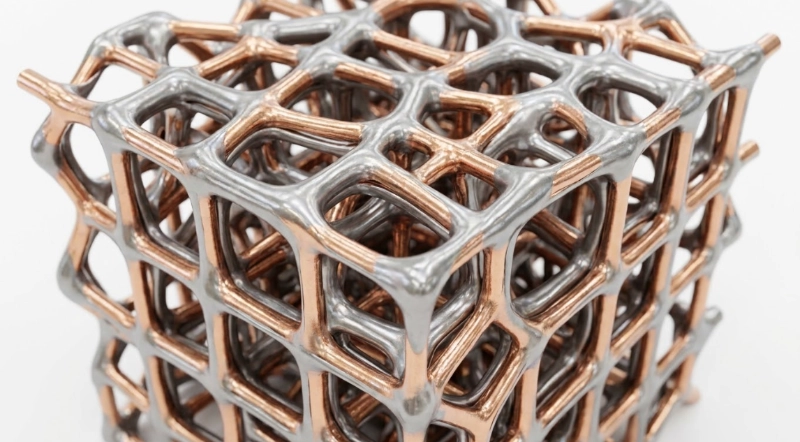
Rather than plating lithium onto a flat, two-dimensional copper foil, researchers are using three-dimensional porous scaffolds. Examples include copper foam, carbon nanotube networks, or graphene aerogels.
These 3D structures dramatically increase the electroactive surface area of the anode. By distributing the local current density over a much larger surface, the localized electric fields are minimized. This effectively prevents the formation of “hot spots” that drive dendritic growth, encouraging the lithium to plate smoothly and uniformly within the pores of the scaffold.
6. The Commercialization Horizon
The race to commercialize a viable lithium metal battery is a high-stakes competition involving global automotive giants, battery conglomerates, and deep-tech startups. The market potential is staggering: vehicles that can travel 600+ miles on a single charge, rapid charging times that rival gas-station fillups, and electric regional aviation.
However, moving from a coin-cell prototype in an academic cleanroom to a multi-megawatt roll-to-roll production line requires solving complex manufacturing equations. Any scaling strategy must address the fundamental battery design risk by proving that safety and cycle-life targets can be met under real-world operating conditions, including sub-zero temperatures, high vibrations, and variable discharge rates.
Furthermore, analyzing historical lithium metal battery issues shows that initial commercial deployments are likely to be niche, high-value applications where cost-per-kilowatt-hour is less sensitive than energy-to-weight ratios. High-end consumer electronics, defense systems, medical devices, and aerospace platforms will adopt these advanced batteries first, paving the way for the manufacturing scale needed to make them economically viable for mass-market electric vehicles.
Ultimately, the transition from conventional intercalation anodes to pure lithium metal is not a simple drop-in replacement. It is a fundamental paradigm shift that demands meticulous mechanical, chemical, and thermal engineering. Only through deep, interdisciplinary collaboration will the industry unlock the full potential of the “holy grail” of battery technology, safely and sustainably.
Soalan Lazim
Q1: Why is a lithium metal battery so much more energetic than a standard lithium-ion battery?
In a standard lithium-ion battery, the anode is mostly made of graphite, which acts as a heavy, bulky host framework. Six carbon atoms are required to hold onto a single lithium ion ($LiC_6$). A lithium metal anode, however, is made of 100% active, pure lithium without any host material. This hostless design eliminates dead weight and volume, allowing the cell to achieve up to double the volumetric and gravimetric energy density of conventional cells.
Q2: What is “dead lithium,” and how does it affect battery longevity?
“Dead lithium” refers to active metallic lithium that has become chemically and physically isolated from the battery’s electrical circuit. During the discharging (stripping) process, lithium may dissolve unevenly, leaving the tips of some plated structures disconnected from the copper current collector. Once disconnected, this lithium can no longer participate in chemical reactions, resulting in a permanent loss of battery capacity and a corresponding decrease in efficiency.
Q3: How do solid-state electrolytes help solve lithium metal battery issues?
Solid-state electrolytes replace flammable liquid organic solvents with solid ceramic, sulfide, or polymer membranes. These solid barriers serve a dual purpose: they are mechanically resilient, making it much more difficult for sharp lithium dendrites to penetrate and cause a short circuit, and they are chemically stable, preventing the continuous electrolyte consumption and aggressive gas generation that typically plague liquid-based lithium metal cells.