









Твердотельные батареи для робототехники: питание следующего поколения автономных систем
Release time: 2026-07-07
Оглавление
The robotics revolution is accelerating at an unprecedented pace. From autonomous mobile robots (AMRs) navigating complex warehouse floors to humanoid robots mimicking human movements, and ultra-precise surgical arms operating in sterile environments, the demands placed on robotic systems have never been higher. However, as mechanical designs, sensor suites, and artificial intelligence algorithms advance, they all hit a common, stubborn bottleneck: energy storage.
For decades, liquid-electrolyte lithium-ion batteries have been the default power source for mobile machinery. While they have successfully facilitated the early stages of mobile automation, their physical limitations regarding safety, energy density, operating temperature ranges, and charging speeds are becoming increasingly restrictive. To unlock the next era of autonomous performance, the industry requires a paradigm shift. This shift is arriving in the form of solid-state technology.
The Energy Bottleneck in Modern Robotics
Modern robots are complex, power-hungry machines. Unlike consumer electronics that experience predictable, low-drain usage patterns, a robot requires instantaneous bursts of high current to drive heavy actuators, maintain wireless communication, process computer vision data, and power onboard computing units simultaneously.
The Limitations of Liquid Electrolytes
Traditional lithium-ion packs rely on a volatile organic liquid electrolyte to transport lithium ions between the anode and cathode. While functional, this design introduces several critical liabilities for robotic applications:
- Vulnerability to Vibration: Robots are dynamic machines. Industrial arms experience constant acceleration and deceleration, while agricultural robots traverse uneven, rugged terrain. This continuous vibration puts mechanical stress on the internal structures of liquid-electrolyte cells, increasing the risk of internal short circuits.
- Thermal Management Overhead: Liquid batteries generate substantial heat under heavy loads. To prevent thermal runaway, manufacturers must install heavy active cooling systems, adding dead weight and reducing the overall payload capacity of the robot.
- Limited Lifespan: Continuous rapid charging degrades liquid electrolytes, leading to capacity fade. For enterprises operating 24/7 robotic fleets, frequent battery replacements drastically increase the total cost of ownership (TCO).
To overcome these constraints, developers are actively searching for an upgraded, ultra-reliable решение для роботов с аккумуляторными батареями that guarantees operational longevity, reduces maintenance intervals, and enhances overall safety.
Unpacking Solid-State Technology
At its core, a solid-state battery replaces the flammable liquid electrolyte of a conventional battery with a solid, non-flammable material. This solid electrolyte serves dual purposes: it acts as the medium for ionic transport and functions as the physical separator between the electrodes.
The Anatomy of Solid-State Architecture
Solid electrolytes can be synthesized from various material classes, each offering distinct advantages:
- Оксиды: Extremely stable, highly resistant to dendrite penetration, and exceptionally safe, though brittle.
- Сульфиды: Offer the highest ionic conductivity at room temperature, making them excellent for high-drain applications, but require careful handling during manufacturing.
- Полимеры: Easier to manufacture using existing roll-to-roll processes and highly flexible, though they typically require elevated operating temperatures to achieve optimal conductivity.
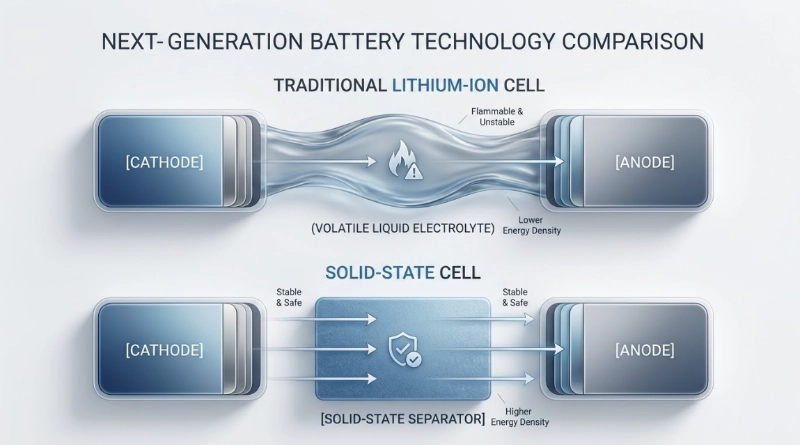
By eliminating the liquid phase, engineers can completely rethink the anode. Instead of using graphite to house lithium ions, solid-state designs can utilize pure lithium metal. This change drastically reduces the anode’s physical volume while exponentially increasing the charge storage capability, paving the way for a highly optimized твердотельная батарея для робототехники that can deliver extended operational runtimes without adding physical bulk.
Comparative Analysis: Powering the Future of Automation
To understand where solid-state technology fits in the broader landscape of robotic energy, we must compare it with existing and emerging alternatives.
| Параметр | Liquid Lithium-Ion | Hydrogen Fuel Cells | Твердотельная технология |
|---|---|---|---|
| Объемная плотность энергии | Moderate (~650 Wh/L) | Low (requires bulky tanks) | Extremely High (up to 1,000+ Wh/L) |
| Профиль безопасности | Flammable, risk of thermal runaway | High-pressure risk, gas leaks | Inherently non-flammable, stable |
| Maintenance & Longevity | Moderate (500–1,500 cycles) | Complex mechanical systems | Exceptional (often 5,000+ cycles) |
| Environmental Resilience | Плохо переносит сильный холод/жару. | Vulnerable to system freezing | Outstanding thermal stability |
| Charging Speeds | 1 to 3 hours (to avoid damage) | Fast refueling (minutes) | Ultra-fast (under 15 minutes) |
As shown in the comparison, while hydrogen fuel cells offer rapid replenishment, their structural complexity and spatial requirements make them impractical for compact or dexterous robotic designs. Solid-state technology emerges as the most balanced, safe, and energy-dense alternative, establishing itself as the premier твердотельная батарея для робототехники on the horizon.
Key Advantages: Performance, Safety, and Longevity
Transitioning to solid-state chemistry solves the fundamental engineering trade-offs that have plagued roboticists for years: choosing between power, operating life, and safety.
1. Eliminating the Thermal Runaway Risk
Safety is paramount, particularly for robots that interact closely with humans, such as domestic helper bots, surgical instruments, and automated guided vehicles (AGVs) in busy fulfillment centers. Conventional batteries are susceptible to “dendrites”—tiny, needle-like lithium crystals that can grow through the liquid separator over multiple charge cycles, causing a catastrophic internal short circuit.
The rigid nature of a solid-state electrolyte physically blocks dendrite propagation. Even if a solid-state cell is punctured, crushed, or subjected to extreme external heat, it will not catch fire or explode. This unmatched safety profile allows developers to design lighter structural enclosures around the battery pack, redirecting that saved weight toward higher-payload equipment.
2. High-C Discharge and Charge Rates
Robots do not pull energy at a constant rate. An AMR climbing a steep ramp or a robotic arm lifting a heavy component requires a sudden, massive surge of power. Delivering this surge requires a аккумулятор высокой плотности мощности that can discharge rapidly without suffering internal degradation.
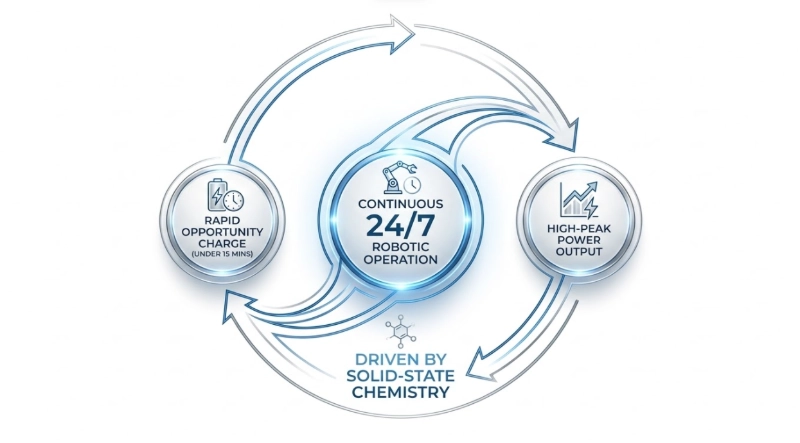
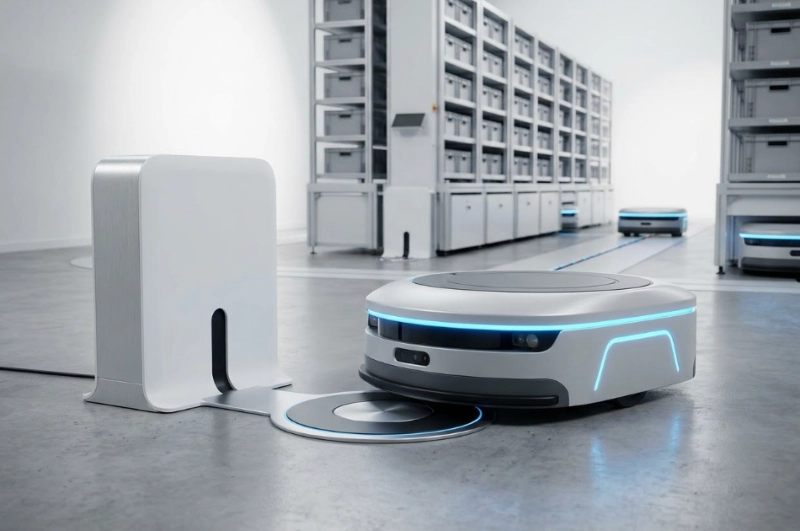
Solid-state cells facilitate efficient, high-speed ion transport, enabling the battery to supply sustained peak currents. Conversely, this same rapid transport allows for accelerated recharging. Minimizing charge times from hours to minutes means that industrial robots can utilize brief “opportunity charging” windows (e.g., while waiting at a loading dock) to maintain continuous 24/7 operations, maximizing warehouse throughput.
3. Unrivaled Lifespan and Reduced TCO
Industrial robots represent a significant capital investment. When a robot is sidelined for battery maintenance or replacement, productivity drops. Because solid-state electrolytes do not degrade or form resistive solid-electrolyte interphase (SEI) layers in the same manner as liquids, they boast a significantly longer cycle life. A solid-state pack can easily outlast the mechanical components of the robot it powers, eliminating the logistical and financial headache of mid-lifecycle battery replacements.
Driving Applications Across Robotic Domains
The unique performance characteristics of solid-state systems are set to redefine what robots can achieve across various fields.
Humanoid and Bipedal Robots
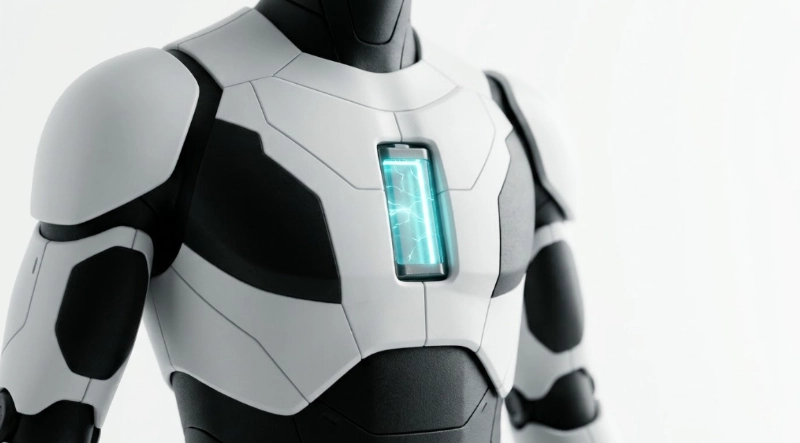
Humanoid robots are arguably the most demanding application for any battery. They must carry their own weight, maintain balance using dozens of high-torque actuators, process complex environmental data, and walk naturally. Adding heavy battery packs to a humanoid robot severely limits its agility and balance. By utilizing a аккумулятор высокой плотности мощности built with solid-state chemistry, engineers can place a high-capacity energy reserve directly in the robot’s torso without disrupting its center of gravity or adding excessive weight.
Medical and Surgical Robotics
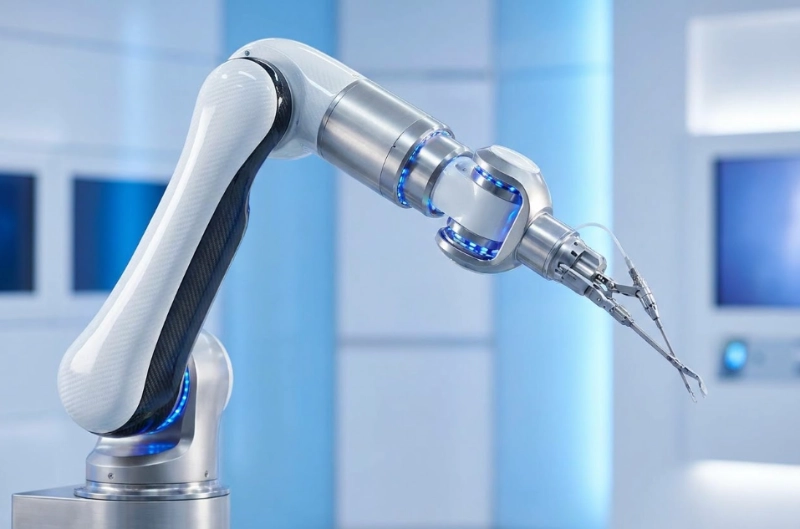
In the healthcare sector, failure is not an option. Surgical robots require absolute electrical stability and zero risk of chemical leakage. Solid-state packs provide an incredibly stable voltage curve, preventing sudden power drops that could disrupt critical procedures. Furthermore, the absence of toxic liquids ensures that even in the highly unlikely event of mechanical failure, there is zero risk of hazardous chemical contamination within sterile operating rooms.
Logistics and Last-Mile Delivery
E-commerce giants rely on automated warehouses where hundreds of AGVs run simultaneously. Upgrading these fleets with a next-generation решение для роботов с аккумуляторными батареями dramatically optimizes fleet logistics. Robots can operate with smaller, lighter battery packs—which increases their carrying capacity—and recharge almost instantly during scheduled brief stops, reducing the total fleet size needed to maintain continuous operations.
Overcoming the Path to Commercialization
Despite its immense promise, the widespread adoption of solid-state technology across the robotics industry is not without challenges. Currently, the primary hurdles lie in manufacturing scalability and cost.
Scaling Up Production
Most battery manufacturing infrastructure worldwide is optimized for wet, liquid-electrolyte cells. Transitioning to solid-state production requires specialized, moisture-free environments (dry rooms) and highly precise equipment to ensure perfect contact between the solid layers. Even minor microscopic gaps between the solid electrolyte and the electrodes can create high interfacial resistance, severely hindering ion flow and diminishing performance.
Инновации в материаловедении
Researchers are actively developing hybrid and semi-solid-state solutions as a bridge to full commercialization. These intermediate steps involve adding a very small amount of liquid or gel polymer to wet the interfaces, dramatically lowering manufacturing complexity while retaining up to 80% of the safety and energy benefits of a pure solid-state system. As manufacturing techniques mature and raw material supply chains for solid-state ceramics and sulfides stabilize, production costs are projected to fall rapidly, making solid-state solutions highly competitive with traditional premium lithium-ion packs.
The Road Ahead for Autonomous Power
We are standing on the brink of an energy revolution. As artificial intelligence advances, robots are transforming from pre-programmed factory tools into highly adaptable, autonomous agents capable of navigating and interacting with our world. However, these intelligent machines cannot reach their full potential if they remain tethered to outdated, heavy, and potentially volatile power sources.
Solid-state batteries represent the missing puzzle piece for the robotics industry. By combining unparalleled safety, remarkable energy density, and rapid-charge capabilities, they provide the robust foundation required to let robots run further, lift heavier, and operate safer than ever before. For companies designing, deploying, or managing autonomous fleets, integrating solid-state technology is no longer a distant luxury—it is the defining competitive advantage of the coming decade.
Часто задаваемые вопросы
Why are solid-state batteries safer for household and medical robots than traditional lithium-ion batteries?
Traditional lithium-ion batteries use a highly flammable liquid organic solvent as their electrolyte. If punctured, overheated, or short-circuited, these batteries can experience thermal runaway, leading to intense fires and toxic gas releases. Solid-state batteries replace this liquid with a non-flammable solid material (such as ceramic, oxide, or polymer). This solid separator is chemically stable and physically blocks the formation of dendrites (microscopic crystalline fibers that cause internal short circuits). As a result, even under extreme mechanical stress or damage, a solid-state battery will not ignite, making it incredibly safe for robots operating in close proximity to humans, medical patients, or fragile household environments.
How do solid-state batteries improve the runtime and payload capacity of autonomous mobile robots (AMRs)?
Payload capacity and runtime are closely linked to a robot’s overall weight. Because solid-state batteries feature a significantly higher energy density (both gravimetric and volumetric) than conventional liquid-electrolyte cells, they can store up to twice as much energy in the same physical footprint and at a fraction of the weight. This weight reduction directly translates to a lighter robot structure. By saving weight on the battery pack, the robot requires less energy to move itself, allowing it to carry heavier payloads, operate longer on a single charge, and utilize smaller, more compact chassis designs.
When can we expect solid-state batteries to be commercially viable and widely adopted in the robotics industry?
While full-scale commercialization for heavy consumer automotive applications is expected around the late 2020s, the robotics sector is already seeing early adoption. Because robotic systems are highly specialized, high-value assets, they can absorb the premium costs of early-stage solid-state technology much better than mass-market passenger cars. Many high-end robotics developers are currently testing semi-solid-state and early-generation solid-state packs in surgical, humanoid, and defense robots. We anticipate a significant ramp-up in commercial viability and widespread industrial adoption in logistics and manufacturing fleets over the next three to five years as manufacturing techniques scale and costs decrease.