









การเลือกแบตเตอรี่สำหรับรถยนต์ไฟฟ้า
Release time: 2026-07-23
สารบัญ
The global transition toward sustainable transportation is accelerating at an unprecedented pace. At the very center of this automotive revolution lies a critical component that dictates performance, safety, and consumer adoption. The heart of any modern zero-emission car is the electric vehicle battery. Over the past decade, advancements in energy storage have transformed niche electric mobility into a mainstream reality. However, as consumers demand longer driving ranges, faster charging times, and absolute safety, the automotive industry is looking beyond current technological limitations. The dawn of the solid-state era is upon us, promising to redefine the parameters of what electric cars can achieve.
In this comprehensive guide, we will explore the evolution of automotive power sources, dissect the mechanics of next-generation chemistries, and explain why the industry is aggressively pivoting toward solid-state architectures.
The Evolution of Automotive Energy Storage
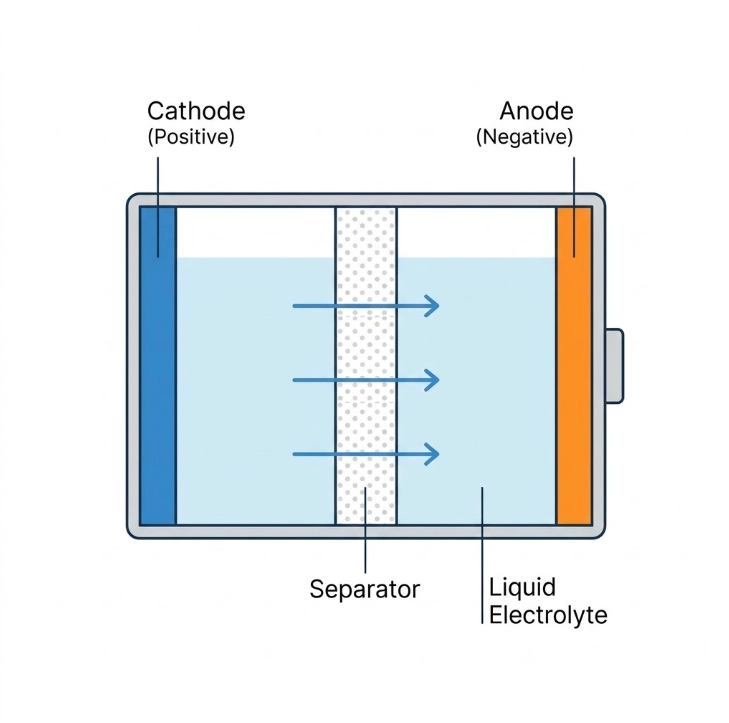
To understand the magnitude of the upcoming technological shift, one must first examine the current landscape. Today’s electric cars are predominantly powered by lithium-ion (Li-ion) technology. These power cells rely on a liquid electrolyte to facilitate the movement of lithium ions between the cathode and the anode during charging and discharging cycles.
While lithium-ion technology has served the industry well, enabling ranges of 300 to 400 miles on a single charge in premium models, it is approaching its theoretical chemical limits. The liquid electrolyte within these cells presents several inherent challenges:
- ความไวไฟ: Liquid electrolytes contain volatile organic solvents that can ignite if the cell is punctured, crushed, or overheats, leading to thermal runaway.
- Energy Density Caps: There is a physical limit to how much energy can be packed into a liquid-based cell without compromising safety or longevity.
- Degradation: Liquid electrolytes break down over time, especially under fast-charging conditions or in extreme temperatures, leading to a loss of total capacity.
Understanding the lifecycle and limitations of an EV battery is crucial for engineers striving to build the next generation of transportation. The quest for a safer, more energy-dense alternative has led researchers to eliminate the liquid component entirely.
Unveiling the Next Generation: What is a Solid-State Architecture?
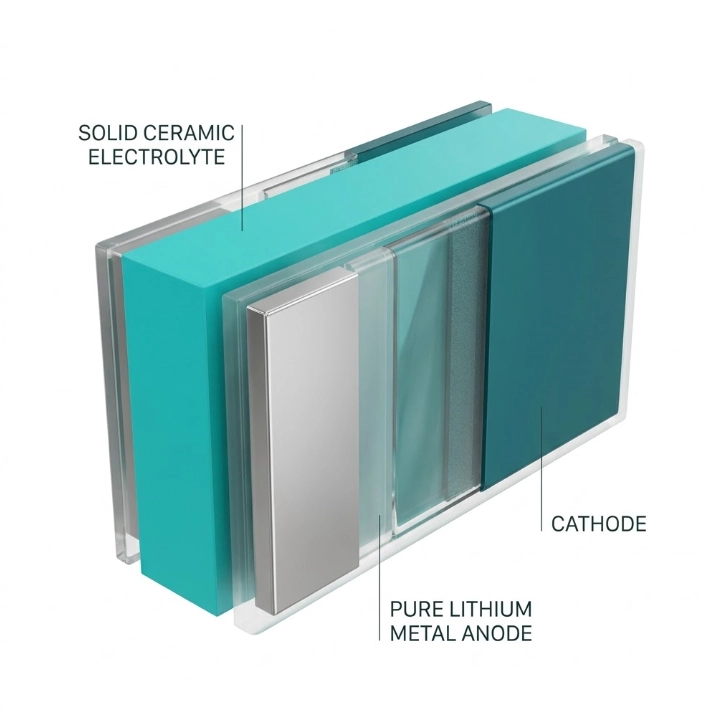
As the name implies, this revolutionary technology replaces the liquid or polymer gel electrolyte found in conventional cells with a solid, conductive material. This fundamental architectural change might sound simple, but it represents a monumental leap in chemistry and materials science.
Developing a reliable solid state battery for EV applications is considered the “holy grail” of the automotive sector. By utilizing solid materials such as advanced ceramics, glass, or solid sulfides to transport ions, engineers can fundamentally alter the internal structure of the cell.
The Mechanism of Action
In a traditional cell, a porous separator is required to keep the positive and negative electrodes apart while the liquid electrolyte sloshes around them. In a solid-state configuration, the solid electrolyte itself acts as the separator. This structural integrity prevents the electrodes from touching (which would cause a short circuit) while still allowing lithium ions to flow freely.
Furthermore, the solid nature of the electrolyte allows for the use of a pure lithium metal anode. Conventional lithium-ion cells typically use graphite for the anode because pure lithium metal interacts poorly with liquid electrolytes, forming dangerous “dendrites”—spiky microscopic structures that can pierce the separator and cause short circuits. Solid electrolytes are physically dense enough to suppress dendrite growth, unlocking the use of lithium metal, which has a significantly higher energy capacity than graphite.
Technical Metrics: A Comprehensive Comparison
To truly grasp the generational leap, we must look at the data. A common EV battery comparison often pits traditional Lithium-Ion (NMC/NCA), Lithium Iron Phosphate (LFP), and emerging Solid-State technologies against one another.
Below is a detailed breakdown of how these technologies stack up across the metrics that matter most to consumers and manufacturers.
Automotive Energy Storage Comparison Table
| Metric | Traditional Lithium-Ion (NMC/LFP) | เทคโนโลยีโซลิดสเตท | Advantage / Implication for Drivers |
|---|---|---|---|
| สถานะอิเล็กโทรไลต์ | Liquid / Gel | Solid (Ceramic, Glass, Sulfide) | Fundamental structural difference. |
| ความหนาแน่นของพลังงาน | 200 – 300 วัตต์-กิโลกรัม | 400 – 500+ วัตต์-กิโลกรัม | Solid-state offers up to double the range in the same physical space. |
| ข้อมูลด้านความปลอดภัย | Moderate (Flammable liquid) | Excellent (Non-flammable) | Eradicates the risk of thermal runaway and battery fires. |
| ความเร็วในการชาร์จ | 20 to 40 minutes (10%-80%) | 10 to 15 minutes (10%-80%) | Solid-state handles higher currents without overheating, mimicking gas station fill-up times. |
| ช่วงอายุขัย / รอบ | 1,000 – 2,000 cycles | 5,000 – 10,000+ cycles | The vehicle will likely wear out long before the solid-state power unit degrades. |
| Temperature Tolerance | Poor in extreme cold/heat | Highly resilient | Minimal range loss in freezing winter conditions. |
| ต้นทุนปัจจุบัน | ~130 per kWh (Mass produced) | High (Currently in prototype/pilot phase) | Solid-state is currently expensive but expected to drop with scaled manufacturing. |
Furthermore, a comprehensive EV battery comparison reveals that while LFP (Lithium Iron Phosphate) is gaining market share due to its low cost and durability, it cannot compete with the sheer energy density and lightweight profile that solid-state technology promises.
The Three Pillars of Solid Electrolytes

There are three primary material pathways that researchers are currently pursuing to create the perfect solid electrolyte. Each has its own distinct advantages and engineering hurdles.
1. Sulfide-Based Electrolytes
Sulfide solid electrolytes are currently the frontrunners for automotive applications. They offer exceptionally high ionic conductivity, meaning lithium ions can move through them almost as fast as they do through liquids. This is crucial for rapid charging and discharging. Companies like Toyota are heavily investing in sulfide-based technology. However, they are highly sensitive to moisture; exposing a sulfide electrolyte to ambient humidity can produce toxic hydrogen sulfide gas, requiring manufacturing to take place in ultra-dry cleanrooms.
2. Oxide-Based (Ceramic) Electrolytes
Oxides, such as LLZO (Lithium Lanthanum Zirconium Oxide), offer unparalleled chemical and thermal stability. They are virtually indestructible under normal operating conditions and are completely safe. The challenge with oxide-based electrolytes is their brittleness. Cars vibrate, hit potholes, and experience physical stress. A rigid ceramic electrolyte can crack under mechanical stress, leading to a failure of the cell. Additionally, achieving good contact between a solid ceramic and the solid electrodes (interfacial resistance) is incredibly difficult.
3. สารอิเล็กโทรไลต์โพลิเมอร์แข็ง (SPE)
Polymers are flexible, easy to manufacture, and scale well using existing roll-to-roll manufacturing techniques. They have been used in niche applications (like buses in Europe) for years. However, standard polymer electrolytes only conduct ions effectively at high temperatures (often above 60°C or 140°F). Therefore, they currently require internal heating systems, making them less ideal for standard passenger cars unless massive breakthroughs in room-temperature polymer conductivity are achieved.
Why This is the Ultimate Game Changer for Drivers
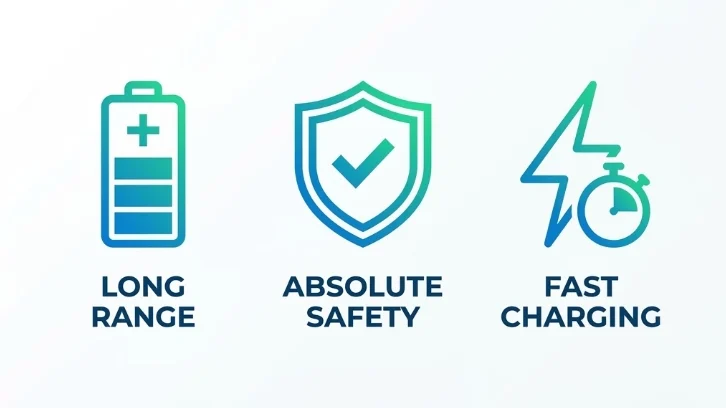
The shift away from liquid chemistries is not just an academic exercise; it translates into massive, tangible benefits for the end user. The ultimate success of the solid state battery for EV market depends on delivering on three core consumer promises: banishing range anxiety, ensuring absolute safety, and enabling ultra-fast charging.
Shattering the Range Anxiety Myth
Because solid electrolytes allow for the use of a pure lithium metal anode, the energy density of the cell skyrockets. In practical terms, an automotive manufacturer can take the physical footprint of a current 300-mile battery pack and replace it with a solid-state pack that delivers 500 to 600 miles of range. Alternatively, automakers building smaller urban cars can cut the battery size and weight in half while maintaining a 300-mile range, resulting in lighter, more efficient, and better-handling vehicles.
Eradicating Thermal Runaway
Safety remains a psychological barrier for some potential buyers. High-profile, albeit rare, incidents of lithium-ion fires are notoriously difficult for firefighters to extinguish. By removing the combustible liquid solvent, solid-state cells eliminate the fuel source for these fires. Even if a vehicle is involved in a catastrophic collision that punctures the battery pack, a solid-state cell will simply cease to function rather than combust.
Gas Station-Equivalent Charging Times
Fast charging a traditional liquid cell generates immense heat and accelerates the degradation of the internal components. Solid electrolytes are highly thermally stable. This means they can accept massive influxes of electrical current without overheating or suffering microscopic damage. Automakers project that solid-state packs will comfortably charge from 10% to 80% in roughly 10 minutes, mirroring the time it takes to pump a tank of gasoline and grab a coffee.
การเอาชนะอุปสรรคทางการค้า
If the technology is so superior, why aren’t these vehicles in showrooms today? The transition from successful laboratory prototypes to mass-market manufacturing is fraught with immense engineering and economic challenges.
The Interfacial Resistance Problem
Imagine placing two solid bricks on top of each other. No matter how smooth they look, at a microscopic level, there are gaps between them. In a battery, the solid electrolyte must maintain perfect, microscopic contact with the solid electrodes for ions to flow. As the battery charges and discharges, the electrodes expand and contract, which can cause them to pull away from the rigid solid electrolyte. Managing this “interfacial contact” over tens of thousands of miles of driving is a major engineering hurdle.
ความสามารถในการขยายขนาดการผลิต
The global supply chain and manufacturing infrastructure for liquid lithium-ion cells are deeply established, representing hundreds of billions of dollars in sunk costs. Solid-state cells require entirely new manufacturing processes, novel machinery, and extreme cleanroom environments (especially for sulfide variants). Scaling these unproven manufacturing techniques to produce millions of cells with zero defects is currently the biggest bottleneck.
Cost Parity
In its nascent stage, the next generation EV battery is prohibitively expensive to produce. The raw materials (like highly refined lithium metal) and the slow, precise manufacturing techniques mean that initial solid-state packs will likely be reserved for ultra-luxury or high-performance vehicles. Economies of scale will eventually drive the price down, but reaching cost parity with deeply entrenched liquid lithium-ion technology will take years of aggressive scaling.
Environmental Sustainability and Lifecycle
The environmental footprint of manufacturing energy storage systems is a vital consideration. Proper recycling of an electric vehicle battery will dictate the long-term sustainability of the automotive industry.
Fortunately, solid-state technology presents unique opportunities for recycling. Without the hazardous, toxic liquid solvents to deal with, the disassembly and material recovery processes could potentially be safer and more straightforward. Direct recycling methods—where the cathode structure is preserved and revived rather than melted down to basic elements—may be highly effective for solid-state architectures. Furthermore, because these cells are projected to last up to three times longer than current iterations, the overall volume of battery waste generated per decade will significantly decrease.
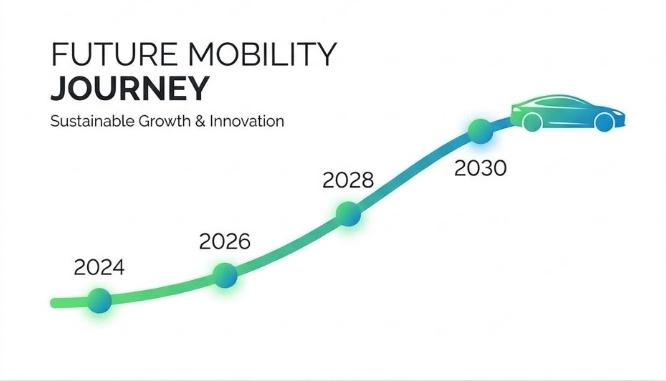
The Timeline to Mass Market Adoption
When can consumers expect to walk into a dealership and purchase a vehicle with this technology? The timeline is coming into sharper focus.
Currently, several major automakers and specialized startups (such as QuantumScape, Solid Power, and ProLogium) are in the “A-sample” and “B-sample” testing phases. This means they are producing functional cells and providing them to automotive partners for real-world testing.
- 2024 – 2025: Small-scale pilot production lines become operational. Technology is proven in controlled fleets.
- 2026 – 2028: Introduction of the first commercial vehicles featuring solid-state tech. These will likely be high-end, low-volume luxury sedans or hypercars due to the initial cost premium.
- ปี 2030 และหลังจากนั้น: As manufacturing bottlenecks are solved and economies of scale are realized, the technology will cascade down into mid-market commuter vehicles, sparking a massive wave of global adoption.
บทสรุป
The automotive industry is standing on the precipice of its most significant technological leap since the transition from the horse and buggy to the internal combustion engine. The replacement of volatile liquid electrolytes with stable, energy-dense solid architectures will fundamentally alter how we interact with electric vehicles.
By delivering on the promises of ultra-fast charging, doubled driving ranges, and unparalleled safety, solid-state technology will eradicate the remaining consumer hesitations regarding electric mobility. While manufacturing and cost challenges remain, the sheer weight of global investment guarantees that these hurdles will be overcome. The era of the แบตเตอรี่โซลิดสเตท is not just a theoretical concept; it is an impending reality that will power the future of transportation.
คำถามที่พบบ่อย
How long does a solid-state unit take to charge compared to traditional ones?
Traditional liquid lithium-ion packs typically take 20 to 40 minutes to charge from 10% to 80% at a DC fast charging station. Because solid-state cells have much higher thermal stability and can accept electrical current without degrading, they are projected to complete that same 10% to 80% charge in just 10 to 15 minutes, making road trips much more convenient.
Will solid-state technology make electric cars cheaper?
Initially, no. When they first arrive on the market (expected around 2026-2028), the high cost of novel manufacturing will make them more expensive, likely limiting them to luxury vehicles. However, because they require less cooling infrastructure and can pack more energy into fewer raw materials, economies of scale are expected to eventually make them cheaper than current batteries by the 2030s.
Are solid-state units affected by cold weather range loss?
One of the biggest frustrations with current electric cars is that their liquid electrolytes become sluggish in freezing temperatures, leading to a significant loss of driving range in the winter. Solid electrolytes are highly resilient to temperature extremes. Therefore, vehicles equipped with this new technology will experience minimal range degradation, performing reliably whether in freezing winters or scorching summers.