









แบตเตอรี่โซลิดสเตทเทียบกับแบตเตอรี่ลิเธียมไอออน
วันวางจำหน่าย: 12 กรกฎาคม 2026
สารบัญ
The global transition toward a fully electrified future hinges on one critical technological pillar: energy storage. From the smartphones in our pockets to the electric vehicles (EVs) rapidly filling our highways, the demand for safer, lighter, and more powerful energy reserves has never been higher. For decades, the industry has relied heavily on traditional liquid-based chemical compositions to power the modern world. However, as technological demands outpace the physical limitations of current power cells, a paradigm shift is occurring. At the center of this engineering revolution is the pivotal solid-state battery vs lithium-ion battery debate. Understanding the distinct differences, advantages, and limitations of these two paradigms is essential for industry professionals, investors, and tech enthusiasts alike. This comprehensive guide will dissect the underlying chemistries, evaluate performance metrics, and forecast the commercial trajectory of next-generation power systems.
1. The Anatomy of Modern Energy Storage Systems
To truly grasp the magnitude of the upcoming transition in power cell technology, one must first understand the fundamental architecture of how chemical energy is converted into electrical energy. At their core, almost all modern rechargeable power cells consist of three primary components: an anode (the negative electrode), a cathode (the positive electrode), and an electrolyte.
When a device draws power, positively charged ions travel from the anode to the cathode through the electrolyte, while electrons are forced to travel through an external circuit, providing the electrical current that powers our devices. When the device is plugged in to recharge, this process is reversed, forcing the ions back to the anode.
Additionally, a separator—a porous membrane—is placed between the anode and the cathode. This component is absolutely crucial in conventional designs because it prevents the two electrodes from touching, which would cause a catastrophic short circuit, while still allowing the microscopic ions to pass through the liquid medium. The efficiency, safety, and overall capacity of a power unit are heavily dictated by the specific materials used for these three foundational pillars.
2. Deep Dive: The Mechanics of Liquid Electrolyte Systems
Since their commercial debut by Sony in 1991, conventional liquid-electrolyte cells have completely revolutionized the consumer electronics market. They offer a relatively high energy density (the amount of energy stored for a given weight or volume) and lack the severe “memory effect” that plagued older technologies like nickel-cadmium.
In these traditional units, the anode is typically made of graphite, while the cathode comprises various metal oxides (such as lithium cobalt oxide or lithium iron phosphate). The electrolyte linking them is a liquid organic solvent infused with conductive salts. This liquid acts as a highly efficient highway for ions to travel back and forth during charge and discharge cycles.
The Limitations of Liquid Systems
While revolutionary, these liquid-based accumulators have physical and chemical ceilings that engineers are struggling to break through.
- Thermal Runaway and Safety: The liquid organic solvents used in standard cells are highly flammable. If the cell is punctured, overcharged, or subjected to extreme heat, the separator can fail. This leads to an internal short circuit, generating massive heat and potentially triggering a dangerous chain reaction known as “thermal runaway,” resulting in fires or explosions.
- Energy Density Plateau: We are rapidly approaching the theoretical maximum energy density of standard liquid designs. Adding more reactive materials to increase capacity often compromises the structural integrity and safety of the unit.
- Dendrite Formation: Over time, especially during rapid charging, microscopic, needle-like structures called dendrites can grow from the anode. In liquid systems, these dendrites can pierce the plastic separator, causing a short circuit.
- ความไวต่ออุณหภูมิ: Liquid electrolytes become sluggish in freezing temperatures, drastically reducing an electric vehicle’s range in winter. Conversely, excessive heat accelerates their chemical degradation.
3. The Architecture of Solid Electrolyte Systems
To overcome the inherent limitations of liquid solvents, researchers have focused on fundamentally altering the core architecture. The most promising breakthrough is the development of a cell that replaces the flammable liquid medium with a stable, solid conductive material. A true แบตเตอรี่โซลิดสเตท utilizes advanced ceramics, specialized glass, or complex solid polymers to facilitate the necessary ion movement between the anode and the cathode.
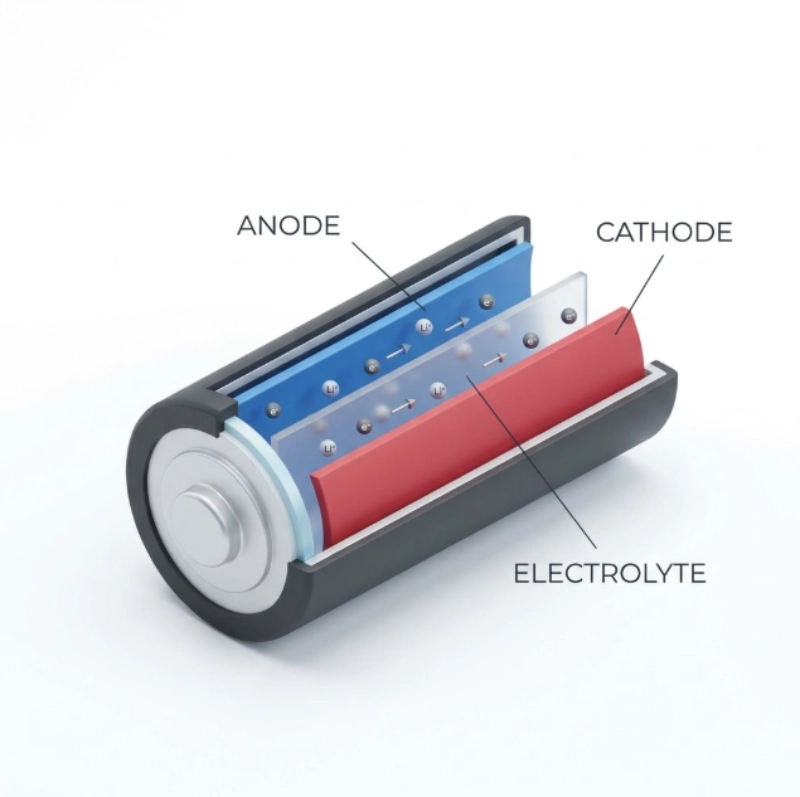
By transitioning to a solid medium, engineers can completely remove the liquid solvent and the porous plastic separator. The solid electrolyte itself acts as the barrier between the electrodes.
The Core Advantages of Solid Architecture
- Absolute Safety: The primary benefit is the elimination of flammable organic liquids. Solid ceramics and polymers are incredibly heat-resistant and structurally robust. Even if the unit is crushed, punctured, or exposed to high temperatures, the risk of a fiery thermal runaway is virtually eliminated.
- Unlocking the Lithium Metal Anode: Because the solid electrolyte acts as a physical wall, it significantly suppresses the growth of dendrites. This suppression allows manufacturers to replace the bulky graphite anode with a pure lithium metal anode. This single change drastically increases the amount of energy the cell can hold, potentially doubling the energy density of current market standards.
- การชาร์จที่รวดเร็วทันใจ: Solid electrolytes can be engineered to allow ions to move faster and more efficiently, especially at higher temperatures. Without the fear of dendrite-induced short circuits, these next-generation units can handle much higher charging currents, potentially reducing an EV’s recharge time from 40 minutes to under 15 minutes.
- อายุการใช้งานที่ยาวนานขึ้น: The chemical degradation that occurs in liquid systems is significantly minimized in solid structures. With fewer unwanted side reactions at the electrode interfaces, solid cells are projected to endure thousands more charge cycles before their capacity drops below acceptable levels.
4. Detailed Technical Matchup & Metrics
When evaluating the future of the electric vehicle and consumer tech markets, conducting a thorough การเปรียบเทียบแบตเตอรี่ reveals stark contrasts across several vital performance metrics. The industry evaluates these technologies based on five crucial pillars: Energy Density, Safety Profile, Charging Velocity, Cycle Life, and Manufacturing Economics.
Below is a structured analysis highlighting the performance differences between the current standard and the emerging solid technology.
| ตัวชี้วัดประสิทธิภาพ | Traditional Liquid Cells (Current Standard) | Solid Electrolyte Cells (Next-Generation) |
|---|---|---|
| Electrolyte Material | Flammable liquid organic solvent | Non-flammable solid (Ceramic, Glass, Polymer) |
| ความหนาแน่นพลังงานสูงสุด | ~250 – 300 Wh/kg (Approaching limit) | ~400 – 500+ Wh/kg (Significant growth potential) |
| Safety / Fire Risk | Moderate to High (Susceptible to thermal runaway) | Exceptionally Low (Inherently fire-resistant materials) |
| เวลาในการชาร์จเร็ว | 30 to 45 minutes (10% to 80% capacity) | 10 to 15 minutes (With reduced degradation) |
| Operating Lifespan | ~1,000 to 2,000 charge cycles | Projected 5,000+ charge cycles |
| Current Market Status | Mature, easily scalable, low production cost | Experimental/Early Commercial, high cost, difficult to scale |
| Temperature Range | Sensitive to extreme cold and extreme heat | Highly resilient to extreme temperature fluctuations |
Analyzing the Metrics
The data clearly illustrates that while liquid cells dominate due to their mature manufacturing ecosystem, they fall short in ultimate performance. The gravimetric energy density (Watt-hours per kilogram) is the most heavily scrutinized metric by automotive engineers. A higher Wh/kg ratio means a lighter vehicle that can travel further on a single charge. By surpassing the 400 Wh/kg threshold, solid cells could easily push standard EV ranges beyond the 600-mile mark, eliminating consumer “range anxiety” entirely. Furthermore, the robust nature of solid ceramics means complex cooling systems—currently required in all EVs to keep liquid cells from overheating—could be downsized or eliminated, saving even more weight and space.
5. Market Drivers: The Search for a Breakthrough
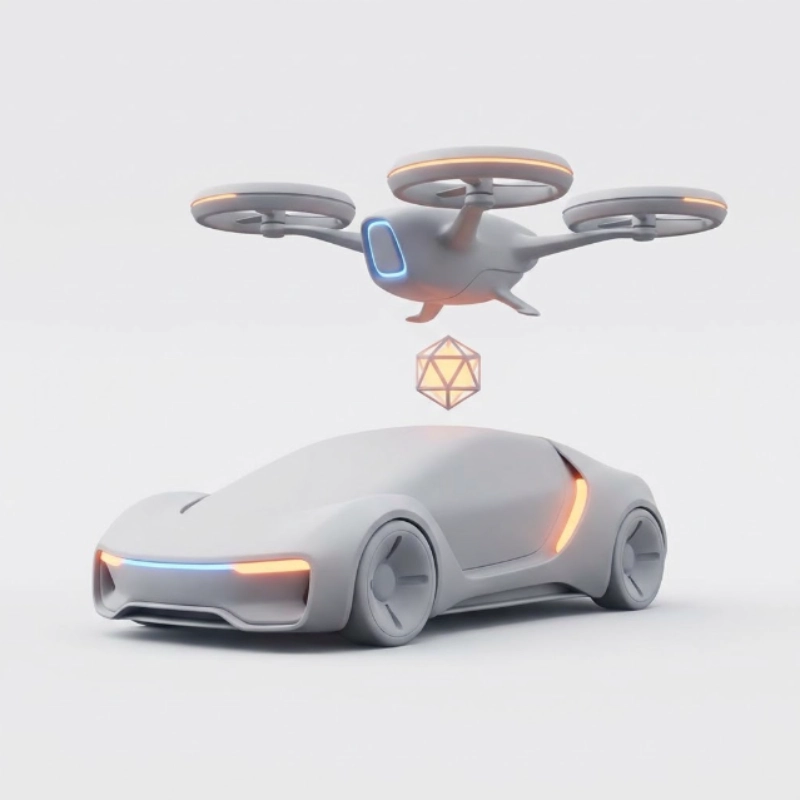
The automotive and aerospace sectors are experiencing unprecedented pressure to innovate. As automakers commit billions to phasing out internal combustion engines, they are hitting a wall regarding how much power they can safely pack into a vehicle’s chassis. Finding a viable lithium-ion alternative has become the ultimate priority for global tech giants and mobility startups alike.
รถยนต์ไฟฟ้า (EVs)
The mass adoption of EVs is currently hindered by three factors: range, charging time, and vehicle cost. While current technology has brought EVs into the mainstream, it cannot easily solve the needs of heavy-duty transport, such as electric semi-trucks, which require massive, impractically heavy power packs. Solid technology offers the precise combination of low weight and high capacity needed to electrify heavy haulers, buses, and construction equipment.
Aerospace and Aviation
Perhaps the most demanding industry looking for next-generation power is aerospace. Electric Vertical Takeoff and Landing (eVTOL) aircraft and electric commercial planes cannot get off the ground with traditional power storage; the energy-to-weight ratio is simply too low. The success of electric aviation is entirely dependent on the commercialization of ultra-lightweight, high-density power systems that only solid-state engineering can provide.
Consumer Electronics and Wearables
While EVs grab the headlines, the consumer tech market is quietly driving demand. Smartwatches, medical implants, and augmented reality (AR) glasses require tiny power sources that last all day and are completely safe to wear against the human body. The miniaturization capabilities of solid-state tech make it ideal for these intimate applications.
6. Overcoming Manufacturing and Commercialization Hurdles
Despite the overwhelming theoretical advantages, replacing the global standard is a monumental task. The industry faces several severe bottlenecks before solid cells can be mass-produced and integrated into everyday products.
- Interface Resistance: In a liquid cell, the liquid perfectly coats the electrodes, ensuring continuous contact. In a solid cell, keeping a rigid solid electrolyte in perfect, continuous contact with a solid electrode (especially as the electrode expands and contracts during charging) is incredibly difficult. This microscopic gap increases electrical resistance, hindering power delivery.
- ความซับซ้อนในการผลิต: The world has invested hundreds of billions of dollars into Gigafactories designed explicitly to pump highly sensitive liquids into cell casings. Solid materials require entirely different manufacturing processes, often involving extreme pressures or high-temperature sintering. Retrofitting existing production lines is proving technically challenging and financially staggering.
- Material Costs and Supply Chains: The specialized ceramics, sulfide-based glass, and pure lithium metals required for solid cells are currently produced in small batches. Creating a global supply chain capable of producing millions of tons of these novel materials will take at least a decade. Until economies of scale are reached, solid cells will remain prohibitively expensive, likely debuting first in luxury hypercars rather than budget-friendly sedans.
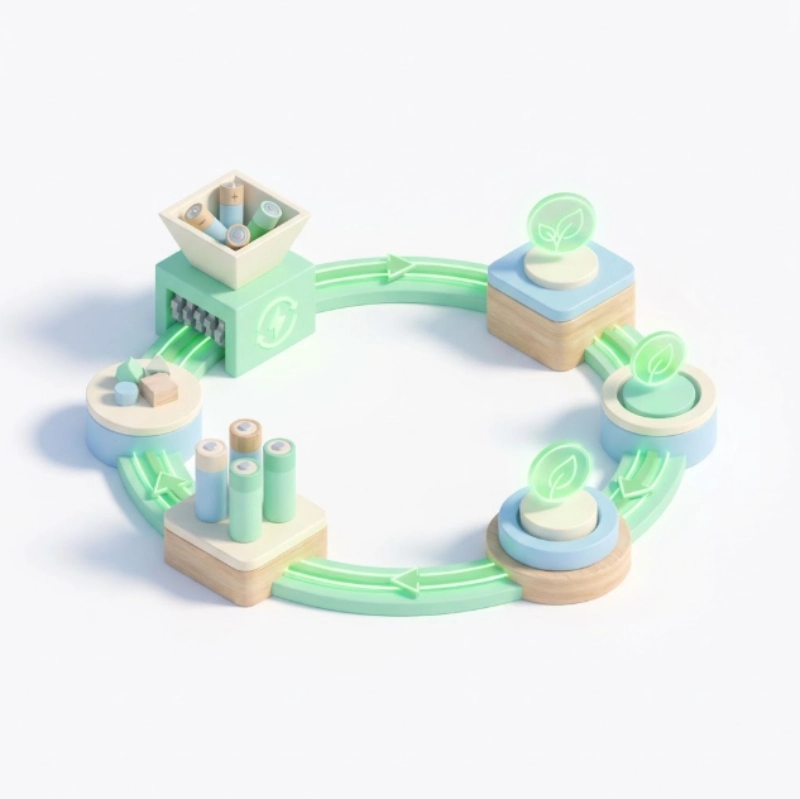
7. Sustainability, Recycling, and the Circular Economy
As we evaluate the environmental footprint of our electrified future, we must look beyond tailpipe emissions. The mining of raw materials like cobalt, nickel, and lithium poses significant ecological and geopolitical challenges.
Solid designs offer a mixed bag regarding sustainability. On the positive side, many advanced solid designs eliminate the need for cobalt—one of the most ethically and environmentally problematic metals to mine. Furthermore, because solid cells last significantly longer (potentially outlasting the vehicle itself), fewer units will need to be manufactured over time, reducing total raw material extraction.
However, recycling presents a new challenge. The recycling infrastructure currently being built globally is optimized to extract valuable metals from liquid-based cells. Solid ceramics and complex polymer electrolytes will require entirely new chemical and thermal recycling processes. If the industry does not simultaneously develop recycling methods alongside manufacturing techniques, we risk creating a new category of complex electronic waste.
8. บทสรุป
The transition toward next-generation energy storage is no longer a question of “if,” but “when.” While traditional liquid cells will continue to dominate the market for the remainder of this decade due to their proven reliability and low cost, they are fundamentally approaching their chemical limits. The ongoing evolution in the solid-state battery vs lithium-ion battery landscape represents one of the most important engineering challenges of the 21st century. By offering unparalleled safety, vastly superior energy density, and rapid recharge capabilities, solid electrolyte technology is poised to completely redefine electric mobility, unlock electric aviation, and secure a truly sustainable power grid.
คำถามที่พบบ่อย
1. Why is a แบตเตอรี่โซลิดสเตท considered safer than current market standards?
The primary safety advantage stems from the elimination of liquid organic electrolytes. Traditional cells use liquids that are highly volatile and flammable; if the cell is damaged or overheats, these liquids can ignite, causing thermal runaway. Solid-state units use highly stable ceramics, glass, or solid polymers as their electrolyte. These solid materials are naturally fire-resistant and structurally robust, meaning the power cell will not explode or catch fire even if it is physically crushed, punctured, or exposed to intense heat.
2. When will this lithium-ion alternative become affordable for everyday electric vehicles?
Currently, solid-state technology is in the late research and early pilot production phases. While tech giants and automakers plan to introduce these cells in low-volume, luxury electric vehicles around 2026-2028, widespread affordability will take longer. Industry analysts project that the manufacturing scale required to bring the cost down to parity with current traditional cells won’t be reached until the early 2030s. Overcoming factory retrofitting costs and establishing a massive supply chain for novel solid materials are the main factors delaying mass-market affordability.
3. In a strict การเปรียบเทียบแบตเตอรี่, which technology offers a longer overall lifespan?
Solid-state technology significantly outperforms traditional liquid cells in terms of lifespan and cycle life. In standard cells, the liquid electrolyte slowly degrades over time due to unwanted chemical side reactions, and dendrite growth physically damages the internal structure, usually limiting lifespan to 1,000-2,000 cycles. Because solid electrolytes block dendrite growth and limit these internal chemical degradations, they can endure thousands of additional charge and discharge cycles. A solid cell is projected to maintain its optimal capacity for well over 5,000 cycles, potentially outlasting the very vehicle it powers.