









Solid-State Battery vs Lithium Metal Battery
Release time: 2026-07-15
สารบัญ
The global transition toward electrification and renewable energy has created an unprecedented demand for advanced energy storage solutions. Traditional lithium-ion (Li-ion) technology, while revolutionary for its time, is rapidly approaching its theoretical limits in terms of energy density and safety. Driving the current industrial revolution is the quest for a superior next-gen battery chemistry that can power electric vehicles (EVs) for over 1,000 miles on a single charge and enable electric aviation. At the center of this high-stakes technological dialogue is the ultimate architectural showdown: the solid-state battery vs lithium metal debate.
Understanding the nuances, overlaps, and distinctions between these technologies is crucial for engineers, investors, and tech enthusiasts. This comprehensive guide will dissect the fundamental mechanics, performance metrics, manufacturing challenges, and commercial trajectories of these emerging powerhouses.
1. Deconstructing the Terminology
Before diving into the technical comparisons, it is essential to clarify what these terms actually mean, as they are often erroneously used interchangeably in mainstream media.
The Lithium-Metal Architecture
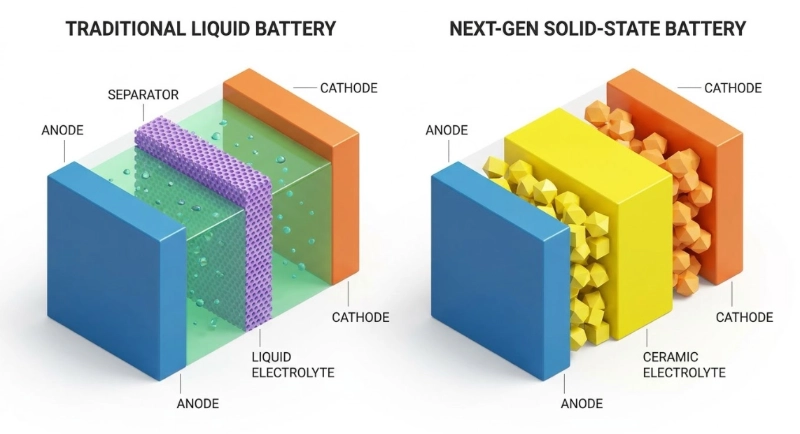
A standard Li-ion cell utilizes graphite or silicon-graphite composites as the anode (the negative electrode). A lithium-metal cell entirely replaces this heavy, bulky host material with a thin foil of pure lithium metal. Because pure lithium has an extremely high theoretical specific capacity (3,860 mAh/g) and the lowest negative electrochemical potential, utilizing it as an anode drastically reduces the weight and volume of the cell. However, this architecture traditionally still uses a highly flammable liquid electrolyte to shuttle ions back and forth.
The Solid-State Paradigm
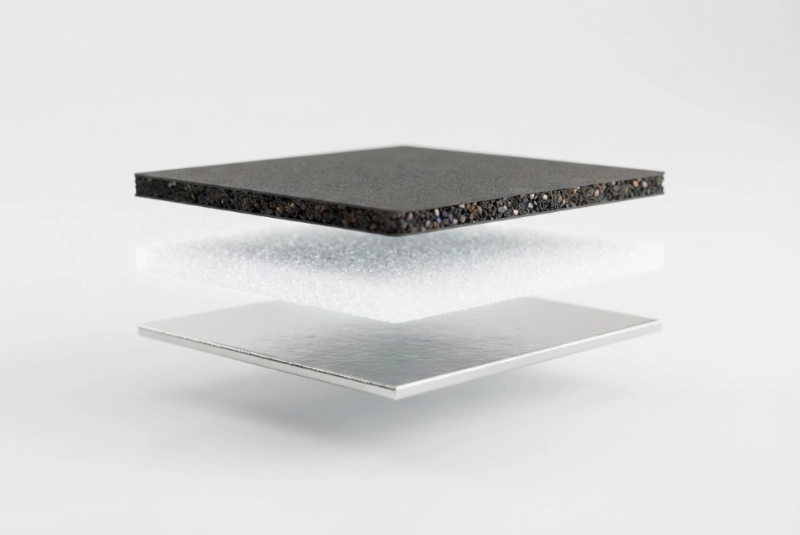
The term “solid-state” does not refer to the electrodes; rather, it refers strictly to the electrolyte. In conventional cells, a liquid organic solvent separates the cathode and anode. In เซลล์โซลิดสเตท, this liquid is replaced by a solid material—typically ceramics (like oxides or sulfides) or solid polymers. A true solid-state battery relies on these solid ionic conductors to transport lithium ions.
The confusion arises because the ultimate goal of the industry is to combine both: using a solid electrolyte to safely enable a pure lithium-metal anode. However, it is entirely possible to have a solid-state cell with a traditional graphite anode, or a liquid-based cell with a pure lithium anode.
2. The Core Challenge: Dendrites and Safety
To understand why the industry is shifting away from liquid electrolytes, we must examine the primary nemesis of high-energy storage: dendrites.
When a cell with a pure lithium anode is charged, lithium ions deposit back onto the anode surface. In a liquid electrolyte environment, this deposition is rarely perfectly smooth. Instead, microscopic, needle-like structures called dendrites begin to grow. Over multiple charge-discharge cycles, these dendrites can pierce the porous plastic separator dividing the anode and cathode. If a dendrite bridges the gap, it causes an internal short circuit. Combined with the highly volatile and flammable liquid organic electrolytes used today, this short circuit leads to a catastrophic event known as thermal runaway—the primary cause of EV fires.
Solid electrolytes are engineered to act as a physical and mechanical barrier. Materials like sulfide-based glasses or garnet-type ceramics possess high mechanical shear modulus, theoretically making them tough enough to suppress dendrite penetration. This mechanical suppression is the fundamental reason why solid electrolytes are seen as the key to unlocking the pure Li-metal anode safely.
3. Comparison
When conducting a thorough lithium metal battery comparison, evaluating how different internal architectures stack up against one another across key performance indicators is vital.
Energy Density (Gravimetric and Volumetric)
Energy density dictates how heavy and how large a pack must be to deliver a specific range or runtime.
- Liquid Li-Metal: Offers massive improvements in gravimetric energy density (Wh/kg) because the heavy graphite is removed. However, safety constraints limit its practical large-scale deployment.
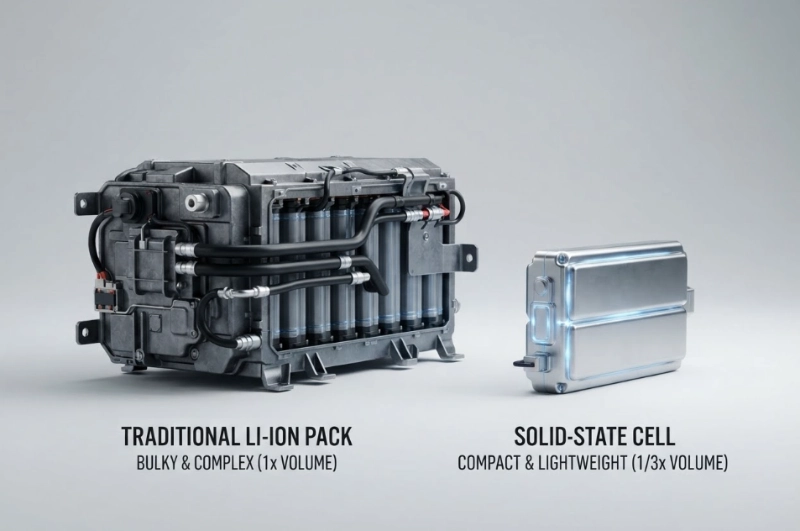
- Solid-State (with Li-Metal Anode): Delivers the holy grail of both gravimetric and volumetric energy density (Wh/L). Because solid electrolytes are non-flammable, heavy cooling systems and safety housings can be minimized at the pack level, drastically reducing overall weight and size.
Cycle Life and Longevity
- Liquid Li-Metal: Generally suffers from poor cycle life. The continuous formation and consumption of the Solid Electrolyte Interphase (SEI) layer depletes both the active lithium and the liquid electrolyte, causing rapid capacity fade.
- Solid-State Cells: Promise significantly longer cycle life. Solid electrolytes do not continuously react with the anode in the same parasitic manner as liquids. Once a stable interface is formed, the degradation curve flattens out, potentially allowing for thousands of deep cycles.
Charging Speeds (Fast-Charge Capabilities)
- Liquid Li-Metal: Fast charging exacerbates dendrite growth aggressively. Therefore, charge rates are usually artificially limited via Battery Management Systems (BMS) to preserve safety.
- Solid-State Cells: Current ceramic and sulfide solid electrolytes demonstrate exceptionally high ionic conductivity at room temperature—sometimes exceeding that of liquid equivalents. This enables ultra-fast charging (e.g., 0% to 80% in under 15 minutes) without the same risk of dendrite-induced short circuits.
4. Analytical Data: The Performance Matrix
To provide a clear visual of where the industry stands, the following table outlines the estimated theoretical and practical limits of these configurations.
| Metric / Attribute | Traditional Li-ion (Liquid) | Li-Metal (Liquid/Semi-Solid) | Solid-State (with Li-Metal Anode) |
|---|---|---|---|
| วัสดุแอโนด | Graphite / Silicon | Pure Li-Metal Foil | Pure Li-Metal Foil |
| ประเภทอิเล็กโทรไลต์ | Liquid Organic Solvent | Liquid / Gel Polymer | Ceramic, Sulfide, or Polymer |
| ความหนาแน่นเชิงน้ำหนัก | 250 – 300 Wh/kg | 350 – 450 Wh/kg | 400 – 500+ Wh/kg |
| ความหนาแน่นเชิงปริมาตร | ~600 Wh/L | ~800 Wh/L | 1000 – 1200+ Wh/L |
| Safety / Flammability | High Risk (Thermal Runaway) | Extremely High Risk | Low to Zero Risk (Non-flammable) |
| ความต้านทานเดนไดรต์ | ปานกลาง | ต่ำมาก | Extremely High |
| Operating Temp Range | Narrow (0°C to 45°C) | Narrow | Extremely Wide (-30°C to 100°C) |
5. Manufacturing and Commercialization Hurdles
Despite the overwhelming advantages on paper, transitioning these architectures from controlled R&D laboratories to gigawatt-hour scale commercial production involves massive engineering bottlenecks.
The Interface Contact Problem
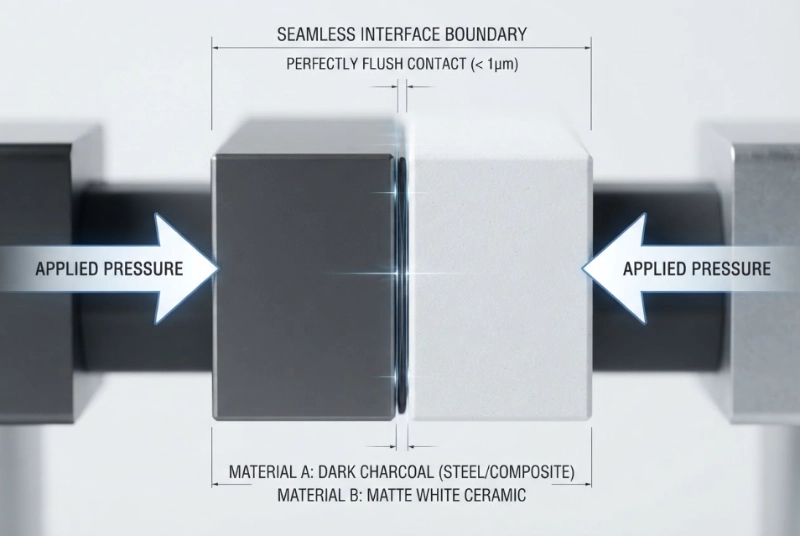
In a liquid system, the liquid solvent easily wets the porous electrodes, ensuring perfect ionic contact across all surfaces. In a solid-state system, joining two rigid solids (the solid electrolyte and the solid electrodes) creates microscopic air gaps. Ions cannot jump across empty space. To maintain adequate contact, many solid-state designs require massive external stack pressure—sometimes exceeding several atmospheres—which adds weight and complexity to the module design.
Processing Environments
Lithium metal is highly reactive. Exposing a naked foil of lithium to standard ambient humidity causes immediate oxidation and degradation. Manufacturing facilities for these advanced chemistries require extreme ultra-dry cleanrooms with dew points lower than -40°C. Furthermore, materials like sulfide-based solid electrolytes can react with trace amounts of moisture in the air to produce toxic hydrogen sulfide gas, requiring specialized containment and handling protocols that traditional gigafactories are not currently equipped for.
Cost of Raw Materials
The precursors for advanced solid electrolytes, particularly germanium or specialized sulfides, are incredibly expensive to synthesize. Furthermore, producing ultra-thin, high-purity lithium foils at a scale required for millions of EVs demands entirely new metallurgical supply chains. Until economies of scale are achieved, the initial cost per kWh of these advanced cells will be significantly higher than standard Li-ion.
6. Applications Driving the Revolution
Different industries have distinct pain points, dictating their urgency in adopting these new architectures.
The Automotive Sector (EVs): Range anxiety and charging times remain the final barriers to total internal combustion engine (ICE) phase-out. Solid-state designs promise to deliver EVs that can travel 600 to 800 miles on a charge, recharge in the time it takes to pump a tank of gas, and eliminate the risk of spontaneous vehicle fires. Major automotive OEMs have invested billions into startups specializing in this area.
Aerospace and eVTOLs: Electric Vertical Takeoff and Landing (eVTOL) aircraft and commercial drones are entirely constrained by battery weight. A standard Li-ion pack is simply too heavy to enable long-distance electric flight. The massive leap in gravimetric density offered by Li-metal architectures is not just an upgrade for aerospace—it is an absolute prerequisite for the industry to exist.
Consumer Electronics and Wearables: As smartphones become more powerful and augmented reality (AR) glasses demand massive processing power in a tiny form factor, volumetric energy density becomes critical. Solid electrolytes allow device manufacturers to pack 50% more energy into the exact same physical space, or maintain current battery lives while shrinking the device thickness significantly.
7. Future Outlook: The Road Ahead
The timeline for mass commercialization is a topic of intense debate among industry analysts. We are currently seeing a phased approach. Semi-solid solutions—which use a small amount of liquid gel or specialized coatings combined with advanced anodes—are already making their way into premium niche markets and high-end drones.
However, achieving an automotive-grade, fully solid system that meets rigorous 10-year lifespan requirements, extreme temperature testing, and cost parity with graphite-based Li-ion remains a formidable task. Most experts project that low-volume premium EVs featuring true solid-state architectures will debut between 2026 and 2028, with widespread, affordable mass-market adoption trailing into the early 2030s. As material science accelerates, the integration of AI in discovering novel solid electrolytes is drastically shrinking the R&D timeline. We are witnessing the dawn of a new era in energy, defined by safety, power, and limitless potential. By refining this next-gen battery chemistry, humanity is unlocking the final barrier to a fully sustainable, electrified future.
บทสรุป
The evolution from traditional liquid systems to advanced solid-state and pure metallic anode architectures represents the most significant leap in energy storage since the commercialization of Li-ion in the 1990s. While liquid-based metallic anodes offer incredible capacity, their inherent instability makes them unsuitable for mass consumer deployment. Conversely, the transition to solid ionic conductors provides the mechanical integrity needed to finally harness the power of metallic anodes safely. When concluding this lithium metal battery comparison, it is clear that while engineering, cost, and manufacturing hurdles remain, the convergence of solid electrolytes with metallic anodes is undeniably the endgame for global electrification.
คำถามที่พบบ่อย
1. What exactly does the solid-state battery vs lithium metal debate entail?
This debate often stems from a misunderstanding of terms. “Solid-state” refers to replacing the liquid electrolyte with a solid material, solving safety and flammability issues. “Lithium metal” refers to replacing the graphite anode with pure lithium to increase energy capacity. The ultimate goal of the industry is actually to combine both concepts: using a solid electrolyte to safely enable a lithium metal anode.
2. Are solid-state energy storage systems completely immune to fires?
While they are vastly safer than traditional liquid Li-ion cells because they lack volatile, flammable organic solvents, they are not completely indestructible. The solid electrolytes are non-flammable, meaning the risk of spontaneous thermal runaway is practically eliminated. However, they still store immense amounts of electrochemical energy, which could cause localized heating if subjected to extreme physical destruction.
3. When will a solid-state battery be available in affordable consumer cars?
Currently, these advanced cells are in the prototype and low-volume production stages. While some premium automakers plan to release flagship vehicles with this technology between 2026 and 2028, achieving the economies of scale needed to bring the cost down to match today’s standard EVs will take longer. Broad adoption in mainstream, affordable cars is widely expected to occur in the early to mid-2030s.