









Pin thể rắn dành cho xe điện
Release time: 2026-07-08
Mục lục
The global transportation sector is undergoing its most significant transformation since the invention of the internal combustion engine. As countries commit to aggressive decarbonization targets, the automotive industry has rallied behind electrification. However, the current generation of electric vehicles (EVs) relies heavily on lithium-ion cells with liquid electrolytes—a technology that, while highly mature, is rapidly approaching its theoretical performance ceiling.
As the global automotive industry undergoes a rapid transition toward electrification, finding a high-performance electric vehicle battery solution has become the primary focus of leading research laboratories and manufacturers. The limitations of traditional liquid systems, particularly concerning safety, energy density, and charging speeds, have intensified the quest for a successor. Enter solid-state energy technology: a paradigm-shifting advancement poised to revolutionize how clean energy is stored and deployed on our roads.
1. Decoding the Chemistry: How Solid Electrolytes Replace Liquid Systems
To understand the immense excitement surrounding this technological shift, one must contrast its physical and chemical architecture with conventional designs.
In a standard lithium-ion cell, lithium ions travel between a cathode (typically made of nickel, manganese, and cobalt—NMC, or lithium iron phosphate—LFP) and an anode (typically graphite or silicon-graphite) through a liquid organic solvent electrolyte. A microporous polymer separator keeps the positive and negative electrodes apart to prevent short circuits.
While this configuration has successfully powered millions of cars, liquid electrolytes present inherent risks. They are volatile, flammable at elevated temperatures, and prone to leakage. Moreover, they limit the use of high-energy-density anode materials like pure lithium metal, because liquid-electrolyte systems are highly susceptible to the formation of “dendrites”—needle-like lithium crystals that grow during charging cycles, eventually piercing the separator and causing catastrophic short circuits or thermal runaway.
Among the various emerging energy storage systems, the development of a viable solid-state battery for EVs represents the most anticipated breakthrough of the decade. By replacing the volatile liquid organic solvent with a solid ceramic, polymer, or glass electrolyte, researchers can eliminate the volatile component entirely. This solid layer acts as both the electrolyte and the separator, dramatically simplifying the internal architecture of the cell.
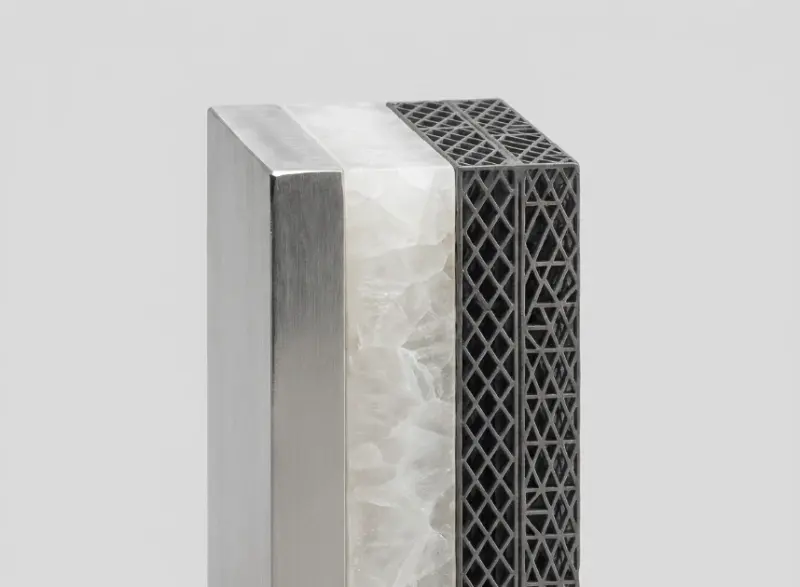
This structural modification unlocks the use of lithium metal anodes. Pure lithium metal boasts an theoretical specific capacity of 3,860 milliampere-hours per gram (mAh/g), compared to just 372 mAh/g for conventional graphite. Consequently, replacing graphite with lithium metal allows cells to pack significantly more energy into a fraction of the weight and volume.
2. Liquid vs. Solid-State: Comparative Performance Matrix
To demonstrate why automotive executives and materials scientists are heavily investing in this transition, let us analyze the precise performance trade-offs between today’s dominant liquid lithium-ion technology, the transitionary semi-solid-state systems, and the ultimate destination of all-solid-state architectures.

The following comparative table illustrates these critical parameters:
| Chỉ số hiệu suất | Conventional Liquid Lithium-Ion | Semi-Solid-State Systems | All-Solid-State Systems (SSBs) |
|---|---|---|---|
| Pha điện giải | 100% Liquid Organic Solvent | Hybrid (Gelled Polymer + Solid) | 100% Solid (Ceramic / Sulfide) |
| Anode Chemistry | Than chì hoặc silic-than chì | Silicon-Graphite or Lithium-Metal | Pure Lithium-Metal |
| Energy Density (Cell) | 200 – 280 Wh/kg | 300 – 400 Wh/kg | 450 – 550+ Wh/kg |
| Mật độ thể tích | 500 – 700 Wh/L | 700 – 900 Wh/L | 1,000 – 1,200+ Wh/L |
| Rủi ro quá nhiệt | Moderate to High (Flammable) | Low (Reduced Volatility) | Extremely Low (Non-Flammable) |
| Thời gian sạc nhanh | 30 – 45 Minutes (10% to 80%) | 15 – 25 Minutes | 10 – 15 Minutes or Less |
| Phạm vi nhiệt độ hoạt động | -20°C to 55°C | -30°C to 60°C | -40°C to 100°C+ |
| Estimated Target Cost | 75 – 95 per kWh | 100 – 130 per kWh | 140 – 200+ per kWh (Initial scale) |
To understand why this technology is hailed as the definitive pillar of the EV battery future, one must examine the fundamental limitations of current liquid-electrolyte systems. As shown in the comparison, solid-state configurations do not merely offer incremental improvements; they rewrite the limits of volumetric and gravimetric efficiency. By packing up to twice the energy into the same space, automakers can design vehicles that are lighter, more aerodynamic, and capable of travel distances exceeding 1,000 kilometers on a single charge.
3. The Triad of Solid Electrolytes: Sulfides, Oxides, and Polymers
Not all solid-state architectures are created equal. The industry is currently divided into three main chemical pathways, each characterized by the type of solid material used to conduct lithium ions.
A. Sulfide-Based Electrolytes
Sulfide-based materials (such as lithium phosphorus sulfur halide, or LPSX) are favored by many major automakers, particularly in Japan and China.
- Advantages: They exhibit incredibly high ionic conductivity at room temperature, sometimes even surpassing that of liquid electrolytes. This high conductivity enables rapid power delivery and ultra-fast charging capabilities. Furthermore, sulfides are relatively soft and malleable, which allows for excellent interfacial contact with the electrodes under moderate pressure.
- Challenges: Sulfides are highly reactive when exposed to moisture in the air, generating toxic hydrogen sulfide (H_2S) gas. Consequently, manufacturing facilities must operate under extremely dry, inert atmospheres, driving up initial production costs.
B. Oxide-Based Electrolytes
Oxide-based materials (such as garnet-type LLZO or perovskite-type LLTO) utilize advanced ceramic compounds to facilitate ion transport.
- Advantages: Oxides exhibit exceptional chemical stability, high electrochemical windows, and are completely non-flammable. They are also incredibly resilient against dendrite penetration due to their high mechanical hardness.
- Challenges: The rigidity of ceramics makes them prone to cracking under mechanical stress. More importantly, achieving tight, seamless interfacial contact between a hard ceramic electrolyte and solid active materials is incredibly difficult, leading to high internal resistance that can hinder efficient energy transfer.
C. Polymer-Based Electrolytes
Polymer-based systems utilize solid polyethylene oxide (PEO) matrices infused with lithium salts.
- Advantages: They are the easiest and cheapest to manufacture because they can leverage existing roll-to-roll production lines used for conventional liquid cells. They are flexible, durable, and scale easily.
- Challenges: Standard polymer electrolytes suffer from low ionic conductivity at room temperature. They must typically be heated to 60°C or higher to work efficiently, which requires active thermal management systems in vehicles, limiting their application in passenger cars.
4. Current Industry Progress and 2026 Commercialization Realities
For years, solid-state technology was regarded as a distant lab-bound concept. However, the commercial landscape has shifted dramatically. Rather than waiting for complex all-solid-state chemistries to fully mature, the automotive sector has executed a phased rollout, prioritizing semi-solid-state variants as a bridge to establish early market presence.
In the current market, major progress has been registered by key global players. For instance, Chinese automakers and Tier-1 suppliers have already successfully integrated semi-solid-state cells (achieving densities of 350-360 Wh/kg) into premium consumer passenger vehicles. Dongfeng Motor’s eπ007 and various test fleets running intensive winter calibrations have demonstrated over 1,000 kilometers of real-world range, maintaining excellent capacity retention even in freezing sub-zero environments.
Meanwhile, sulfide-based all-solid-state developments are accelerating. Industry giants such as CATL, BYD, and Toyota have established clear industrialization roadmaps. Small-scale pilot lines and prototype vehicle validations are planned or active, with mainstream commercial deployments targeted between 2027 and 2030.
While semi-solid variants are already establishing an early market presence, achieving a fully commercialized, all-solid-state solid-state battery for EVs remains the ultimate milestone for the automotive sector. This transition from hybrid systems to 100% solid architectures will require a complete overhaul of cell assembly processes, which is currently driving massive capital expenditures in specialized gigafactories.
5. Overcoming Technical Barriers: Dendrites, Interfaces, and Costs
Despite the rapid pace of development, several profound engineering hurdles must be resolved before this next-generation power tech can displace standard lithium-ion cells on a global scale.
The Interfacial Resistance Dilemma
In a traditional cell, the liquid electrolyte flows effortlessly into every micro-crevice of the porous cathode and anode, ensuring near-perfect physical contact. In a fully solid system, mating two solid materials (such as a ceramic electrolyte sheet and a lithium metal foil) creates microscopic air gaps at the interface. Over repeated charge and discharge cycles, the microscopic expansion and contraction of the lithium anode can cause these layers to delaminate. This delamination dramatically increases internal resistance, causing power loss and cell degradation.
The Microscopic Threat of Dendrites
While solid electrolytes are mechanically harder than liquid ones, they are not completely immune to dendrite growth. In fact, under high-current fast-charging conditions, lithium ions tend to accumulate unevenly at the boundary interface. This localized concentration can force lithium metal to deposit along microscopic grain boundaries or pre-existing micro-cracks in ceramic materials. Once a dendrite fully penetrates the solid barrier, it causes a short circuit, defeating one of the core safety benefits of the technology.
Supply Chain and Manufacturing Costs
The production of high-purity solid electrolyte materials requires expensive precursors and specialized synthesis environments. For example, oxide-based ceramics require high-temperature sintering (often exceeding 1,000°C), which is energy-intensive and slow compared to high-speed roll-to-roll liquid-filling lines.
By eliminating the compromises of range anxiety and safety hazards, this technology secures its place as the cornerstone of the EV battery future. However, achieving the cost parity required for mass-market adoption necessitates solving these manufacturing bottlenecks to bring pack-level costs down to the golden threshold of 100/kWh.
6. The Path Forward: Scaling Up and Global Integration
The global transition to solid-state systems will occur in distinct waves. Over the next few years, semi-solid designs will dominate premium electric sedans and high-end SUVs, where consumers are willing to pay a premium for exceptional driving range and enhanced cold-weather resilience.
Simultaneously, niche industries such as electric vertical takeoff and landing (eVTOL) aircraft, military unmanned aerial vehicles (UAVs), and medical robotics will serve as critical early adopters. These sectors prioritize high volumetric density and uncompromising safety over extreme cost-efficiency, allowing manufacturers to refine their automated assembly lines and achieve economies of scale.
Ultimately, the transition from conventional packs to this next-generation architecture will redefine what consumers expect from an electric vehicle battery solution. As automated gigafactories scale up and sulfide or oxide supply chains mature, the industry will achieve the high-throughput production speeds necessary to supply mainstream, affordable family passenger vehicles.
7. Strategic Outlook
The global race for battery supremacy is no longer defined by incremental adjustments to liquid chemistry. The transition to solid-state systems represents a complete disruption of the established supply chain. Automakers that secure robust alliances with solid electrolyte suppliers and master the complex manufacturing processes required for lithium-metal anodes will dominate the clean energy landscape for the next half-century.
For the end-user, this transition means charging an electric car will soon be as fast and seamless as filling a tank of gasoline, with zero risk of thermal runaway. The transition is no longer a question of “if,” but “when.”
Câu hỏi thường gặp
Q1: What is the main difference between a semi-solid-state cell and an all-solid-state cell?
The fundamental difference lies in the presence of liquid elements. A semi-solid-state cell is a hybrid design that incorporates a small percentage of liquid or gelled polymer electrolyte (typically 5% to 10% by weight) to wet the interface between the solid separator and the electrodes. This liquid portion ensures low interfacial resistance and allows the cell to be manufactured using existing factory machinery. Conversely, an all-solid-state cell completely eliminates all liquid components, utilizing a 100% solid interface. While much harder to manufacture, all-solid-state cells offer superior safety, wider operating temperatures, and much higher energy densities.
Q2: How do solid electrolyte systems perform in extreme winter temperatures?
Solid electrolyte systems perform exceptionally well in freezing conditions compared to conventional liquid-electrolyte cells. Standard liquid cells suffer from drastically increased viscosity in cold weather, slowing down ion transport and reducing available range by up to 30% to 40%. Because solid-state and semi-solid-state architectures do not rely on liquid solvents, they are not subject to freezing. Premium semi-solid-state configurations tested in sub-zero environments (-30°C) have demonstrated over 70% capacity retention and excellent power output, making them highly reliable for cold-climate regions.
Q3: What is the estimated timeline for affordable passenger cars to feature these advanced cells?
While premium, low-volume electric vehicles and industrial drones are already utilizing semi-solid-state packs, broad commercial adoption of all-solid-state configurations in affordable, mass-market passenger cars is projected to occur in phases. Major global suppliers and automakers are currently scaling up pilot lines, with initial high-end vehicle demonstrations scheduled for 2027. Mainstream mass production and integration into affordable consumer models are anticipated to reach scale between 2030 and 2035, as supply chains mature and material synthesis costs decrease to competitive levels.