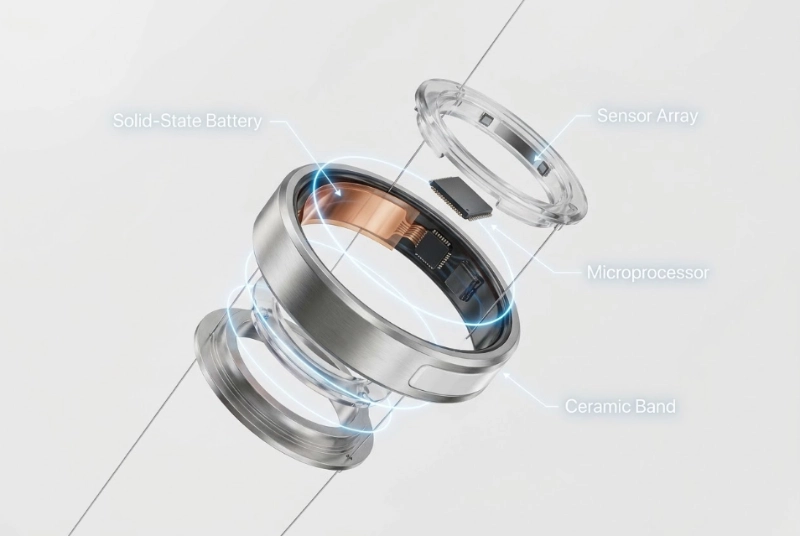










एयरोस्पेस के लिए बैटरी प्रौद्योगिकी
रिलीज की तारीख: 2026-07-26
विषयसूची
The aerospace industry is currently standing at the precipice of its most significant transformation since the invention of the jet engine. As global mandates for carbon neutrality accelerate and the commercial viability of Urban Air Mobility (UAM) comes into sharp focus, the race to electrify flight has intensified. From Electric Vertical Takeoff and Landing (eVTOL) aircraft and high-altitude pseudo-satellites to deep space exploration probes, the limiting factor has always been the same: energy storage. Gravity is an unforgiving adversary, and overcoming it requires immense power stored in the lightest possible package.
For decades, engineers have relied on various iterations of liquid-electrolyte lithium-ion technology to power flight systems. However, traditional lithium-ion architectures are rapidly approaching their theoretical limits regarding energy density and safety. To cross the threshold into true commercial electric aviation and next-generation space exploration, a paradigm shift is required. That shift is the solid-state battery.
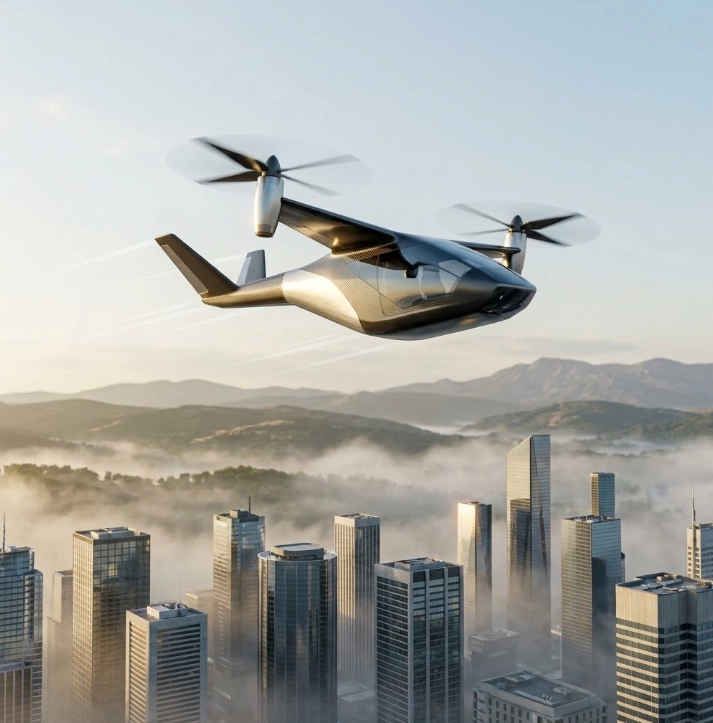
This comprehensive guide explores the disruptive potential of सॉलिड-स्टेट बैटरी प्रौद्योगिकी in the aerospace sector, analyzing its underlying mechanics, engineering benefits, current challenges, and the future trajectory of electrified flight.
The Evolution of Power in Flight
To appreciate the revolutionary nature of solid-state technology, one must first understand the historical context of energy storage in aviation and spaceframes. The historical development of the एयरोस्पेस बैटरी has been characterized by a slow, cautious evolution prioritizing absolute stability over rapid performance gains. Early satellites and aircraft utilized heavy, low-capacity lead-acid and nickel-cadmium (NiCd) systems. These were robust but offered abysmal specific energy (watt-hours per kilogram).
The introduction of lithium-ion (Li-ion) technology in the late 20th and early 21st centuries marked a significant leap forward. Li-ion batteries allowed for lighter payloads and paved the way for modern drones and early-stage electric aircraft. However, traditional Li-ion cells utilize a volatile, flammable liquid organic electrolyte to shuttle lithium ions between the anode and cathode. In the unforgiving environment of aerospace—characterized by extreme temperature fluctuations, intense vibrations, and the vacuum of space—this liquid electrolyte poses inherent risks of leakage, freezing, boiling, and catastrophic thermal runaway.
Decoding the Solid-State Architecture
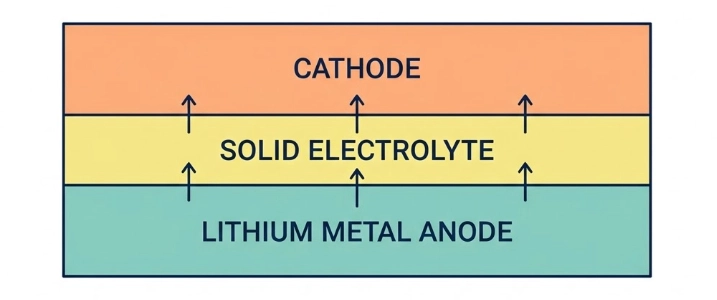
At its core, a solid-state battery operates on the same fundamental electrochemical principles as a traditional lithium-ion battery. During discharge, lithium ions travel from the negative electrode (anode) to the positive electrode (cathode), releasing electrons that power the aircraft’s motors or avionics.
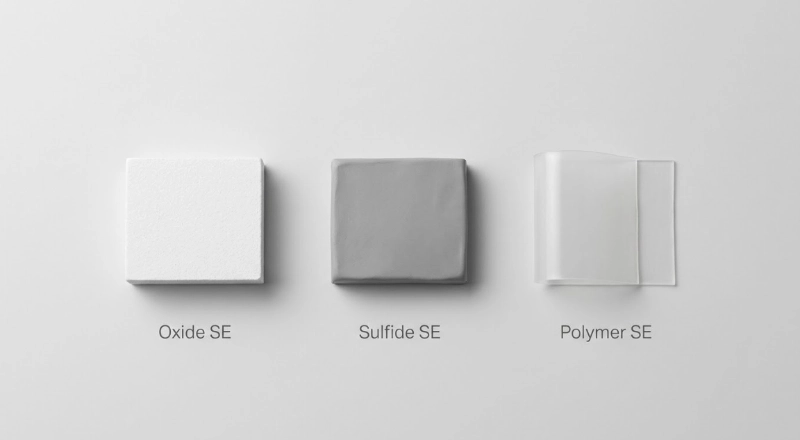
The transformative difference lies in the electrolyte. Solid-state batteries completely eliminate the flammable liquid or polymer gel electrolyte, replacing it with a dense, solid material. Researchers are currently developing three primary categories of solid electrolytes:
- Inorganic Solid Oxides (Ceramics): These materials offer exceptional chemical stability and mechanical strength, making them highly resistant to dendrite formation (microscopic, needle-like lithium structures that cause short circuits).
- Sulfide-Based Glass Ceramics: Sulfides boast incredible ionic conductivity, rivaling that of liquid electrolytes, which is crucial for delivering the high bursts of power needed during aircraft takeoff.
- Solid Polymer Electrolytes (SPEs): While easier to manufacture and highly flexible, traditional SPEs often require elevated temperatures to conduct ions efficiently, though advanced nanocomposites are changing this reality.
By utilizing a solid electrolyte, engineers can also transition from heavy graphite anodes to pure lithium metal anodes. This substitution is the key to unlocking unprecedented levels of energy density.
Why the Aerospace Sector Demands Solid-State Technology
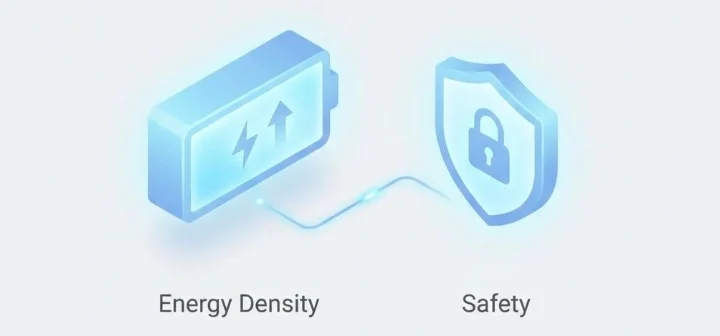
The rigorous demands of aviation and space exploration make the aerospace sector the ultimate proving ground for solid-state batteries. The advantages of this technology address the precise pain points that have hindered electric flight for decades.
1. Unprecedented Energy Density and Weight Reduction
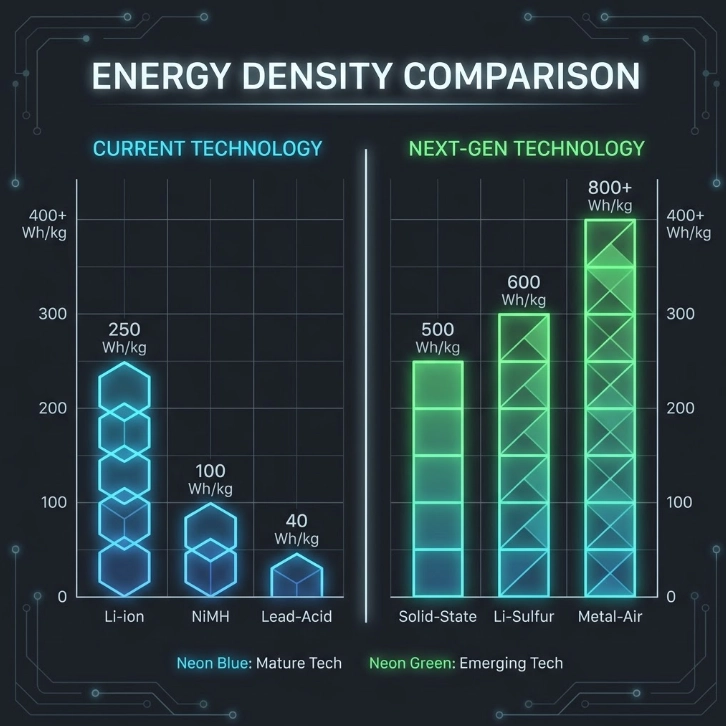
In aviation, weight is the ultimate currency. Every additional kilogram of battery weight reduces payload capacity, shortens flight range, and increases the structural requirements of the airframe. Traditional lithium-ion cells generally max out around 250 to 300 Wh/kg.
Solid-state batteries, utilizing lithium metal anodes, are projected to achieve specific energies exceeding 500 Wh/kg. This effectively doubles the energy stored per kilogram. For eVTOL manufacturers and drone operators, this offers a truly हल्का बैटरी समाधान that does not compromise on power output, enabling longer regional flights, larger passenger capacities, and fundamentally altering the economics of electric aviation.
2. Uncompromising Safety Profiles
Safety is non-negotiable in aerospace. The Federal Aviation Administration (FAA) and the European Union Aviation Safety Agency (EASA) impose extraordinarily strict certification standards regarding fire risks. Liquid electrolytes are highly flammable; if a cell is punctured, crushed, or overheated, it can ignite, triggering a chain reaction known as thermal runaway.
Solid electrolytes are non-flammable and highly resistant to combustion. Even in the event of severe physical damage, structural deformation, or short-circuiting, a solid-state cell will not leak toxic fluids or erupt in flames. This inherent safety significantly reduces the need for heavy, complex thermal management and fire suppression systems, further decreasing the overall weight of the aircraft’s energy storage system.
3. Extreme Temperature Resilience
Spacecraft and high-altitude aircraft operate in environments with massive temperature swings. Low Earth Orbit (LEO) satellites can experience temperatures ranging from -170°C in Earth’s shadow to +123°C in direct sunlight. Liquid electrolytes can freeze solid in extreme cold or vaporize in extreme heat.
Solid electrolytes inherently possess a much wider operating temperature window. They remain stable and functional at temperatures that would cause traditional batteries to fail catastrophically, reducing the parasitic energy drain required for active battery heating and cooling systems.
4. Extended Cycle Life and Durability
Commercial aviation relies on high asset utilization. An eVTOL operating as an air taxi may need to be rapid-charged dozens of times a day. Solid-state technology mechanically suppresses the growth of lithium dendrites—the primary culprit behind battery degradation and premature failure. Consequently, these batteries can endure thousands of deep charge and discharge cycles with minimal capacity fade, drastically lowering the total cost of ownership (TCO) for fleet operators.
Comparison
To truly understand where the industry is heading, we must look at the data. When conducting an objective एयरोस्पेस बैटरी तुलना, engineers look at specific energy, volumetric energy density, safety, and lifecycle. The table below illustrates the stark contrasts between current and next-generation power sources for flight.
| प्रदर्शन मीट्रिक | Traditional Lithium-Ion (NCA/NMC) | Lithium-Sulfur (Li-S) (Developing) | Solid-State (Lithium Metal) | Aerospace Impact |
|---|---|---|---|---|
| Specific Energy (Wh/kg) | 200 – 300 Wh/kg | 400 – 600 Wh/kg | 400 – 500+ Wh/kg | Determines flight range and maximum payload capacity. |
| Volumetric Energy (Wh/L) | 600 – 700 Wh/L | 300 – 400 Wh/L | 800 – 1000+ Wh/L | Determines how much physical space the battery pack occupies in the airframe. |
| इलेक्ट्रोलाइट प्रकार | Flammable Liquid Organic | Liquid / Semi-Solid | Non-Flammable Ceramic/Polymer | Dictates safety and thermal management requirements. |
| थर्मल रनअवे जोखिम | High (Requires heavy shielding) | मध्यम | Very Low to None | Critical for FAA/EASA certification and passenger safety. |
| परिचालन तापमान | -20°C to +60°C | -40°C to +50°C | -40°C to +100°C+ | Vital for high-altitude, stratospheric, and space missions. |
| चक्र जीवन | 1,000 – 2,000 Cycles | 100 – 500 Cycles (Currently) | 5,000+ Cycles (Projected) | Determines maintenance intervals and long-term operating costs. |
Note: Data represents current state-of-the-art parameters and projected commercial targets for emerging technologies.
Key Challenges in Commercializing Solid-State for Aviation
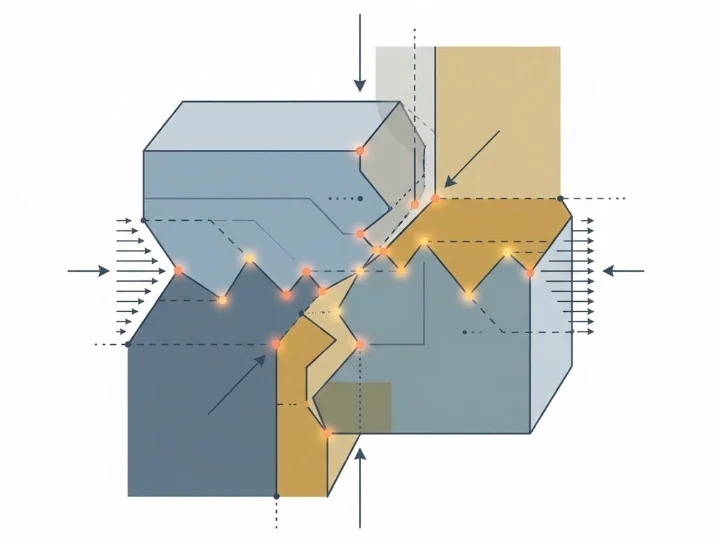
Despite the overwhelming theoretical advantages, the transition to solid-state batteries in aerospace is not without its hurdles. The path from the laboratory to the launchpad involves solving complex engineering and manufacturing puzzles.
Sector-Specific Applications
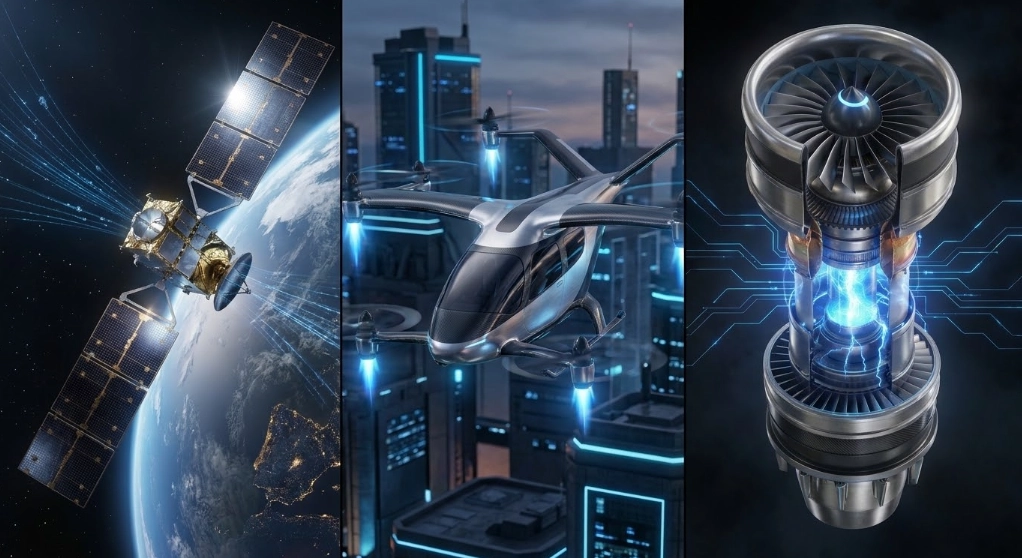
The deployment of solid-state batteries will likely follow a phased approach, starting with high-budget, weight-critical applications before trickling down to broader commercial use.
Satellites and Deep Space Exploration
The space sector will be among the first adopters. The cost of launching a payload into orbit is astronomically high, measured in thousands of dollars per kilogram. The weight savings provided by solid-state technology translate directly into massive financial savings or the ability to pack more scientific instruments into a probe. Furthermore, a deep space mission to Mars or Jupiter requires a high reliability battery capable of surviving harsh cosmic radiation, zero atmospheric pressure, and extreme cold for decades without maintenance. Solid-state cells are uniquely positioned to meet these punishing criteria.
Urban Air Mobility (UAM) and eVTOLs
Air taxis represent the next great frontier in urban transportation. However, current eVTOL prototypes using Li-ion batteries are often limited to short hops of 20 to 50 miles, carrying only two to four passengers. Solid-state technology will be the catalyst that unlocks regional air mobility (e.g., flying from New York City to Washington D.C. on a single charge). By eliminating heavy fire-suppression systems and increasing specific energy, eVTOLs will become quieter, safer, and highly profitable.
Commercial Airline Hybridization
While fully electric wide-body passenger jets (like a Boeing 777) are still decades away due to the immense energy requirements of sustained supersonic or transoceanic flight, solid-state batteries will enable aircraft hybridization. Future commercial jets will likely use solid-state battery packs to power ground taxiing, auxiliary power units (APUs), and initial takeoff thrust, drastically reducing airport noise and ground-level carbon emissions.
निष्कर्ष
The future of aerospace is undeniably electric, but getting there requires leaving legacy power systems behind. Solid-state battery technology represents a fundamental leap in electrochemical engineering. By offering unparalleled energy density, extreme temperature resilience, and the elimination of thermal runaway risks, solid-state batteries will redefine what is aerodynamically and economically possible.
While manufacturing challenges and high initial costs remain, the influx of capital from major aerospace conglomerates, automotive giants, and governments ensures that these hurdles will be overcome. Over the next decade, as production scales and technology matures, solid-state batteries will move from the laboratory into the skies, ushering in a new era of clean, silent, and efficient flight.
अक्सर पूछे जाने वाले प्रश्न
How soon will solid-state batteries be used in commercial electric aircraft?
While solid-state batteries are currently being tested in laboratory and small-scale automotive applications, broad commercial adoption in aerospace is expected between 2028 and 2032. The aerospace sector requires rigorous, multi-year certification processes by agencies like the FAA to ensure absolute safety. Early adoption will likely be seen in smaller drones and defense applications before moving to passenger-carrying eVTOLs and commercial aircraft.
Are solid-state batteries completely immune to catching fire in an airplane crash?
While no energy storage system is entirely without risk if subjected to extreme kinetic destruction, solid-state batteries are exponentially safer than current lithium-ion batteries. Because they lack the volatile, flammable liquid organic electrolytes found in traditional batteries, they are not prone to thermal runaway. In the event of a crush or puncture, a solid-state battery will typically just cease to function rather than combust or explode, making them incredibly safe for aviation.
Why do solid-state batteries perform better in the vacuum of space than traditional batteries?
Traditional batteries rely on liquid components that can boil and expand in the zero-pressure vacuum of space, requiring heavy, pressurized containment vessels. Additionally, liquid electrolytes can freeze in the extreme cold of orbit. Solid-state batteries use a stable, dry, solid electrolyte that is unaffected by a lack of atmospheric pressure and maintains its structural integrity and ion conductivity across a much wider and more extreme temperature range, making them ideal for satellites and lunar/Martian rovers.