










Can Solid-State Batteries Improve Energy Density
Release time: 2026-06-26
Table of Contents
For decades, the technological world has been tethered to the capabilities of the lithium-ion battery. From the smartphones in our pockets to the electric vehicles (EVs) revolutionizing our highways, this ubiquitous power source has transformed modern society. However, as our demands for longer range, faster processing, and uninterrupted power grow exponentially, the traditional lithium-ion architecture is rapidly approaching its theoretical physical and chemical limits.
The most pressing bottleneck in current energy storage technology is the capacity to hold more power in a smaller, lighter package. This brings us to the forefront of modern electrochemical engineering: the solid-state battery. Hailed as the “holy grail” of energy storage, this emerging technology promises to shatter current limitations. But the central question remains: Can these next-generation power cells truly deliver on their core promise? In this comprehensive analysis, we will explore the underlying science, manufacturing paradigms, and market implications to understand exactly how this technology works.
What is Energy Density?
Before diving into the mechanics of solid-state technology, it is essential to define what energy density actually means in the context of battery science. Energy density is the measure of how much energy a battery contains in proportion to its weight or size. It is generally divided into two distinct categories:
- Gravimetric Energy Density (Specific Energy): Measured in Watt-hours per kilogram (Wh/kg). This dictates how heavy a battery must be to store a specific amount of energy. In the automotive and aerospace sectors, this is a critical metric because moving excess weight consumes more energy.
- Volumetric Energy Density: Measured in Watt-hours per liter (Wh/L). This determines how much physical space the battery occupies. For consumer electronics like smartphones and laptops, where space is at an absolute premium, this is often the most crucial metric.
For electric vehicles to achieve parity with internal combustion engine (ICE) vehicles—meaning a range of 500 to 600 miles on a single charge without making the vehicle prohibitively heavy—a significant leap in both gravimetric and volumetric metrics is required. This is exactly where the transition to new battery architectures becomes non-negotiable.
The Architectural Shift: Liquid vs. Solid
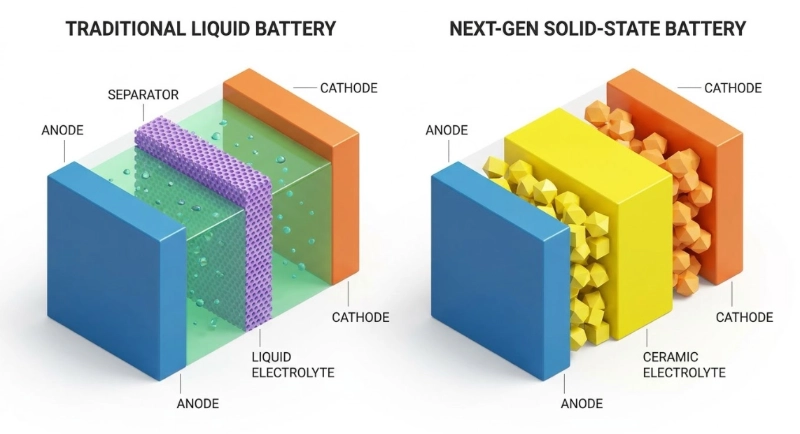
To comprehend how the new generation of batteries achieves its superior capacity, we must first look at the anatomy of traditional lithium-ion cells. A standard battery consists of three main components: an anode (negative electrode), a cathode (positive electrode), and an electrolyte separator in the middle.
In conventional lithium-ion batteries, the electrolyte is a liquid organic solvent. When the battery charges and discharges, lithium ions swim back and forth between the anode and cathode through this liquid medium. A porous plastic separator is required to keep the anode and cathode from touching, which would cause a catastrophic short circuit.
Solid-state technology, as the name implies, replaces this flammable liquid electrolyte and the bulky plastic separator with a single piece of solid material—typically a specialized ceramic, glass, or solid polymer. This singular structural change is the catalyst for a cascade of design efficiencies.
Understanding the mechanisms behind solid-state battery energy density is crucial, as the removal of liquid components fundamentally alters what materials can be used for the electrodes themselves.
How Solid-State Technology Dramatically Boosts Capacity
The increase in energy storage capacity in solid-state cells does not come merely from swapping a liquid for a solid. Instead, the solid electrolyte acts as an enabler for more energy-dense electrode materials that are otherwise unstable in liquid environments.
1. The Enabling of the Lithium Metal Anode
In traditional batteries, the anode is primarily made of graphite. Graphite is stable and reliable, but it is also heavy and bulky, essentially acting as a sponge that holds lithium ions. Researchers have long known that using pure lithium metal for the anode would drastically increase capacity, as lithium metal has an exceptionally high theoretical specific capacity (3,860 mAh/g compared to graphite’s 372 mAh/g).
However, in liquid electrolytes, lithium metal anodes suffer from the formation of “dendrites”—needle-like structures of lithium that grow during charging, pierce the plastic separator, and cause short circuits and fires. A rigid solid electrolyte physically suppresses the growth of these dendrites. By allowing the safe use of a pure lithium metal anode, the volume and weight of the battery are significantly reduced, directly skyrocketing the energy density.
2. Elimination of Bulky Safety Architecture
Liquid electrolytes are highly volatile and flammable. Consequently, conventional EV battery packs require extensive, heavy, and space-consuming cooling systems and safety armors to prevent thermal runaway. Because solid electrolytes are non-flammable and possess much higher thermal stability, battery pack designers can remove a large portion of these thermal management systems. This means more active battery cells can be packed into the same physical space in a vehicle chassis.
3. High-Voltage Cathode Compatibility
Solid electrolytes generally have a wider electrochemical window than liquid solvents. This means they can remain stable at higher voltages. Consequently, battery manufacturers can pair the solid electrolyte with next-generation, high-voltage cathode materials. Operating at a higher voltage inherently increases the total energy output of the cell.
Comparative Analysis: Traditional vs. Solid-State
To clearly illustrate the generational leap in technology, the following table breaks down the fundamental differences and how they impact the end-user.
| Feature / Metric | Traditional Lithium-Ion (Liquid) | Next-Gen Solid-State | Impact on Application & End User |
|---|---|---|---|
| Electrolyte State | Liquid organic solvent | Solid (Ceramic, Glass, Polymer) | Eliminates leakage risks; allows diverse form factors. |
| Anode Material | Graphite or Silicon-Graphite | Pure Lithium Metal | Massive reduction in weight and physical volume. |
| Gravimetric Density | ~250 – 300 Wh/kg | ~400 – 500+ Wh/kg | Vehicles can travel 50-80% further on a single charge. |
| Volumetric Density | ~600 – 700 Wh/L | ~1000 – 1200+ Wh/L | Devices become thinner; EV battery packs become smaller. |
| Flammability | High (Requires intense cooling) | Extremely Low to Zero | Drastically reduces fire risk in EVs and aviation. |
| Operating Temperature | Narrow optimal range (20°C – 40°C) | Wide range (-30°C to 100°C) | Reliable operation in extreme winter or desert conditions. |
Beyond Capacity: A Holistic Upgrade
While the primary focus of this technology is packing more power into less space, the transition from liquid to solid architectures provides secondary benefits that are equally transformative for modern industries. By addressing the fundamental chemical vulnerabilities of legacy systems, engineers have unlocked a holistic battery performance improvement, encompassing safety, charging speed, and lifecycle longevity.
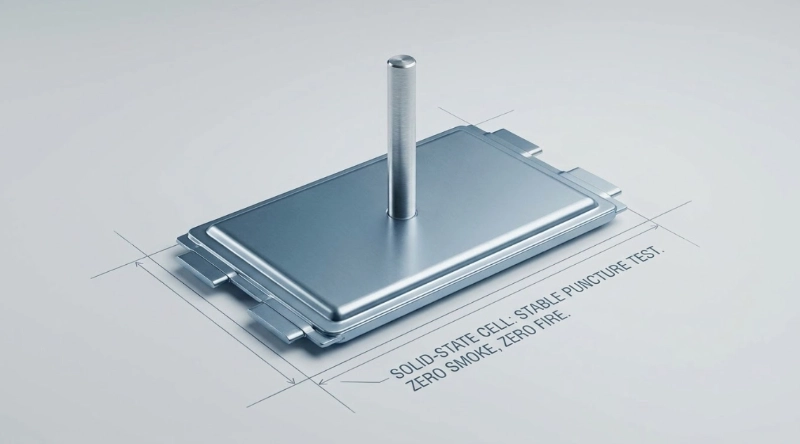
Unprecedented Safety: Thermal runaway—a chain reaction causing a battery to catch fire and explode—is a major concern with liquid electrolytes. Solid electrolytes are mostly inorganic and non-flammable. Even if the battery is physically punctured or crushed in an automotive accident, the risk of a catastrophic fire is infinitesimally small compared to current technology.
Ultra-Fast Charging: One of the barriers to EV adoption is the time it takes to recharge. Pushing high currents into a liquid lithium-ion battery can accelerate dendrite growth and degrade the battery quickly. Solid-state structures, with their high ionic conductivity at varying temperatures and inherent resistance to dendrite formation, can handle much higher charging currents. Future iterations aim to recharge an EV from 10% to 80% in under 10 minutes, rivaling the time it takes to pump gas.
Extended Lifespan: The chemical degradation that occurs in liquid batteries—often exacerbated by fast charging and extreme temperatures—limits their lifespan to a certain number of charge cycles. Solid-state interfaces are far more stable over time, potentially doubling the operational lifespan of the battery, which is a massive economic benefit for EV owners and grid-scale storage solutions.

The EV Revolution and Aerospace Applications
The automotive industry is the primary driver behind the billions of dollars currently being poured into solid-state research. Range anxiety remains a significant psychological barrier for potential EV buyers. The integration of a high energy density solid-state battery can reduce the weight of the vehicle while simultaneously extending its range well beyond the 500-mile mark. Lighter vehicles are also more efficient, creating a compounding positive effect on overall energy consumption.
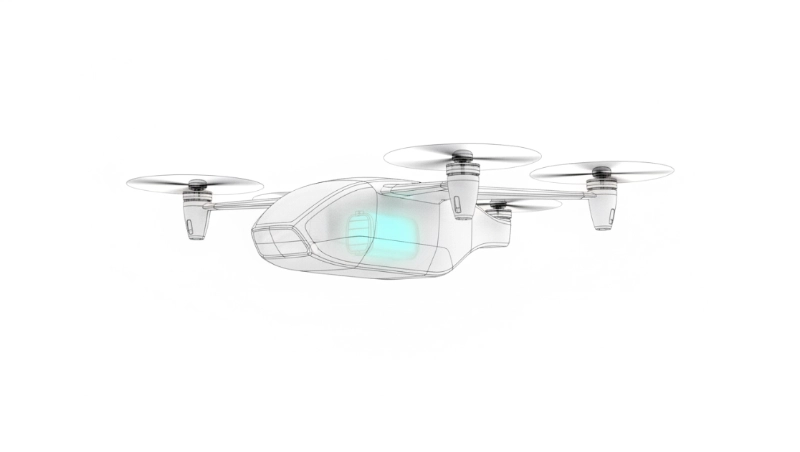
Furthermore, this technology is unlocking entirely new industries, most notably Electric Vertical Takeoff and Landing (eVTOL) aircraft and electric aviation. Traditional lithium-ion batteries are simply too heavy to make long-distance electric flight viable. The massive specific energy leap provided by solid-state cells is the exact technological breakthrough required to make commercial electric aviation a reality, promising to decarbonize one of the most stubborn transportation sectors.
The Technical Hurdles and Road to Commercialization
Despite the incredible theoretical advantages, bringing this technology from laboratory pristine conditions to mass-market commercialization involves overcoming immense engineering challenges.
Maximizing solid-state battery energy density requires overcoming the “interfacial contact” problem. In a liquid battery, the liquid naturally flows into every microscopic pore of the anode and cathode, ensuring excellent contact for ion transfer. In a solid-state battery, pressing two hard solids together (the solid electrolyte and the solid electrodes) naturally leaves microscopic gaps. These gaps create high electrical resistance, which can hinder the battery’s ability to discharge power quickly. Engineers are currently experimenting with high-pressure pack designs, soft polymer interlayers, and novel manufacturing techniques to solve this.
Additionally, manufacturing solid-state batteries requires entirely new supply chains and factory architectures. Current gigafactories are built around liquid electrolyte filling processes. Solid electrolytes, particularly sulfide-based ones, are highly sensitive to moisture and must be manufactured in incredibly strict, ultra-dry cleanrooms, driving up initial capital expenditure.
The Future Outlook
The race is currently on among major automotive OEMs (like Toyota, Volkswagen, and BMW) and specialized tech startups (like QuantumScape, Solid Power, and Prologium) to be the first to achieve mass production. While we are seeing prototype cells being tested in pilot lines today, true economies of scale are still a few years away.
The successful commercialization of a viable high density solid-state battery is expected by the end of this decade, with limited premium vehicle rollouts anticipated between 2026 and 2028, and broader market penetration in the 2030s.
As manufacturing costs inevitably decrease according to Wright’s Law, these advanced cells will eventually trickle down from premium electric vehicles to consumer electronics, medical devices, and grid storage. This ultimate battery performance improvement will redefine the parameters of mobile energy, untethering our devices and vehicles from the constraints of legacy chemistry and powering the next great leap in technological innovation.
FAQ
1. Why is a solid-state battery able to hold more energy than a traditional lithium-ion battery?
The primary reason is that the solid electrolyte allows battery manufacturers to use a pure lithium metal anode instead of a traditional, bulky graphite anode. The solid material physically prevents the formation of dangerous “dendrites” (lithium spikes) that would normally cause short circuits in a liquid electrolyte. Additionally, because solid electrolytes are non-flammable, battery packs require less heavy protective casing and cooling equipment, allowing more space for active energy storage.
2. When will solid-state batteries be widely available in electric vehicles?
While some limited-production or premium prototype vehicles may feature solid-state technology as early as 2026 or 2027, wide-scale mass market availability is generally projected for the late 2020s to early 2030s. The industry must first solve manufacturing challenges, such as scaling up production in highly controlled environments and lowering the overall cost per kilowatt-hour, before these batteries can be placed in affordable, everyday EVs.
3. Are solid-state batteries completely safe from catching fire?
While no energy storage device is 100% immune to failure, solid-state batteries represent a monumental leap in safety. Traditional batteries use liquid organic solvents that are highly volatile and flammable, which is the primary cause of battery fires. Solid-state batteries replace this liquid with non-flammable solid materials (like ceramics or specialized polymers). Even if the battery is crushed, punctured, or exposed to extreme heat, the risk of a thermal runaway and fire is exceptionally low.