









Solid-State Battery Safety Explained
Release time: 2026-06-27
Table of Contents
The global transition toward electrification is accelerating at an unprecedented pace. From the electric vehicles (EVs) silently dominating our highways to the incredibly powerful smartphones nestled in our pockets, humanity’s reliance on portable energy storage has never been absolute. For decades, the lithium-ion battery has been the undisputed champion of this revolution, powering our modern lives with remarkable efficiency. However, as our demand for higher energy density and faster charging speeds intensifies, the inherent limitations of traditional lithium-ion architecture have become glaringly apparent. Chief among these concerns is the issue of physical and thermal stability.
Recent high-profile incidents involving electric vehicle combustions, e-bike battery explosions, and recalled consumer electronics have thrust energy storage vulnerabilities into the global spotlight. Consumers, manufacturers, and regulatory bodies are aggressively seeking alternatives that do not compromise performance for security. Enter the solid-state battery—a paradigm-shifting innovation widely regarded as the holy grail of the energy sector. This comprehensive guide delves deep into the mechanics, materials, and profound advantages of this next-generation power source, illustrating exactly why it represents a monumental leap forward for global energy infrastructure.
The Lithium-Ion Legacy and Its Achilles’ Heel
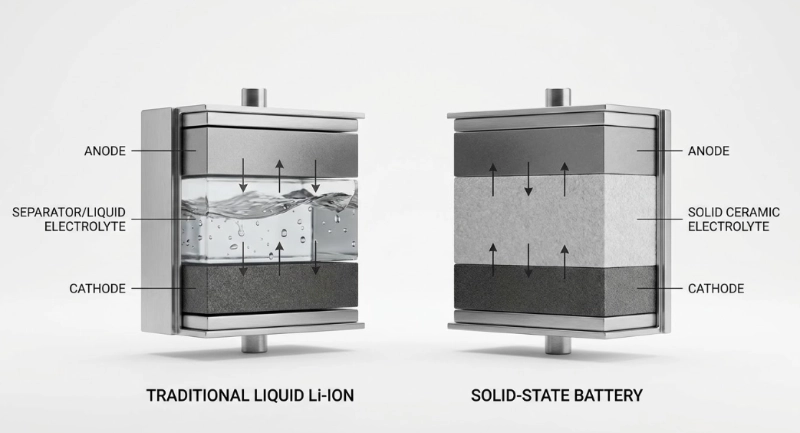
To truly appreciate the revolutionary nature of next-generation batteries, one must first understand the fundamental mechanics and vulnerabilities of the conventional lithium-ion batteries that currently power our world. A standard lithium-ion cell consists of four primary components: a positive electrode (cathode), a negative electrode (anode), a porous separator, and a liquid electrolyte.
During the charging and discharging cycles, lithium ions shuttle back and forth between the cathode and the anode. The liquid electrolyte—typically composed of lithium salts dissolved in a mixture of highly flammable organic carbonates (like ethylene carbonate or diethyl carbonate)—acts as the medium facilitating this ionic movement. While this liquid medium allows for excellent ionic conductivity at room temperature, it is also the battery’s greatest vulnerability.
These organic liquid solvents are volatile, flammable, and prone to degradation under extreme conditions. If the battery is subjected to mechanical abuse (such as a severe crash or puncture), electrical abuse (overcharging or short-circuiting), or thermal abuse (exposure to extreme external heat), the liquid electrolyte can begin to vaporize and decompose. This creates internal pressure and releases oxygen and highly combustible gases, setting the stage for a catastrophic event known as thermal runaway.
The Anatomy of a Solid-State Battery
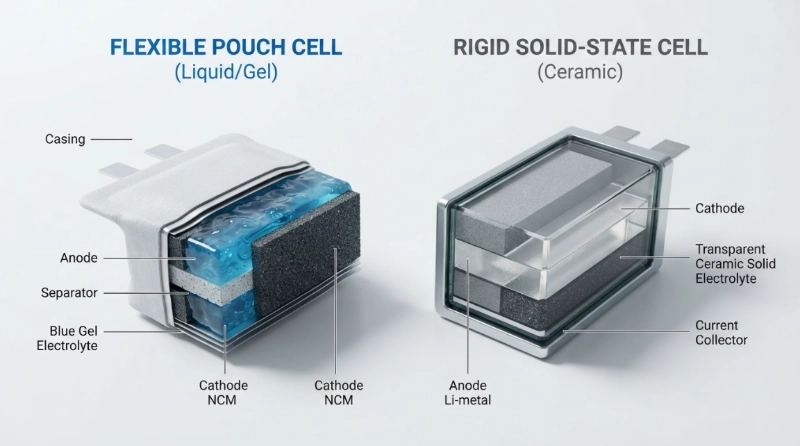
The fundamental difference between conventional lithium-ion batteries and their solid-state counterparts lies entirely in the electrolyte. As the name suggests, a solid-state battery replaces the liquid or gel polymer electrolyte with a completely solid, rigid material. This solid electrolyte simultaneously serves dual purposes: it acts as the medium for lithium-ion transport and functions as a robust physical separator preventing the anode and cathode from touching.
By eliminating the flammable organic solvents, engineers immediately eradicate the most volatile component of the energy cell. The solid materials used—ranging from advanced ceramics and inorganic glasses to complex solid polymers—are inherently non-flammable and possess remarkably high thermal stability. This architectural shift fundamentally rewrites the rules of battery engineering, allowing for tighter packaging, the use of higher-capacity anode materials (like pure lithium metal), and a drastic reduction in the need for heavy, complex cooling systems.
A Comparative Analysis: Liquid vs. Solid Architecture
To visualize the sheer magnitude of this technological leap, let us examine a direct comparison between traditional liquid electrolyte systems and emerging solid-state architectures across several critical operational parameters.
| Feature / Metric | Traditional Lithium-Ion (Liquid Electrolyte) | Solid-State Battery (Solid Electrolyte) |
|---|---|---|
| Electrolyte State | Flammable liquid organic solvents | Non-flammable solid (ceramic, glass, polymer) |
| Thermal Stability | Low (Susceptible to boiling/vaporization) | Extremely High (Stable up to 300°C – 500°C+) |
| Energy Density | Approaching theoretical limits (~250-300 Wh/kg) | High potential for significant increase (400-500+ Wh/kg) |
| Operating Temperature | Narrow optimal range (20°C to 40°C) | Wide operational range (-20°C to 100°C+) |
| Dendrite Resistance | Poor (Requires porous separator) | Excellent (Solid barrier blocks dendrite growth) |
| Cooling Requirements | Heavy, complex active liquid cooling systems | Minimal to none; passive cooling often sufficient |
| Lifespan / Cycles | Degrades faster due to liquid side reactions | Longer lifespan, highly stable internal chemistry |
Conquering the Threat of Thermal Runaway
Thermal runaway is the nightmare scenario for battery engineers. It is an unstoppable, self-sustaining exothermic chain reaction. It begins when a localized fault generates heat. In a liquid-based battery, this heat causes the liquid electrolyte to break down, releasing more heat and flammable gases. As temperatures rapidly escalate past 150°C, the separator melts, causing a massive internal short circuit. The temperature spikes to over 600°C in seconds, igniting the vented gases and resulting in a fierce, chemical fire that is notoriously difficult to extinguish with conventional methods like water.
Replacing the volatile liquid with a solid structure is the ultimate strategy for battery fire risk reduction. Solid electrolytes do not vaporize, do not release combustible gases when heated, and do not provide the fuel necessary to sustain an exothermic chain reaction. Even in the event of a catastrophic mechanical puncture that physically damages the cell, a solid-state battery will simply cease to function rather than erupting into flames.
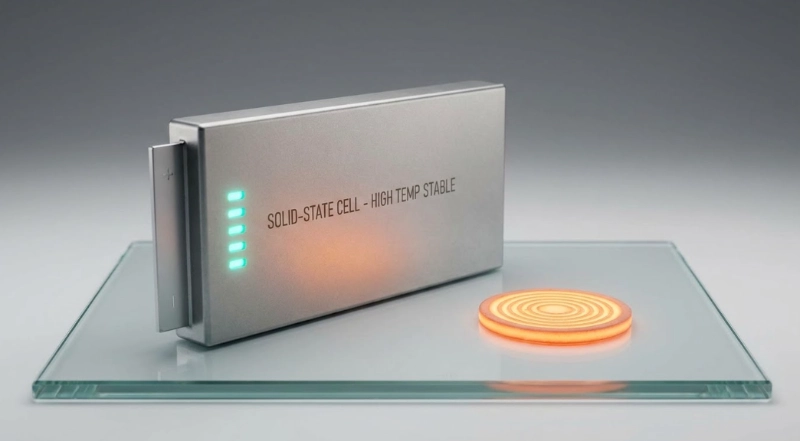
Furthermore, solid electrolytes maintain their structural integrity at temperatures that would completely incinerate a traditional battery separator. While a conventional polymer separator might melt and fail at 130°C, advanced ceramic solid electrolytes remain structurally sound well beyond 500°C. This exceptional thermal tolerance means that external heat sources or minor internal defects will not trigger a cascading failure, providing an unprecedented margin of error for consumers and vehicle occupants.
Preventing Internal Sabotage
Beyond thermal runaway, the lifespan and integrity of lithium batteries are constantly threatened by the formation of “dendrites.” Dendrites are microscopic, needle-like metallic structures that form on the surface of the anode during the charging process, particularly during rapid charging or operation in low temperatures.
In a liquid electrolyte system, these sharp lithium spikes can grow unhindered through the liquid medium. Over time, or during rapid stress, these microscopic needles can pierce the ultra-thin, porous plastic separator that keeps the positive and negative electrodes apart. Once the separator is breached, an immediate internal short circuit occurs, unleashing a massive surge of current and instantly triggering catastrophic thermal failure.
Solid electrolytes act as an impenetrable physical fortress against dendrite growth. Due to their high mechanical strength and shear modulus, materials like solid ceramics and glasses suppress the growth of these metallic spikes. The lithium ions can still migrate through the crystalline structure of the solid electrolyte, but the physical formation of sharp, penetrating needles is mechanically blocked.
This robust defense mechanism not only prevents internal short circuits but also unlocks a long-sought-after engineering goal: the use of pure lithium metal anodes. Because liquid batteries cannot stop dendrites, they must use heavier, bulkier graphite anodes to safely house the lithium ions. By suppressing dendrites, solid structures allow engineers to replace graphite with pure lithium metal, dramatically shrinking the size of the battery while massively boosting its energy density.

Evaluating Solid Electrolyte Options
The realization of optimal solid-state battery safety depends heavily on the specific materials used to create the solid electrolyte. The industry is currently engaged in an intense materials science race, focusing primarily on three distinct categories, each with its own unique advantages and manufacturing challenges.

1. Inorganic Sulfide-Based Electrolytes
Sulfide-based solid electrolytes are currently the frontrunners in the race for electric vehicle commercialization. They offer remarkably high ionic conductivity, rivaling or even exceeding that of liquid electrolytes at room temperature. Furthermore, sulfide glasses are relatively soft and malleable, making it easier to maintain good physical contact with the electrodes as the battery expands and contracts during operation. While they are highly resilient to combustion, their main challenge lies in moisture sensitivity; exposure to ambient humidity can cause them to release toxic hydrogen sulfide gas, requiring strictly controlled, moisture-free manufacturing environments.
2. Oxide/Ceramic-Based Electrolytes
Oxide-based materials, such as Lithium Lanthanum Zirconium Oxide (LLZO), represent the absolute pinnacle of chemical and thermal stability. They are virtually impervious to dendrite penetration, non-reactive with ambient air, and completely non-flammable under almost any conceivable condition. However, ceramics are inherently brittle. Ensuring continuous, seamless contact between a rigid ceramic electrolyte and the active electrode materials without cracking under mechanical stress is a formidable engineering challenge. Additionally, their ionic conductivity at room temperature often lags behind sulfides, sometimes requiring elevated operating temperatures to function optimally.
3. Solid Polymer Electrolytes (SPE)
Solid polymers, such as Polyethylene Oxide (PEO), are essentially sophisticated plastics. They are highly flexible, lightweight, and relatively easy and inexpensive to manufacture using existing roll-to-roll production techniques. They offer excellent interface contact with electrodes due to their pliability. The primary drawback of polymer electrolytes is their exceptionally poor ionic conductivity at room temperature. To allow lithium ions to flow freely, these batteries typically need to be heated to temperatures above 60°C. While less ideal for smartphones, they show promise for large-scale grid storage or commercial fleet vehicles where operating temperatures can be carefully managed.
Transforming Industries with Next-Generation Energy
The implications of successfully scaling this technology extend far beyond incremental improvements; it represents a foundational shift for multiple multi-billion-dollar global industries.
The Electric Vehicle (EV) Paradigm Shift
For the automotive industry, the transition is an existential imperative. Range anxiety and safety concerns remain the two most significant barriers to universal EV adoption. Because solid-state cells can utilize lithium metal anodes without the risk of dendrite-induced short circuits, they can store up to 50% to 80% more energy in the same physical footprint. This translates directly to vehicles that can travel 600, 800, or even 1,000 miles on a single charge.
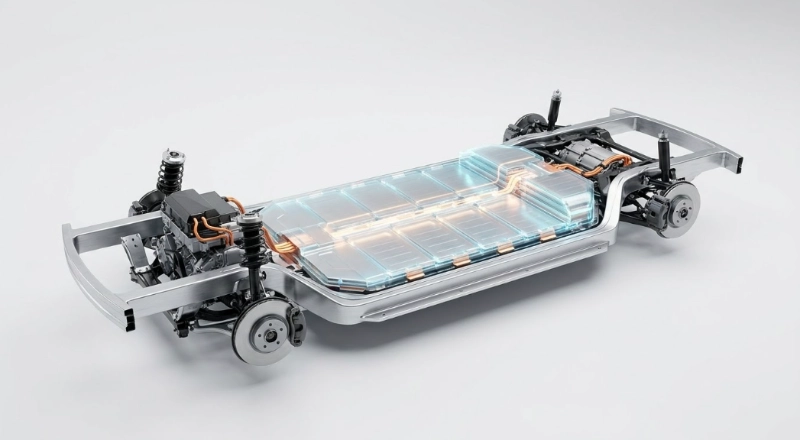
More importantly, the adoption of this safer battery technology allows automakers to fundamentally redesign vehicle architecture. Current EVs require heavy, armored battery enclosures and complex liquid-cooling plumbing to mitigate fire risks and maintain temperature stability. Solid-state architecture eliminates the need for much of this auxiliary safety equipment, further reducing vehicle weight, improving efficiency, and lowering manufacturing costs.
Revolutionizing Aerospace and Aviation
The aviation industry has stringent, zero-tolerance policies regarding fire hazards. The weight and volatility of liquid lithium-ion batteries have severely stunted the development of electric aircraft (eVTOLs) and long-haul electric aviation. The uncompromising security profile and high energy density of solid-state cells finally provide the necessary power-to-weight ratio to make commercial electric flight a tangible reality, free from the terrifying prospect of mid-air thermal events.
Advancing Medical Devices and Consumer Electronics
In the realm of implantable medical devices (such as pacemakers and neurostimulators), chemical leakage and internal failure are completely unacceptable. Solid-state micro-batteries offer an inert, leak-proof power source that can safely operate within the human body for decades. Similarly, for consumer electronics, this technology will enable the design of impossibly thin laptops, smartphones, and wearable augmented reality devices that remain perfectly cool to the touch, even during intensive processing tasks or ultra-fast charging cycles.
Overcoming Commercialization Hurdles
Despite the overwhelming theoretical and prototype-level evidence supporting this technology, mass commercialization remains a complex endeavor. Moving from controlled laboratory environments to gigawatt-scale manufacturing facilities presents several formidable hurdles.
The most significant challenge is interfacial resistance. A battery relies on the seamless flow of ions between the electrodes and the electrolyte. In a liquid battery, the liquid naturally flows into every microscopic pore of the electrodes, ensuring perfect contact. Achieving that same level of intimate, continuous contact on a microscopic level between two rigid solid materials is exceptionally difficult, particularly as the electrodes naturally expand and contract as the battery charges and discharges.
Furthermore, current manufacturing processes for advanced ceramics and sulfides require specialized equipment, extreme pressure, and unique atmospheric controls that differ vastly from existing lithium-ion production lines. The initial capital expenditure to retrofit existing battery “gigafactories” or build new, dedicated solid-state facilities is staggering. However, as major automotive conglomerates and state-sponsored research initiatives pour billions of dollars into development, experts project that these manufacturing bottlenecks will be resolved, leading to initial commercial availability in high-end vehicles by the late 2020s, followed by broader market penetration in the 2030s.
Conclusion
The evolution of energy storage is at a critical inflection point. As our global dependence on portable and grid-level electrical power grows, we can no longer afford to rely on chemical architectures that pose inherent volatility risks. The relentless pursuit of absolute solid-state battery safety is not merely an academic exercise; it is a foundational requirement for the sustainable electrification of transportation, aviation, and modern infrastructure.
By replacing combustible liquids with resilient, rigid materials, engineers have definitively solved the historical vulnerabilities of lithium-based power. This transition promises the ultimate battery fire risk reduction, safeguarding consumers and the environment alike. As manufacturing scales and costs inevitably decrease, industries worldwide will eagerly integrate this safer battery technology, unlocking unprecedented performance metrics and ushering in a new era of clean, boundless, and uncompromisingly secure energy.
FAQs
1. Will solid-state batteries ever catch fire or explode?
Under normal operating conditions and even in severe crash or puncture scenarios, they are practically immune to explosions or sustained chemical fires. Because they lack the volatile, flammable liquid solvents found in traditional batteries, there is no combustible material to fuel a thermal runaway event. While immense external heat could theoretically melt the structural housing, the battery itself will not chemically ignite or explode.
2. Why are solid-state batteries taking so long to reach the market?
The delay is primarily due to manufacturing scalability and “interfacial resistance.” It is highly complex to manufacture a solid electrolyte that maintains perfect, microscopic physical contact with the battery’s electrodes while the battery expands and contracts during charging. Scaling these precise material requirements from a laboratory prototype to millions of units in a massive gigafactory requires entirely new manufacturing processes and machinery, which takes significant time and capital to develop.
3. Will this new technology make electric vehicles cheaper?
Initially, solid-state powered EVs will likely be more expensive due to low production volumes and high research and development costs, meaning they will debut in luxury models first. However, in the long term, they are expected to reduce overall EV costs. Their high energy density requires fewer raw materials to achieve the same range, and their inherent stability means automakers can eliminate the heavy, expensive cooling systems and armored battery casings currently required for liquid lithium-ion batteries.