









How Solid Electrolyte Improves Battery Safety
Release time: 2026-06-25
Table of Contents
The global transition toward clean energy has placed battery technology at the center of modern industrial innovation. From electric vehicles (EVs) navigating city streets to consumer electronics tucked into our pockets, high-energy-density lithium-ion batteries are the invisible engines of our daily lives. However, this rapid adoption has highlighted a persistent, critical challenge: battery safety. High-profile incidents of thermal runaway, vehicle fires, and recalls have sparked intense scientific and commercial interest in finding a more secure alternative to traditional energy storage systems.
Enter the solid-state battery. By replacing the highly volatile liquid electrolyte found in conventional batteries with a solid counterpart, this emerging technology promises to redefine the standards of safety, energy density, and longevity. This article explores the deep scientific and practical mechanics of how solid electrolytes mitigate hazards, prevent catastrophic failures, and pave the way for the future of clean energy.
The Volatile Nature of Traditional Liquid Electrolytes
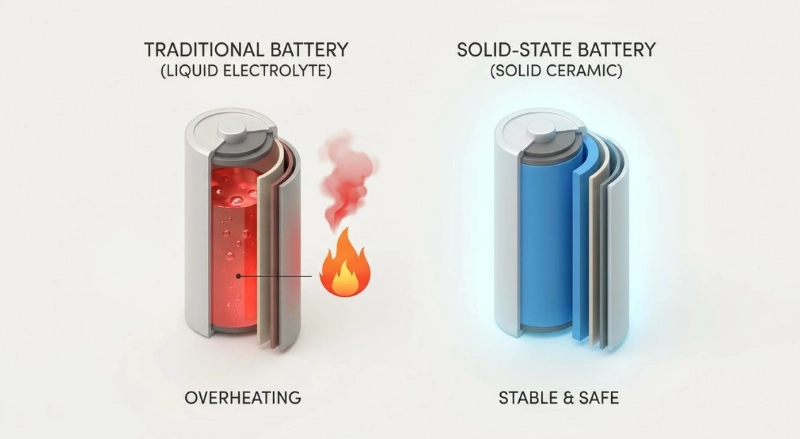
To understand why solid-state technology is such a massive leap forward, we must first dissect the vulnerability of conventional lithium-ion batteries. Traditional cells rely on a liquid electrolyte—typically a mixture of lithium salts dissolved in organic carbonate solvents (such as ethylene carbonate or dimethyl carbonate).
While liquid electrolytes excel at providing high ionic conductivity, which allows lithium ions to travel quickly between the anode and cathode, they possess inherent physical and chemical liabilities:
- Low Flashpoints: The organic solvents used in liquid electrolytes are highly flammable. If a battery’s temperature rises due to overcharging, physical damage, or an internal short circuit, these solvents can easily vaporize and ignite.
- Thermal Runaway Cascades: Once an initial failure occurs, a chain reaction known as thermal runaway can begin. The heat from a localized short circuit decomposes the liquid electrolyte, releasing oxygen from the cathode. This oxygen further fuels the combustion, creating a self-sustaining, rapidly accelerating fire that can reach temperatures exceeding 1,000°C.
- Leakage and Corrosion: Over time, physical stress, vibration, or manufacturing defects can cause the battery casing to rupture. Liquid electrolyte leakage not only damages surrounding circuitry but also poses toxicological and environmental hazards.
What is a Solid-State Electrolyte?
A solid-state electrolyte (SSE) is a solid material capable of conducting ions (specifically lithium ions in the context of lithium batteries) through its crystalline or polymeric structure. Unlike liquids, which physically flow around the electrodes, solid electrolytes act as both the ion-conducting medium and the physical separator between the anode and cathode.
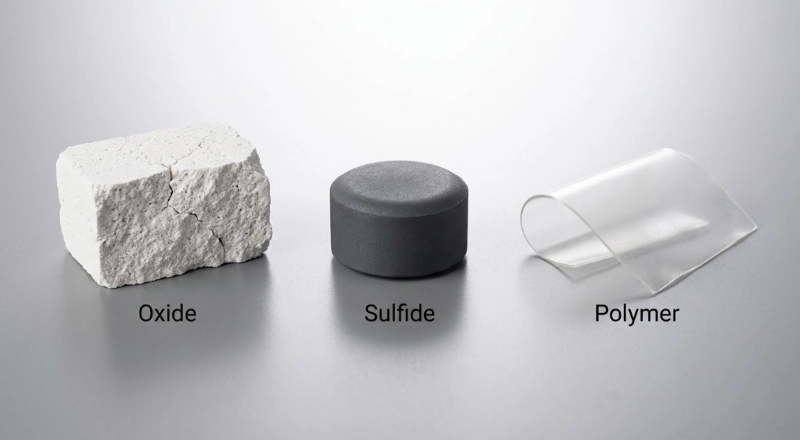
Scientists and engineers generally classify solid electrolytes into three major categories, each offering distinct mechanical and electrochemical properties:
- Oxide-Based Electrolytes: Materials like LLZO (Lithium Lanthanum Zirconium Oxide) and LATP (Lithium Aluminum Titanium Phosphate) are ceramic-like solids. They exhibit exceptional chemical stability, high safety profiles, and high mechanical strength, though they can be brittle and difficult to manufacture at scale.
- Sulfide-Based Electrolytes: Compounds like LPS (Lithium Phosphorus Sulfur) offer outstanding ionic conductivity, sometimes even matching or exceeding that of liquid electrolytes. They are softer than oxides, allowing for better physical contact with electrodes. However, they must be processed carefully because they can release toxic hydrogen sulfide gas if exposed to atmospheric moisture.
- Polymer-Based Electrolytes: Solid polymer electrolytes (SPEs), typically based on polyethylene oxide (PEO) complexed with lithium salts, are flexible, lightweight, and relatively easy to manufacture using existing roll-to-roll processes. Their main drawback is lower ionic conductivity at room temperature, often requiring elevated operating temperatures to function efficiently.
Eliminating Thermal Runaway: The Nonflammable Solid Battery
The primary driver behind the shift to solid-state chemistry is the elimination of fire risks. By replacing volatile organic liquid solvents with non-combustible inorganic solids, the risk of ignition is virtually neutralized.
By replacing volatile liquid components with inorganic materials, researchers have successfully engineered a nonflammable solid battery capable of surviving extreme thermal stress. Even when subjected to extreme external heat, localized short circuits, or physical penetration, these solid-state systems do not undergo the catastrophic self-heating typical of liquid-electrolyte cells.
Furthermore, solid-state electrolytes do not release oxygen at low temperatures when exposed to heat, preventing the positive feedback loop that drives thermal runaway. If a solid-state cell is physically punctured by a nail or crushed during a collision, there is no volatile liquid to leak, vaporize, and catch fire. The solid structure remains intact, isolating the reactants and localizing any damage to the immediate impact zone.
Dendrite Suppression and Mechanical Barrier Safety
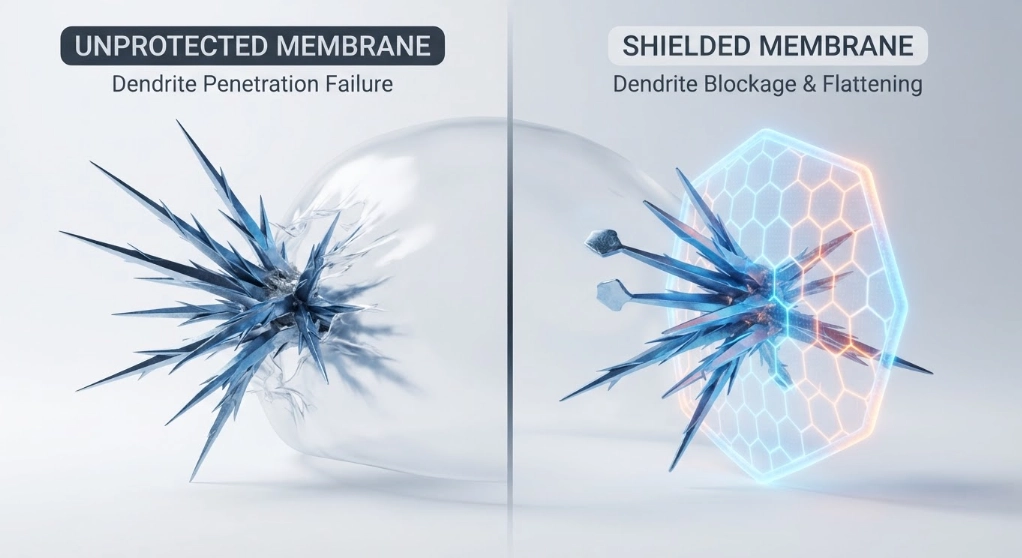
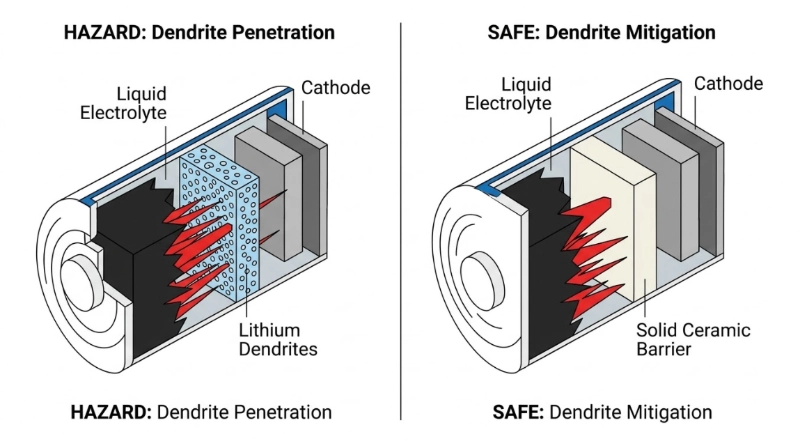
Another critical hazard in high-energy-density batteries is the formation of lithium dendrites. Dendrites are microscopic, needle-like metallic structures that can grow on the surface of the lithium anode during rapid charging cycles.
In traditional liquid batteries, these dendrites can easily grow through the porous polymeric separator. Once a dendrite reaches the cathode, it creates a direct internal short circuit, sparking localized heating and triggering thermal runaway.
Solid electrolytes solve this problem through sheer mechanical impedance. High-modulus ceramic or crystalline solid electrolytes, such as LLZO, possess a mechanical stiffness that physically blocks and deflects the growth of lithium dendrites. This mechanical defense mechanism is a cornerstone of solid electrolyte safety, ensuring that internal pathways remain isolated even under high electrical stress. This enables the safe integration of pure lithium metal anodes, which radically increases energy density without compromising safety.
Designing a Safer Battery Chemistry
Beyond preventing physical short circuits and resisting high temperatures, solid-state technology allows for the design of a fundamentally more stable electrochemical system. Liquid electrolytes severely restrict the choice of active materials because they are prone to degradation and side reactions at high voltages.
Transitioning away from flammable organic carbonates toward solid alternatives allows engineers to establish a fundamentally safer battery chemistry. In this controlled environment, side reactions are heavily suppressed.
Solid electrolytes feature a much wider electrochemical stability window (often up to 5V or higher), allowing for the safe use of high-voltage cathodes and ultra-high-capacity anodes. Additionally, they prevent the transition-metal dissolution from the cathode that typically poisons liquid systems over time. By stabilizing these chemical interfaces, solid-state batteries minimize the formation of resistive interphases, keeping the internal resistance stable and predictable over thousands of charge-discharge cycles.
Comprehensive Comparison: Liquid vs. Solid-State Electrolytes
To illustrate the technical differences and trade-offs of these systems, the table below compares traditional liquid-electrolyte batteries with the primary solid-state pathways.
| Performance & Safety Parameter | Traditional Liquid Electrolyte | Oxide-Based Solid Electrolyte | Sulfide-Based Solid Electrolyte | Polymer-Based Solid Electrolyte |
|---|---|---|---|---|
| Flammability | High (Contains volatile organic solvents) | Zero (Incombustible ceramic) | Zero (Incombustible solid) | Low to Medium (Self-extinguishing options available) |
| Thermal Runaway Risk | High | Extremely Low | Extremely Low | Very Low |
| Dendrite Resistance | Poor (Relies on thin polymer separators) | Excellent (High mechanical shear modulus) | Moderate to High (Requires specialized coatings) | Moderate (Better at high temperatures) |
| Operating Temp. Range | Narrow (-20°C to 60°C) | Wide (-40°C to 150°C) | Wide (-30°C to 120°C) | Limited (Requires heat, typically >50°C) |
| Risk of Toxic Leakage | High (Corrosive hydrofluoric acid risk) | None | None (But risk of H2S gas if damaged in humid air) | None |
| Ionic Conductivity | Excellent (10-3 to 10-2 S/cm) | Moderate to High (10-4 to 10-3 S/cm) | Outstanding (10-3 to 10-2 S/cm) | Poor at Room Temp (10-6 to 10-5 S/cm) |
| Mechanical Flexibility | High (Liquid flows easily) | Brittle (Prone to cracking under mechanical stress) | Semi-Flexible (Good plastic deformability) | Highly Flexible (Excellent processing properties) |
Overcoming the Interface Challenge
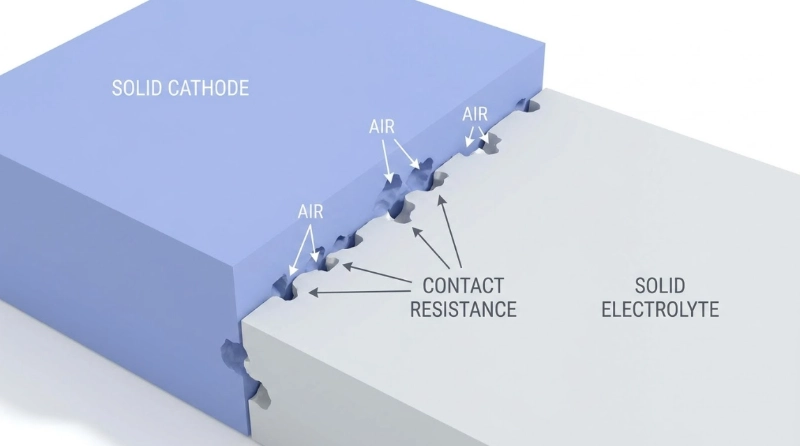
While the safety benefits of solid electrolytes are undeniable, the transition from laboratory prototypes to commercially viable products is not without its challenges. The most significant of these is the “solid-solid interface” issue.
In a liquid battery, the liquid electrolyte wets the entire surface of the porous electrodes, ensuring seamless contact and low resistance. In a solid-state system, joining two solid materials (such as a ceramic electrolyte and a solid cathode) creates microscopic gaps, high interfacial impedance, and physical delamination during the volume changes associated with charging and discharging.
To overcome this, manufacturers are employing several cutting-edge engineering techniques:
- Nanoscale Interfacial Coatings: Applying ultra-thin buffer layers (such as alumina or lithium phosphate) via Atomic Layer Deposition (ALD) to stabilize the interfaces and facilitate smoother ion transfer.
- Hybrid or Semi-Solid Designs: Utilizing small amounts of gel or liquid electrolytes localized at the interface to wet the contact points, creating a transitional hybrid system that dramatically improves performance while retaining the non-flammable benefits of the solid bulk.
- Applying External Pressure: Using specialized battery pack enclosures that apply controlled mechanical pressure to the cells, keeping the solid components in intimate physical contact throughout their lifecycle.
Future Outlook and Market Adoption
The roadmap for solid-state deployment is accelerating. Aerospace and defense sectors, where safety and energy density are paramount and cost sensitivity is lower, are already integrating early-stage solid-state systems.
As global regulatory bodies tighten safety standards for electric transport, the industry’s pivot toward solid electrolyte safety represents an irreversible trend. Major automakers have established joint ventures and dedicated research divisions to bring solid-state vehicles to market.
The transition from lab-scale prototypes to mass-produced vehicles equipped with a nonflammable solid battery requires addressing several engineering hurdles. However, as manufacturing methods mature and economies of scale take effect, we will see these batteries move from niche, high-performance applications to mainstream consumer products. While early iterations face cost barriers, the ultimate promise of a safer battery chemistry makes solid-state technology the undisputed holy grail of energy storage.
FAQs
1. Are solid-state batteries completely explosion-proof?
While no battery is 100% immune to failure under extreme, theoretical conditions, solid-state batteries are significantly safer than traditional liquid-electrolyte batteries. Because they do not contain flammable organic solvents, they eliminate the primary fuel source for fires and explosions. Even under extreme physical damage (like a nail penetration test) or severe overcharging, they do not suffer from the self-sustaining thermal runaway reactions that cause traditional batteries to catch fire or explode.
2. When will we see solid-state batteries in everyday electric cars?
Solid-state batteries are currently entering small-scale trial productions and niche applications. Major automotive manufacturers and battery developers project that commercial electric vehicles equipped with full solid-state batteries will begin hitting the market in limited numbers between 2027 and 2030. Hybrid solid-state batteries (which use a small amount of liquid or polymer gel to bridge the interfaces) are likely to appear in consumer vehicles even sooner.
3. Do solid-state batteries perform well in cold and hot weather?
Yes, solid-state batteries typically offer a wider operating temperature range than liquid-electrolyte batteries. At high temperatures, they remain incredibly stable and do not degrade or present fire risks. At extremely low temperatures, they do not suffer from liquid freezing or sluggish ion transport in the same way traditional cells do, though polymer-based solid-state batteries do require active heating to maintain optimal ionic conductivity. Sulfide- and oxide-based systems are proving to be exceptionally resilient in extreme temperatures.