









How Battery Voltage Requirements Affect Product Design
Release time: 2026-06-30
Table of Contents
In the rapidly evolving landscape of modern electronics, from ultra-compact wearable devices to high-performance electric vehicles (EVs), the underlying architecture is dictated by a silent but absolute ruler: power. Specifically, the intricate dance of electrical potential defines what a device can do, how long it can do it, and what it looks like. Understanding how battery voltage requirements affect product design is not just a secondary engineering task; it is the foundational blueprint upon which all subsequent hardware and software decisions are built.
Whether an engineering team is developing the next generation of smart home IoT sensors or a heavy-duty industrial drone, the voltage profile of the energy source will invariably constrain and guide their choices. This comprehensive guide explores the multifaceted impact of voltage on product development, component selection, physical geometry, thermal management, and how emerging technologies are reshaping the rules of power architecture.
1. The Fundamental Physics of Voltage in Product Engineering
Before diving into complex architectural decisions, it is crucial to establish why voltage holds such sway over electronic design. In simple terms, voltage (measured in Volts, V) is the electrical “pressure” that pushes charged electrons (current, measured in Amps, A) through a conducting loop, enabling them to do work, such as illuminating a display or spinning a motor.
In battery-powered devices, power (Watts, W) is the product of voltage and current ($P = V \times I$). Therefore, to achieve a specific power output required by a device’s components, engineers must balance voltage and current.
The Concept of the “Operating Voltage Window”
Batteries do not deliver a constant voltage. A standard Lithium-ion (Li-ion) cell, for instance, might be labeled as 3.7V (nominal), but it actually charges up to 4.2V and discharges down to around 3.0V before the protection circuitry cuts it off to prevent permanent chemical damage. This shifting baseline creates a moving target for designers. Every component downstream—microprocessors, wireless transceivers, sensors, and displays—must either be capable of operating across this entire fluctuating range, or the design must incorporate power regulation circuits to stabilize the voltage.
If a product’s primary microcontroller requires a strict 3.3V to function reliably, the natural voltage drop of a standard Li-ion cell poses a significant challenge once the battery depletes past the 3.3V mark, even if there is still usable capacity (milliamp-hours, mAh) left inside the cell.
2. Component Selection and Power Architecture
The earliest stages of product development are heavily influenced by the chosen power source. The overarching product battery power design sets the parameters for every integrated circuit (IC) placed on the Printed Circuit Board (PCB).

Power Management Integrated Circuits (PMICs)
Because raw battery voltage fluctuates, products almost always rely on Power Management ICs. The selection of these regulators—specifically Low Dropout Regulators (LDOs), Buck (step-down) converters, and Boost (step-up) converters—is entirely dependent on the battery’s voltage relative to the component requirements.
- Buck Converters (Step-Down): Used when the battery voltage is higher than the component requirement (e.g., stepping down a 7.4V battery pack to 5V for a USB output). They are highly efficient but take up physical space on the PCB because they require external inductors and capacitors.
- Boost Converters (Step-Up): Used when the battery voltage is lower than required (e.g., boosting a 1.5V AA battery to 3.3V for a sensor). Boosting voltage inherently draws more current from the battery, which can lead to faster depletion and potential heat generation.
- Buck-Boost Converters: These can both step up and step down voltage, which is ideal for a 3.7V battery powering a 3.3V system. When the battery is fully charged at 4.2V, it steps down; when the battery drops to 3.0V, it steps up. However, these are more expensive, more complex, and consume more physical board space.
Engineers must meticulously weigh the cost, efficiency, and size of these PMICs against the initial voltage profile of the battery.
3. Physical Constraints and Industrial Design
One of the most visible ways battery voltage impacts a product is in its physical size, shape, and weight. The industrial design of a product is often a compromise between aesthetic desires and the harsh realities of electrochemical energy storage.
Series vs. Parallel Configurations
To achieve higher voltages, battery cells must be wired in series. To achieve higher capacity (longer runtime), they are wired in parallel.
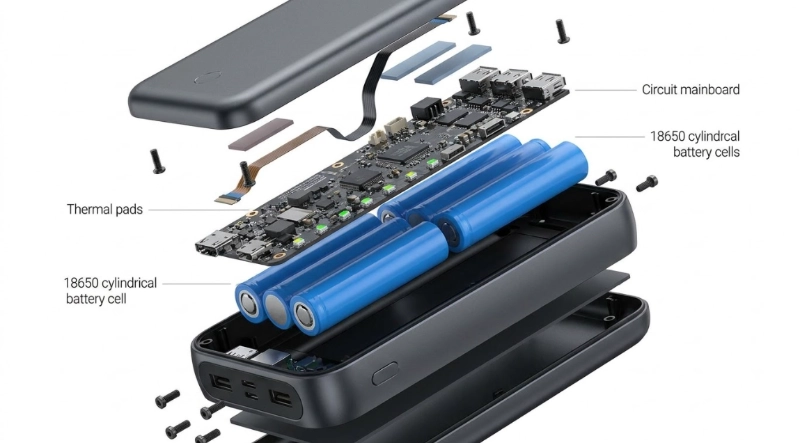
If a high-performance drone requires 14.8V to generate enough thrust from its motors, engineers cannot simply use a single standard Li-ion cell. They must use a 4S (four cells in series) configuration (3.7V \times 4 = 14.8V). This immediately dictates that the product’s physical casing must be large enough to accommodate four battery cells, their wiring, and a more complex Battery Management System (BMS) to balance the charge across the series.
Determining the ideal battery design voltage early in the product lifecycle is critical. If the industrial design team creates a sleek, ultra-thin housing before the engineering team calculates the required voltage to drive the internal mechanics, the project will inevitably face severe delays and redesigns. A higher voltage requirement intrinsically demands a bulkier form factor using traditional cylindrical (like 18650s) or even stacked pouch cells.
Thermal Management Considerations
Voltage and current directly influence thermal output. When stepping up voltage significantly, or when drawing massive amounts of current because the battery voltage is too low to meet the power demand efficiently, heat is generated (I^2R losses).
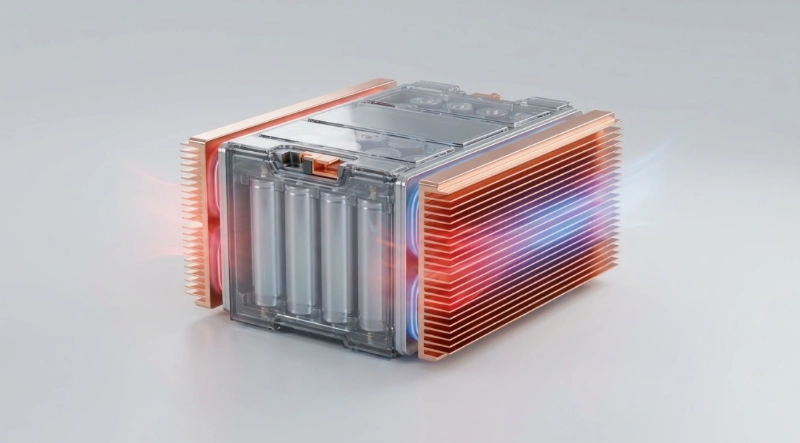
In tightly packed consumer electronics, excessive heat degrades battery lifespan, throttles processor performance, and creates safety hazards. The product’s casing must be designed to dissipate this heat, sometimes requiring internal heat sinks, thermal paste, or active cooling fans—all of which consume physical volume and dictate the final look and feel of the product.
4. The Impact of Emerging Technologies
The paradigm of product engineering is currently undergoing a massive shift due to breakthroughs in battery chemistry. For decades, designers have been bound by the limitations of liquid-electrolyte Lithium-ion cells. Today, the horizon is changing.
The Promise of Solid-State Technology

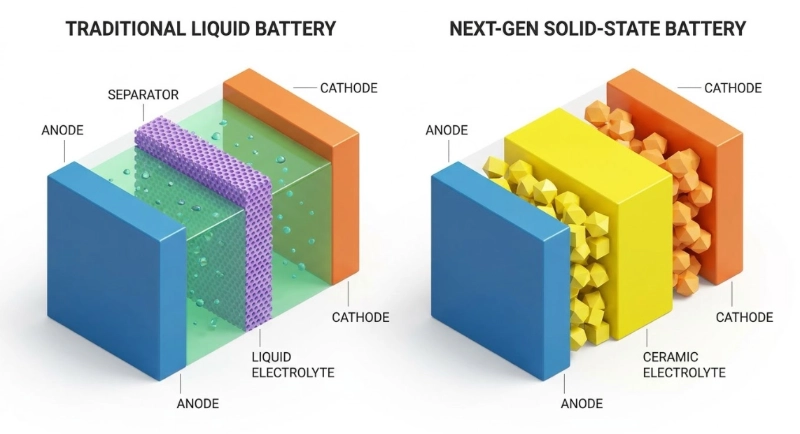
Solid-state batteries replace the liquid or polymer gel electrolyte found in traditional batteries with a solid conductive material. This shift provides massive benefits in energy density and safety (they are far less prone to thermal runaway or catching fire when punctured).
From a product design standpoint, the unique characteristics of solid-state battery voltage profiles are revolutionary. These cells can often operate at higher individual voltages and maintain a much flatter discharge curve. A flatter discharge curve means the voltage remains relatively stable for a longer period before dropping off sharply at the end of its capacity.
This stability drastically simplifies power architecture. If the voltage doesn’t fluctuate as wildly, engineers can rely on simpler, smaller, and cheaper PMICs. The reduced need for heavy protective packaging (due to increased safety) and the higher energy density mean that devices can become thinner and lighter without sacrificing performance. Furthermore, as solid-state technology matures, the ability to manufacture these batteries in custom shapes and flexible form factors will grant industrial designers unprecedented freedom.
5. Strategies for Optimal Voltage Integration
How do industry-leading engineering firms navigate these constraints? The secret lies in a holistic approach to system architecture.
Finding the ideal voltage matching battery is a complex puzzle that involves balancing the peak current demands of the device with the discharge capabilities of the cell. If a device has a cellular modem that occasionally requires a 2-Amp pulse to transmit data, a simple coin cell battery, despite having the correct nominal voltage (e.g., 3V), will experience massive “voltage sag” under that load, causing the device to instantly reboot or crash.
A Comparative Look at Battery Chemistries for Product Design
To better understand how different chemistries dictate design choices, refer to the table below, which outlines the voltage characteristics and typical applications of common battery types.
| Battery Chemistry | Nominal Voltage | Typical Operating Range | Key Design Constraints | Common Product Applications |
|---|---|---|---|---|
| Lithium-Ion / Li-Po | 3.7V | 3.0V – 4.2V | Requires strict BMS; liquid electrolyte limits extreme shapes; moderate voltage sag. | Smartphones, Laptops, EVs, Drones |
| LiFePO4 (Lithium Iron Phosphate) | 3.2V | 2.5V – 3.65V | Heavier/bulkier for the same capacity; incredibly safe; flat discharge curve. | Solar storage, RVs, Medical Devices |
| Alkaline (Primary) | 1.5V | 0.8V – 1.5V | Voltage drops steadily; high internal resistance prevents high-current draws. | Remote controls, Toys, Basic sensors |
| Lithium Coin (CR2032) | 3.0V | 2.0V – 3.0V | Tiny footprint; extremely low current output; severe voltage sag under load. | Watches, AirTags, Biosensors |
| Solid-State (Emerging) | ~3.8V+ | Varies (often flatter) | Currently expensive; enables ultra-thin designs; high safety margins. | Next-gen Wearables, Advanced EVs |
As the table illustrates, the matching process is critical. Designing an IoT tracker with a coin cell means the software must be written to sip power in micro-amps and avoid sudden transmission spikes. The hardware and software must be entirely built around the limitations of the battery.
6. Industry-Specific Design Paradigms
The impact of voltage requirements scales dramatically depending on the industry.
Wearables and IoT Devices
In the world of wearables, physical space is the absolute premium. Engineers cannot afford the space for large boost converters or multi-cell series configurations. Here, optimal product battery power design is centered around ultra-low-power microcontrollers (like the ARM Cortex-M0+ series) that are specifically designed to operate efficiently all the way down to 1.8V. By lowering the operating voltage of the internal logic, the device consumes exponentially less power (P = V^2 / R in CMOS circuits), allowing a tiny battery to last for weeks or months.

High-Power Electronics and Mobility
Conversely, in power tools, e-bikes, and electric vehicles, high current is the enemy of efficiency because it creates massive heat in the wiring and motors. Therefore, engineers opt to increase the battery design voltage significantly. By stepping up the system to 48V, 400V, or even 800V architectures (in the case of modern EVs), the system can deliver the same massive total wattage to the motors while keeping the current (Amps) low. This allows for thinner wiring harnesses (saving weight and cost) and reduces heat generation, entirely altering the mechanical layout and thermal management systems of the vehicle.
7. Safety, Certification, and Regulatory Compliance
Voltage doesn’t just affect how a product works and looks; it affects how it can be legally sold. Regulatory bodies across the globe (such as the FCC, CE, UL, and FAA) have strict guidelines regarding battery voltage and energy capacity.
For instance, the aviation industry strictly regulates the transport of lithium batteries based on their Watt-hour (Wh) rating (which, again, is derived from Voltage x Amp-hours). Designing a product with a voltage configuration that pushes the total energy above 100Wh significantly restricts how that product can be shipped internationally, fundamentally altering the logistics, supply chain, and packaging design of the product. Furthermore, higher voltage systems (typically anything over 42V to 60V DC) begin to enter the realm of “hazardous voltage,” requiring entirely different safety testing, creepage and clearance distances on the PCB, and user isolation protocols, all of which add complexity and size to the product.
8. Conclusion
In conclusion, battery voltage is not merely an afterthought to be solved by plugging in a cell at the end of the design cycle. It is a fundamental constraint that shapes the PCB layout, the choice of processors, the thermal dissipation strategy, and the physical ergonomics of the final enclosure.
As we look toward the future, the commercialization and stabilization of solid-state battery voltage will unlock new dimensions of hardware design, allowing for thinner, safer, and more powerful devices. Until then, engineers and designers must continue their intricate balancing act, recognizing that securing a robust and precise voltage matching battery is the ultimate cornerstone of successful, reliable, and user-friendly product innovation.
FAQs
Q1: How does battery voltage drop affect device performance over time?
As a battery discharges, its voltage naturally drops. If a device lacks proper voltage regulation (PMICs), this drop can lead to reduced performance—such as screens dimming, motors spinning slower, or wireless transmissions failing. In advanced devices, power management circuits compensate for this drop to maintain consistent performance, but once the battery voltage falls below the regulator’s minimum input threshold, the device will shut down entirely to protect itself.
Q2: Why can’t I just use a higher voltage battery to make my product run faster or longer?
Using a battery with a voltage higher than what the product’s components are rated for will instantly fry the microchips and sensors, leading to catastrophic failure. If you want longer runtime (capacity), you must increase the milliamp-hours (mAh) while keeping the voltage matched to the system. To run faster or more powerfully, the entire system architecture—from processors to power regulators—must be redesigned to accept and handle a higher input voltage safely.
Q3: What makes solid-state batteries different in terms of voltage and product integration?
Solid-state batteries replace liquid electrolytes with solid materials. This not only makes them vastly safer and less prone to fires, but it also provides a flatter discharge voltage curve and higher energy density. For product designers, this means they can use smaller, simpler power management components and reduce the bulky safety packaging previously required for lithium-ion cells, enabling the creation of ultra-thin, flexible, and highly efficient next-generation devices.