









What Is a Solid-State Battery Pack
Release time: 2026-07-01
Table of Contents
The global transition toward electrification has never been more urgent. From the rapid proliferation of electric vehicles (EVs) to the increasing demand for high-capacity renewable energy storage grids, the modern world is voraciously consuming power. For decades, the lithium-ion (Li-ion) battery has been the undisputed champion of this revolution, powering everything from our smartphones to space exploration equipment. However, traditional lithium-ion technology is fast approaching its theoretical and physical limitations regarding energy density, charging speed, and, most importantly, safety. Enter the next frontier of energy storage: the solid-state revolution.
Understanding this transformative technology is crucial for engineers, investors, and consumers alike. The emergence of the solid-state battery pack represents a monumental leap forward in electrochemistry, promising to solve the fundamental flaws of its liquid-based predecessors. In this comprehensive guide, we will explore the underlying science, structural components, undeniable advantages, current manufacturing challenges, and the future trajectory of this groundbreaking technology.
Core Definition: Moving Beyond Liquids
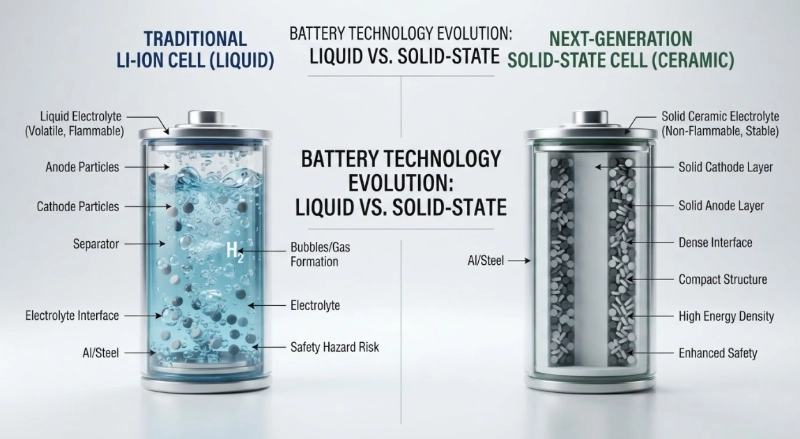
To grasp what makes this new technology revolutionary, one must first understand the limitations of conventional batteries. A standard lithium-ion battery consists of three main components: a positive electrode (cathode), a negative electrode (anode), and a liquid electrolyte that acts as the conductive medium allowing lithium ions to travel between the two electrodes during charging and discharging cycles. Separating the anode and cathode is a thin, porous polymer separator that prevents short circuits.
The Achilles’ heel of this traditional design is the liquid electrolyte. These organic solvents are inherently highly volatile, flammable, and prone to leakage. Under extreme conditions—such as overcharging, physical puncture, or excessive heat—these liquid electrolytes can ignite, leading to a catastrophic chain reaction known as thermal runaway.
A solid-state battery replaces this volatile liquid electrolyte (and the polymer separator) with a solid, highly conductive material. This seemingly simple substitution fundamentally alters the battery’s physics, enabling the use of much higher-capacity electrode materials, such as pure lithium metal, which were previously deemed too dangerous or unstable for use in liquid systems.
Inside the Solid-State Battery System
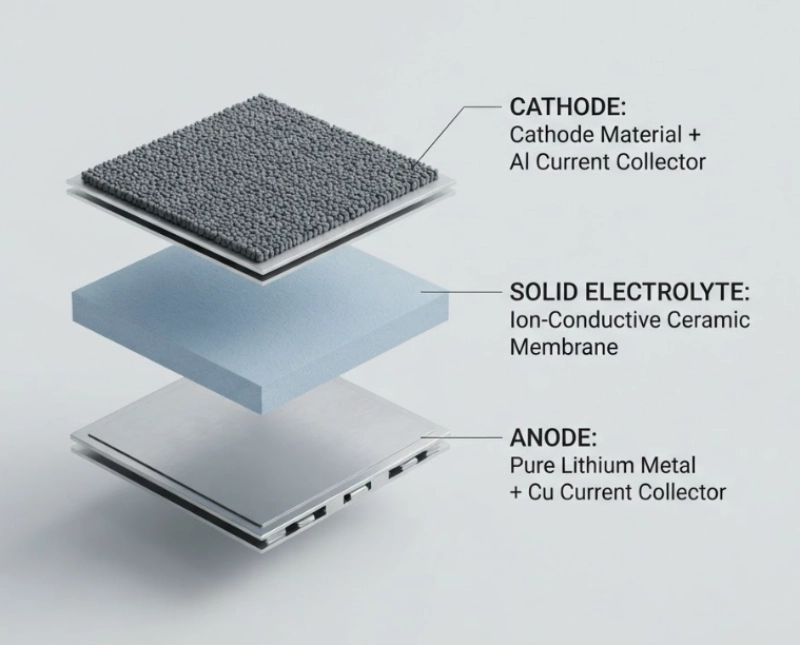
To fully appreciate the engineering marvel of this technology, we must look at its internal blueprint. The overall solid-state battery pack structure is defined by its simplified yet highly sophisticated layering. While traditional batteries require complex casing to contain liquids and accommodate swelling, the solid-state architecture is significantly more rigid and compact.
The Cathode (Positive Electrode)
The cathode is the source of the lithium ions. In solid-state systems, manufacturers often use advanced metal oxides, similar to those found in high-end lithium-ion batteries. Common materials include Lithium Nickel Manganese Cobalt Oxide (NMC) or Lithium Iron Phosphate (LFP). Because the solid electrolyte provides a more stable interface, cathodes can be engineered to be thicker, holding more active material and thereby increasing the total energy capacity of the cell.
The Solid Electrolyte (The Game Changer)
This is the heart of the innovation. It serves a dual purpose: conducting lithium ions efficiently while acting as an impenetrable physical barrier (separator) between the anode and cathode. Researchers are currently focusing on three primary categories of solid materials:
- Inorganic Solid Oxides: Examples include LLZO (Lithium Lanthanum Zirconium Oxide). These offer excellent chemical and thermal stability but can be brittle.
- Sulfide-Based Solid Electrolytes: These offer extremely high ionic conductivity—sometimes exceeding that of liquid electrolytes—and are relatively soft, making them easier to process. However, they can react with moisture in the air to produce toxic hydrogen sulfide gas, requiring stringent manufacturing environments.
- Solid Polymer Electrolytes (SPE): These are flexible, easy to manufacture, and scalable. Unfortunately, most polymers currently require high operating temperatures (often above 60°C) to achieve sufficient ionic conductivity, limiting their use in consumer electronics.
The Anode (Negative Electrode)
The holy grail of battery research is the utilization of a pure lithium metal anode. In liquid batteries, using lithium metal causes the formation of “dendrites”—needle-like metallic structures that grow across the liquid electrolyte during charging, eventually piercing the separator and causing a short circuit. A robust solid electrolyte acts as a physical wall, suppressing dendrite growth. By using pure lithium metal instead of bulky graphite, the battery’s energy density can be drastically increased, dramatically reducing the weight and size of the final product.
Comparative Analysis: Solid-State vs. Traditional Lithium-Ion
To illustrate the stark differences between these two paradigms, the following table breaks down the critical performance metrics.
Table 1: Performance and Characteristic Comparison
| Feature / Metric | Traditional Lithium-Ion (Liquid) | Next-Generation Solid-State |
|---|---|---|
| Electrolyte State | Liquid (Organic Solvents) | Solid (Oxides, Sulfides, or Polymers) |
| Safety Profile | Moderate to Low (Risk of thermal runaway, fire, and leakage) | Extremely High (Non-flammable, no leakage, high thermal stability) |
| Energy Density (Wh/kg) | ~250 – 300 Wh/kg (Nearing theoretical limit) | ~400 – 500+ Wh/kg (Potential for massive increases) |
| Anode Material | Graphite or Silicon-Graphite blend | Pure Lithium Metal (Enables much higher capacity) |
| Charging Speed | Moderate (Fast charging degrades liquid and causes heat) | Ultra-Fast (Solid materials handle rapid ion flow with less heat generation) |
| Operating Temperature | Narrow window (Performance drops in extreme cold/heat) | Wide window (Highly resilient to extreme temperature fluctuations) |
| Cycle Life | ~1,000 – 2,000 cycles | Projected to exceed 5,000 – 10,000 cycles |
| Current Cost | Low (Massive economies of scale achieved) | Very High (Currently in R&D and early pilot production phases) |
Unpacking the Revolutionary Advantages
The transition from liquid to solid brings forth a myriad of benefits that will disrupt multiple trillion-dollar industries.
A. Unprecedented Safety Standards
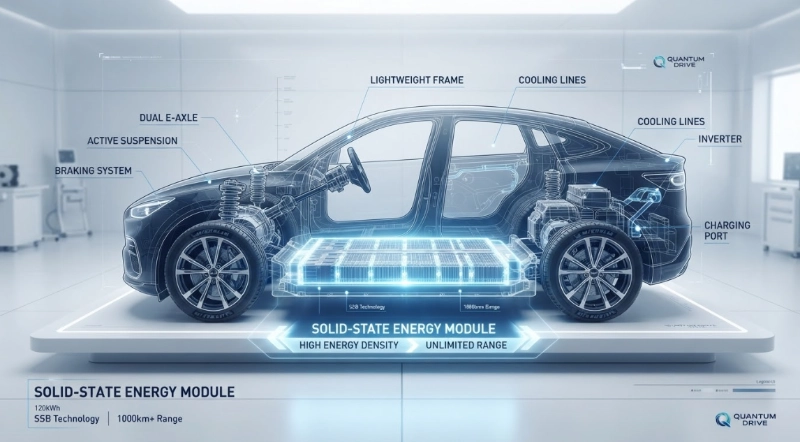
Safety is the paramount driver for this technology. Because solid electrolytes are non-flammable and do not vaporize at high temperatures, the risk of explosion is virtually eliminated. This intrinsic safety means that engineers can remove heavy, expensive cooling and thermal management systems from battery packs, further reducing the overall weight and complexity of the vehicle or device.
B. Massive Leaps in Energy Density
Energy density refers to the amount of energy a battery can hold relative to its weight (gravimetric) or size (volumetric). By enabling the use of a pure lithium metal anode and removing the need for a bulky liquid matrix, solid-state designs can pack significantly more energy into a much smaller footprint. For electric vehicles, this translates directly to “range anxiety” becoming a relic of the past. EVs equipped with these systems could easily achieve 600 to 800 miles on a single charge.
C. Lightning-Fast Charging Capabilities
One of the main bottlenecks in EV adoption is charging time. Pushing too much current into a liquid-based battery causes rapid degradation and dangerous heat build-up. Solid electrolytes are far more resilient to the stresses of high-voltage fast charging. Future systems are projected to charge from 10% to 80% capacity in less than 10-15 minutes, mirroring the convenience of filling up a traditional internal combustion engine car at a gas station.
D. Extended Lifespan and Durability
Liquid electrolytes degrade over time, reacting with the electrodes to form a Solid Electrolyte Interphase (SEI) layer that thickens and consumes active lithium, slowly reducing the battery’s capacity. Solid electrolytes do not suffer from this same continuous parasitic reaction. As a result, the cycle life of these next-generation cells is expected to outlast the mechanical lifespan of the vehicles or devices they power, significantly reducing e-waste.
Real-World Applications and the Need for Customization
While the automotive sector (EVs) dominates the headlines regarding solid-state investments, the implications of this technology reach far beyond passenger cars. The unique physical properties of solid materials allow for innovative form factors.
In the aerospace and defense sectors, where every gram of weight is heavily scrutinized, and equipment must survive extreme temperature variations, standard commercial cells are inadequate. Designing a custom battery pack tailored to the specific aerodynamic geometry of a drone, or the strict payload requirements of a low-earth orbit satellite, becomes much easier with solid-state technology. Because there are no liquids to contain, cells can be manufactured in unconventional shapes—curved, ultra-thin, or structurally integrated directly into the chassis of a device.
Other prominent applications include:
- Medical Implants: Pacemakers and neural stimulators require absolute safety and longevity. Solid-state micro-batteries eliminate the risk of toxic leakage inside the human body.
- Consumer Electronics: Imagine smartphones that charge in 3 minutes and only need to be charged once a week, or smartwatches that operate for a month without a charger.
- Grid Energy Storage: Massive utility-scale storage facilities require immense safety protocols to prevent grid-level fires. Solid-state tech offers a safer alternative for storing wind and solar energy.
Why Aren’t Solid-State Battery Everywhere Yet?
If the benefits are so overwhelming, why are we still primarily using lithium-ion technology? The transition from lab-scale prototypes to gigawatt-hour mass production is fraught with immense engineering and economic challenges.
The Interface Resistance Problem
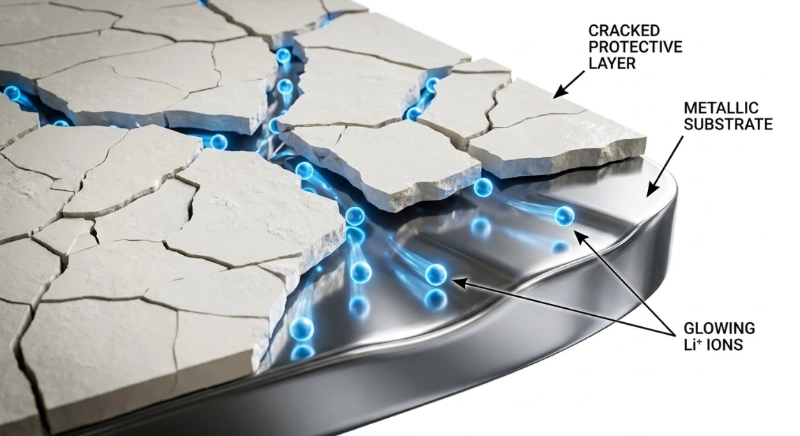
In a liquid battery, the electrolyte wets the electrodes, ensuring perfect atomic-level contact. In a solid-state system, joining two solid materials (the solid electrolyte and the solid electrodes) creates microscopic gaps. This “interfacial resistance” severely slows down the flow of lithium ions. Engineers must apply immense external pressure to the cells to maintain contact, or develop advanced nano-coatings to bridge the gaps.
Manufacturing and Scaling Complexities
The current global battery manufacturing infrastructure is built entirely around liquid electrolyte injection processes. Transitioning requires entirely new manufacturing equipment, clean rooms with zero-humidity environments (especially for sulfide-based materials), and novel material handling techniques. Maintaining the precise integrity of the solid-state battery pack structure during high-speed, roll-to-roll mass production remains one of the most closely guarded secrets among leading R&D firms.
Table 2: Solid Electrolyte Material Challenges
| Electrolyte Type | Primary Advantage | Major Manufacturing Challenge |
|---|---|---|
| Oxides (Ceramics) | Exceptional stability, high safety | Very brittle, poor contact with electrodes, requires high-temp sintering. |
| Sulfides | Highest ionic conductivity, soft | Reacts with ambient moisture to form toxic H2S gas; requires extreme dry rooms. |
| Polymers | Flexible, easy to process | Low conductivity at room temperature, poor compatibility with lithium metal. |
The Era of Bespoke Energy Solutions
As the technology matures, we will see a shift away from commoditized, one-size-fits-all energy solutions. The inherent safety and structural stability of solid electrolytes mean that battery packs no longer need to be restricted to traditional cylindrical or prismatic steel cans.
For highly specialized industries, such as subsea exploration or advanced robotics, off-the-shelf solutions are often insufficient. These sectors will increasingly rely on manufacturers capable of producing a specialized custom battery pack to fit unique spatial constraints and specific power output profiles. By manipulating the chemistry of the solid electrolyte and the physical dimensions of the cell, manufacturers can optimize either for absolute maximum energy density (for long-range applications) or for maximum power delivery (for heavy-lifting industrial equipment).
Future
The race to commercialize this technology is the most intensely competitive arena in modern industrial science. Automotive giants like Toyota, Volkswagen, and BMW have partnered with specialized tech firms like QuantumScape, Solid Power, and Prologium, pouring billions of dollars into research and development.
Currently, small-scale solid-state and semi-solid-state (which still contain a small amount of liquid gel) batteries are already available in niche consumer electronics and some wearable devices. However, the true inflection point—the mass deployment in passenger electric vehicles—is generally projected to occur between 2027 and 2030.
In the initial rollout phase, we can expect to see these advanced power systems featured exclusively in premium, luxury, and high-performance vehicles due to the high initial manufacturing costs. As economies of scale are achieved and production yields improve, the cost per kilowatt-hour will inevitably fall, allowing the technology to trickle down into standard consumer vehicles and everyday electronics.
Conclusion
We are standing on the precipice of a new era in energy storage. The transition away from volatile liquid solvents towards robust, solid architectures will redefine the capabilities of our technology. By solving the safety, charging, and density limitations of traditional lithium-ion systems, the commercial viability of the solid-state battery pack will dictate the speed at which the world can fully embrace clean, renewable electrification. While manufacturing hurdles remain, the sheer scale of global investment guarantees that the solid-state future is not a matter of if, but when.
FAQs
Q1: Why are solid-state batteries considered fundamentally safer than traditional lithium-ion batteries?
A: Traditional lithium-ion batteries utilize liquid organic electrolytes that are highly volatile and flammable. If the battery is damaged, overcharged, or subjected to extreme heat, this liquid can ignite, causing an explosive thermal runaway. Solid-state technology replaces this dangerous liquid with a solid, non-flammable material (like ceramic oxides or solid polymers). Because there is no combustible liquid to catch fire or leak, the risk of explosion is virtually eliminated, even if the battery is physically punctured.
Q2: Will solid-state technology make electric vehicles (EVs) cheaper?
A: Initially, no. Because the technology requires new materials and entirely new manufacturing processes, early solid-state systems will be more expensive than current lithium-ion batteries and will likely only be found in luxury EVs. However, in the long term, they have the potential to reduce costs. Because they are intrinsically safe, automakers can remove expensive and heavy cooling/safety systems from the vehicle. Additionally, as mass manufacturing scales up, the cost of materials and production will decrease significantly.
Q3: Can my current devices (like smartphones or older EVs) be retrofitted or upgraded to use solid-state batteries?
A: In most cases, no. Solid-state cells have different charging protocols, thermal behaviors, and physical structural requirements than liquid-based batteries. The Battery Management System (BMS) software and the physical circuitry inside current devices are calibrated specifically for the behavior of traditional lithium-ion cells. Upgrading would require not just swapping the battery, but fundamentally redesigning the device’s internal electronics and software systems.