









Temperature Performance of Solid-State Batteries
Release time: 2026-06-30
Table of Contents
The global transition toward electrification and renewable energy storage has catalyzed an unprecedented race in advanced materials science. At the very center of this technological revolution is the quest to overcome the limitations of conventional energy storage systems. For decades, lithium-ion technology has served as the backbone of consumer electronics, electric vehicles (EVs), and grid-scale storage. However, the inherent thermal vulnerabilities of liquid electrolytes have pushed researchers to develop safer, more resilient alternatives. The most promising solution to emerge from this global research effort is the solid-state battery, an innovation poised to redefine how we store and deploy electrical energy under extreme environmental conditions.
The overarching theme of longevity, safety, and efficiency in next-generation energy storage hinges heavily on thermal dynamics. Understanding how these advanced cells react to heat and cold is not merely an academic exercise; it is the fundamental prerequisite for widespread commercialization. This comprehensive analysis explores the thermal thermodynamics, engineering implications, and real-world capabilities of solid electrolyte systems, providing a deep dive into their operational superiority.
The Science of Solid Electrolytes vs. Liquid Systems
To fully grasp the thermal advantages of next-generation cells, one must first understand the foundational differences in internal architecture. Traditional cells rely on liquid organic solvents to transport lithium ions between the anode and the cathode during charging and discharging cycles. While effective at room temperature, these liquid solvents are highly volatile, flammable, and susceptible to severe performance degradation when exposed to thermal extremes.
In contrast, solid-state architecture replaces this liquid solvent with a solid material—typically a ceramic, sulfide glass, or solid polymer. This fundamental shift eliminates the presence of highly combustible liquids. The solid electrolyte acts as both the ionic conductor and a physical separator, preventing the growth of microscopic lithium fibers (dendrites) that frequently cause short circuits in older technologies.
By altering the medium of ionic transport, engineers fundamentally change the thermal boundaries of the power source. The thermodynamics of solid materials are vastly different from liquids. Solids do not boil, they do not freeze in the conventional sense that inhibits ionic movement via crystallization, and their thermal expansion coefficients are generally much lower and more predictable.
Analyzing the Operational Spectrum
When evaluating next-generation energy storage, the primary metric of interest for automotive and industrial engineers is the thermal operating window. The solid-state battery temperature range represents a massive leap forward compared to legacy systems. Traditional lithium-ion units operate optimally only within a narrow band, typically between 15°C and 35°C (59°F to 95°F). Pushing them beyond these limits requires complex, heavy, and expensive active thermal management systems (TMS).
Solid-state cells, however, boast an exceptionally broad operational window. Depending on the specific electrolyte chemistry (e.g., oxides like LLZO, sulfides, or advanced polymers), these cells can function efficiently in environments that would cause liquid-based systems to fail entirely.
To illustrate this paradigm shift, the following table provides a comparative breakdown of thermal metrics across different storage technologies:
| Metric / Characteristic | Traditional Lithium-Ion (Liquid) | Advanced Solid-State Architecture |
|---|---|---|
| Optimal Operating Range | 15°C to 35°C | -20°C to 80°C |
| Maximum Safe Limit | ~60°C (Risk of swelling/venting) | >100°C (Stable structure) |
| Thermal Runaway Threshold | ~150°C – 200°C | >300°C (Varies by specific chemistry) |
| Freezing Point of Electrolyte | ~ -20°C (Drastic capacity loss) | N/A (Solid phase remains stable) |
| Cooling System Requirement | Heavy, active liquid cooling | Minimal, potential for passive air |
As demonstrated in the table above, the expansive solid-state battery temperature range directly translates to reduced vehicle weight, lower manufacturing costs, and significantly enhanced safety profiles across a variety of industrial applications.
Winter Operations and Sub-Zero Capabilities
One of the most persistent complaints regarding electric vehicles is the drastic loss of driving range during the winter months. In standard liquid-electrolyte cells, cold environments cause the liquid to become highly viscous. This increased viscosity severely impedes the movement of lithium ions. Furthermore, charging liquid systems in freezing conditions forces the lithium ions to plate onto the surface of the anode rather than intercalating into it, leading to irreversible capacity loss and hazardous dendrite formation.
Evaluating battery performance in cold weather is therefore a critical priority for automakers targeting markets in Northern Europe, Canada, and the northern United States. Solid-state architecture offers a profound solution to this chilling problem. Because the electrolyte is already in a solid phase, there is no liquid to freeze or thicken. While ionic conductivity does naturally decrease with temperature in all materials according to the Arrhenius equation, the baseline stability of solid electrolytes—particularly sulfide-based glasses—allows for continued, safe ionic transport even at temperatures plunging below -30°C.
Moreover, because the physical barrier of the solid electrolyte is robust, the risk of lithium plating and subsequent dendrite penetration during cold charging is virtually eliminated. This means that next-generation EVs will be able to accept fast-charging rates in the dead of winter without permanently damaging the internal chemistry of the cell. For consumers, this translates to reliable winter range and the elimination of “range anxiety” during extreme cold snaps. The optimization of battery performance in cold weather is not just an engineering victory; it is a vital step toward the mass adoption of electric mobility in all global climates.
Managing Extreme Heat and Thermal Runaway
On the opposite end of the spectrum, extreme heat presents a different set of catastrophic risks for legacy energy storage. When liquid organic electrolytes are subjected to high ambient heat or extreme internal loads (such as ultra-fast charging or aggressive driving), they begin to vaporize. This creates immense internal pressure, leading to cell swelling, venting of toxic gases, and ultimately, thermal runaway—a self-sustaining, uncontrollable fire that is notoriously difficult to extinguish.
The architecture of a true high temperature battery requires a fundamental redesign to eliminate these volatile components. By utilizing thermally stable ceramics or sulfides, solid-state cells inherently remove the fuel source for thermal runaway. Inorganic solid electrolytes typically do not decompose until they reach temperatures well exceeding 300°C.
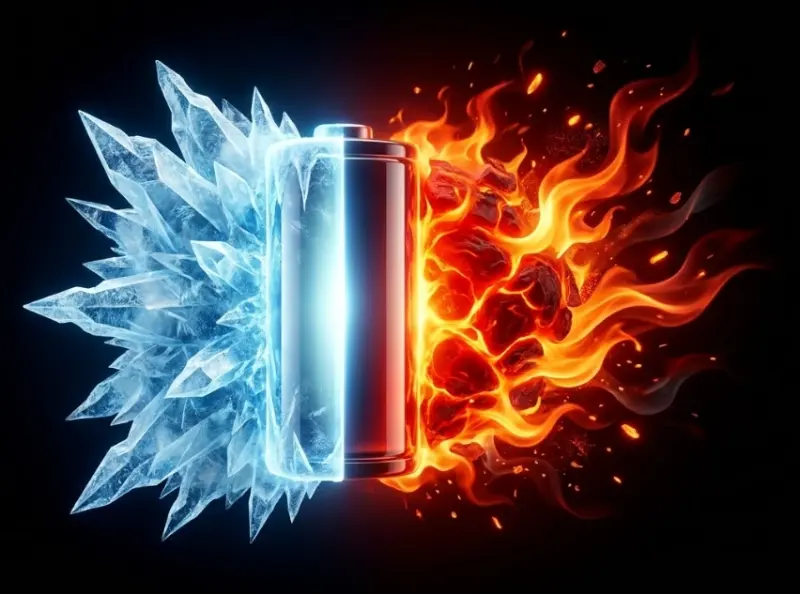
This thermal resilience unlocks new engineering possibilities. Without the constant threat of thermal runaway at 60°C, engineers can design packs much more densely. The need for elaborate, heavy liquid-cooling jackets surrounding every individual cell is drastically reduced. In many cases, designers are exploring the feasibility of passive air-cooling, which strips hundreds of pounds from an EV’s curb weight, thereby indirectly increasing its overall range and efficiency.
Beyond consumer vehicles, this extreme heat tolerance is revolutionizing other sectors. In aerospace, where weight is a premium and thermal extremes are a given, the demand for a reliable high temperature battery is immense. Satellites orbiting in direct solar radiation or drones operating in desert environments require power sources that will not degrade or combust under intense thermal stress. Solid-state technology provides the exact ruggedness required for these demanding, zero-margin-for-error environments.
Materials Science: The Three Pillars of Solid Electrolytes

To appreciate how these cells manage thermal extremes, we must look at the specific materials being utilized. The industry is currently exploring three primary categories of solid electrolytes, each with distinct thermal behaviors
1. Solid Polymer Electrolytes (SPEs)
Polymers were among the first solid electrolytes explored. They offer excellent flexibility, making them easy to manufacture and scale using existing roll-to-roll techniques. However, standard polymers often struggle with ionic conductivity at room temperature and below. They typically require elevated temperatures (often above 60°C) to allow ions to flow freely. While excellent for specific high-heat industrial applications, advanced composite polymers are actively being developed to improve their cold-weather viability for standard consumer use.
2. Inorganic Oxide Electrolytes
Ceramic-based oxides, such as Lithium Lanthanum Zirconium Oxide (LLZO), are highly stable. They offer exceptional safety and can withstand incredibly high heat without degrading. They are completely non-flammable and provide a robust physical barrier against dendrites. The primary thermal challenge with oxides is not the electrolyte itself, but the interfaces. Because ceramics are rigid, changes in temperature can cause the electrodes to expand and contract, potentially leading to delamination (separation) between the electrolyte and the electrode.
3. Sulfide-Based Electrolytes
Sulfides are currently considered the frontrunner for EV integration. They offer ionic conductivity that rivals, and sometimes exceeds, that of liquid electrolytes at room temperature. More importantly, they maintain relatively excellent conductivity across a broad thermal spectrum. They are softer than oxides, allowing them to maintain better interfacial contact during the thermal expansion and contraction cycles that occur naturally during charging and discharging.
Engineering and Economic Implications of Thermal Stability
The ripple effects of thermal stability extend far beyond the physical chemistry of the cells. The commercial implications are staggering. In a modern electric vehicle, the battery pack represents the single largest cost component. However, a significant portion of that cost, weight, and volume is not the energy-storing material itself, but the auxiliary systems required to keep it safe.
Liquid cooling pumps, chilling plates, heavy protective housings, and sophisticated thermal management software add immense complexity to vehicle manufacturing. By integrating a solid-state battery, manufacturers can envision a future where the pack architecture is radically simplified.
A simplified, structurally integrated pack—often referred to as cell-to-pack (CTP) or cell-to-chassis (CTC) design—becomes much safer and easier to execute when the underlying chemistry is thermally inert. This simplification reduces manufacturing assembly time, cuts down on the raw materials needed for auxiliary systems, and allows for more active energy-storing material to be packed into the same physical footprint. Consequently, volumetric energy density skyrockets, paving the way for EVs that can comfortably travel 600 to 800 miles on a single charge, regardless of the ambient environmental conditions.
Grid Storage and Macro-Level Energy Solutions
While automotive applications dominate the headlines, the thermal resilience of these advanced cells has profound implications for global energy infrastructure. As the world transitions to solar and wind power, massive grid-level energy storage installations are required to balance supply and demand.
These massive battery farms are often located in remote environments subject to harsh weather. Solar farms in the Mojave Desert face blistering daytime heat, while wind farms in the North Sea endure freezing winter storms. Maintaining massive HVAC systems to keep liquid-based storage containers at a comfortable 25°C requires a significant amount of parasitic energy—energy that should be going into the grid.
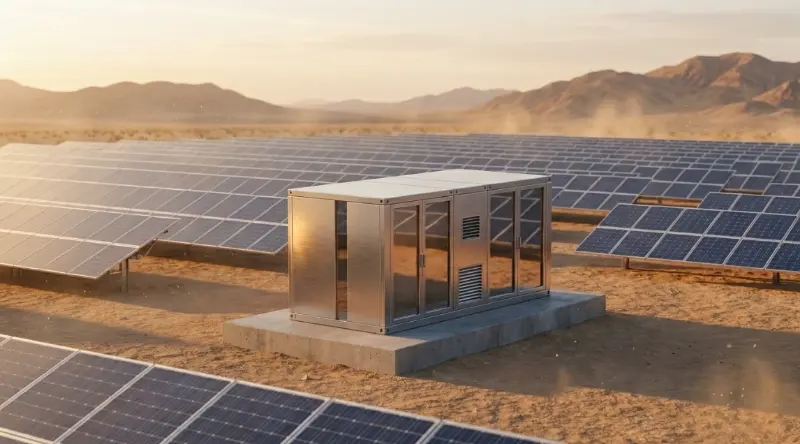
Utilizing thermally stable solid electrolytes in these grid installations drastically reduces the parasitic load of cooling and heating systems. The cells can sit baking in the desert sun or freezing in the northern tundra while maintaining high round-trip efficiency and zero risk of catastrophic fire spreading through the facility.
The Remaining Challenges and Future Outlook
Despite the overwhelming theoretical and proven laboratory advantages, the transition to commercial mass production is not without hurdles. The primary challenge facing engineers today revolves around interfacial resistance.
As temperatures fluctuate, materials naturally expand and contract. In a liquid system, the fluid easily flows to maintain contact with the electrodes as they change volume during charging (lithiation) and discharging (delithiation). In a purely solid system, maintaining perfect, microscopic contact between rigid materials across thousands of thermal cycles is incredibly difficult. If the materials pull apart due to thermal contraction in freezing environments, microscopic gaps form. These gaps act as massive resistors, halting the flow of ions and severely reducing the power output.
Researchers are aggressively pursuing solutions to this phenomenon. Techniques such as applying high external pressure to the cell, developing softer, more malleable sulfide glasses, and engineering elastic composite interlayers are showing immense promise in mitigating interfacial degradation over extreme thermal cycles.
In conclusion, the evolution of energy storage is inextricably linked to the mastery of thermodynamics. By entirely eliminating the volatile, temperature-sensitive liquid solvents of the past, the industry is unlocking a new era of reliability. From guaranteeing a reliable commute during a blizzard to ensuring the safety of aerospace components in scorching heat, the thermal superiority of these advanced cells is undeniable. As manufacturing processes mature and interfacial challenges are resolved, the solid-state battery will transition from a laboratory marvel to the foundational technology powering our electrified future, proving that true efficiency knows no climate boundaries.
FAQs
1. Why do solid electrolyte cells maintain better driving range in freezing winter conditions?
Traditional liquid electrolytes become viscous and sluggish in cold weather, which drastically slows down ionic movement and increases internal resistance. Solid electrolytes do not freeze or thicken; their solid structure allows for a much more consistent flow of lithium ions even in sub-zero temperatures, resulting in significantly less capacity loss and better range retention.
2. Does this new technology completely eliminate the need for cooling systems in electric vehicles?
While they significantly reduce the need for aggressive, heavy liquid-cooling systems, they may not eliminate thermal management entirely. Fast charging still generates ohmic heat. However, because the thermal runaway threshold is so much higher, vehicles can likely rely on lighter, simpler passive air-cooling or drastically reduced liquid systems, saving considerable weight and cost.
3. What is “interfacial resistance,” and why is it a problem during extreme temperature changes?
Interfacial resistance refers to the barrier formed between the solid electrolyte and the electrodes. When temperatures change drastically, the solid materials expand and contract. Because they are solid, this movement can cause microscopic gaps or delamination between the layers. These gaps block the flow of ions, which can lower the power output of the cell. Overcoming this through flexible composite materials is a major focus of current research.