









Main Materials Used in Solid-State Batteries
Release time: 2026-06-24
Table of Contents
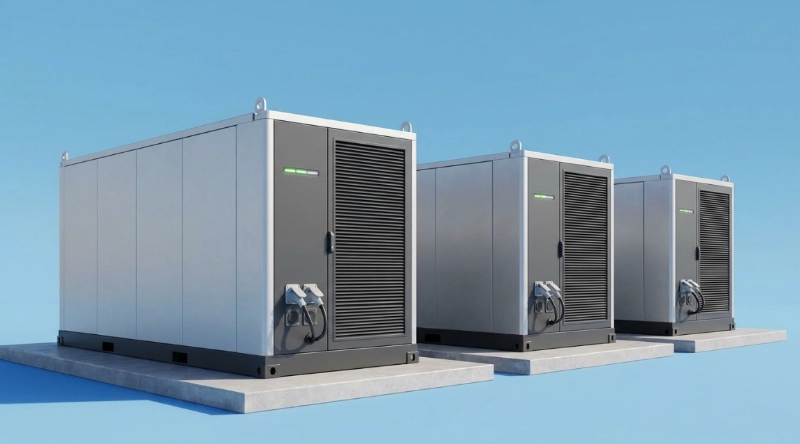
The global energy landscape is undergoing a monumental shift. As electric vehicles (EVs), grid storage, and portable electronics demand higher energy densities, faster charging times, and absolute safety, conventional lithium-ion batteries are reaching their theoretical limits. The liquid organic electrolytes that have powered our digital age for decades carry inherent risks of leakage, thermal runaway, and combustion.
To overcome these safety hazards and energetic ceilings, energy storage technology is transitioning toward solid-state architectures. The commercialization of the solid-state battery represents a paradigm shift, replacing volatile liquid solvents with solid, non-flammable ionic conductors.
However, transitioning from a liquid to a solid-state system is not merely a structural swap; it requires a complete overhaul of the underlying material science. This comprehensive guide explores the primary chemistries, manufacturing challenges, and structural components driving this technological revolution.
1. The Core Innovation: Solid Electrolytes
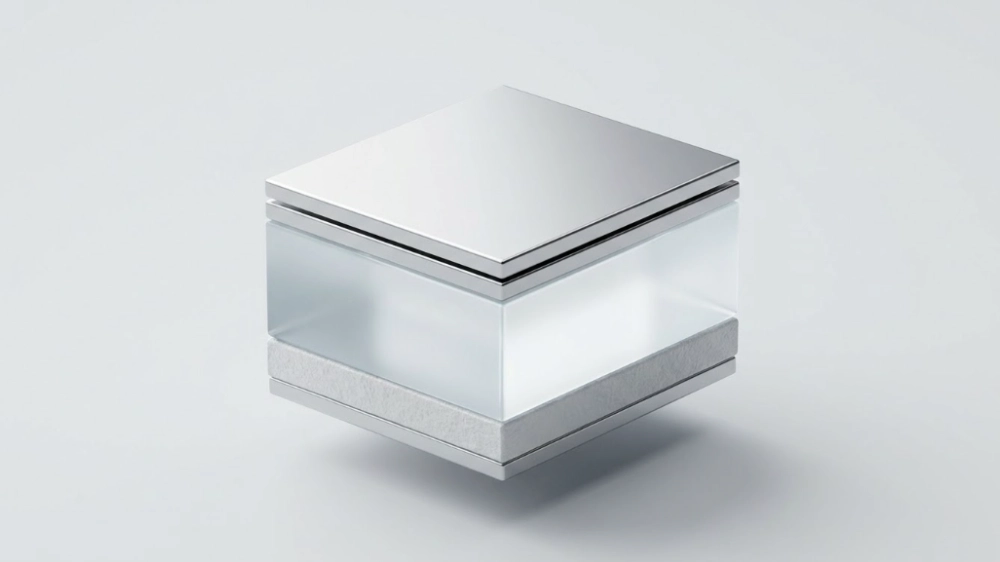
The defining component of any solid-state system is the electrolyte. In conventional batteries, the liquid electrolyte penetrates every crevice of the porous electrodes, ensuring seamless contact. In contrast, solid-state cells rely on a solid membrane that must simultaneously act as an electronic insulator and an exceptional ionic conductor.
Among the various candidates, three distinct classes of solid electrolyte materials have emerged as the frontrunners. Each family exhibits unique trade-offs in terms of ionic conductivity, mechanical flexibility, chemical stability, and ease of manufacturing.
A. Inorganic Oxide Electrolytes
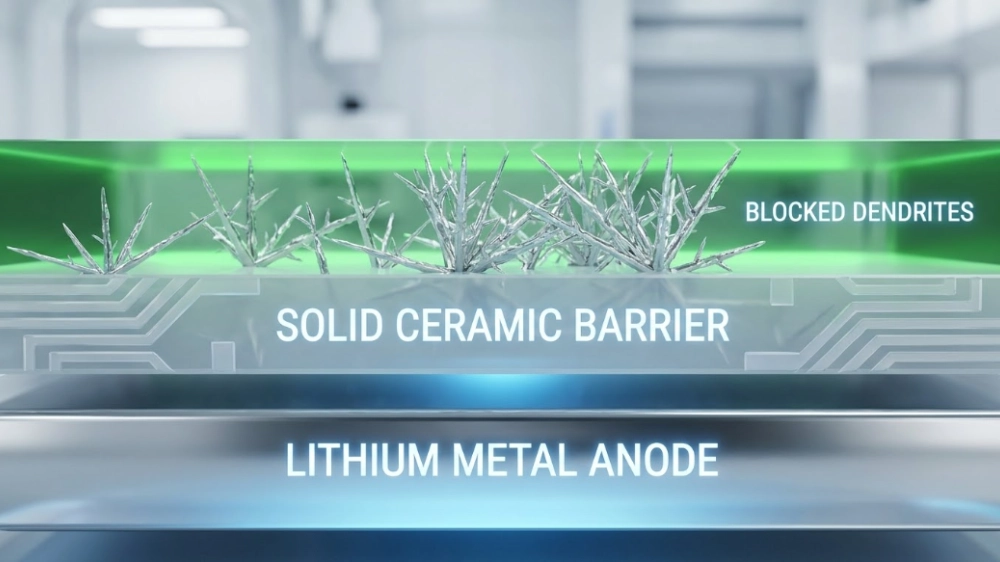
Oxide-based ceramics are highly valued for their exceptional chemical stability and safety profiles. They are highly resistant to lithium dendrite penetration—microscopic crystalline fibers that can grow across the electrolyte and cause short circuits—and are stable at high voltages.
- LLZO (Li7La3Zr2O12): Lithium Lanthanum Zirconate is a garnet-type oxide. It features high ionic conductivity (approaching 10-3 S/cm at room temperature) and excellent electrochemical stability against metallic lithium.
- LATP (Li1.5Al0.5Ti1.5(PO4)3): A NASICON-type phosphate ceramic. While it offers respectable ionic conductivity and is easier to handle in ambient air than sulfides, its titanium content makes it unstable when in direct contact with lithium metal anodes.
- LLTO (Li0.34La0.56TiO3): A perovskite-type oxide known for high bulk ionic conductivity, though its grain-boundary resistance remains a major hurdle.
B. Inorganic Sulfide Electrolytes
Sulfide glasses and glass-ceramics represent the gold standard for pure ionic conductivity. They are softer and more mechanically compliant than oxides, allowing them to form better physical contact with the active electrode particles under compression.
- LGPS (Li10GeP2S12): This crystalline sulfide boasts exceptionally high ionic conductivity (exceeding 10-2 S/cm at room temperature), surpassing even some liquid organic electrolytes.
- Argyrodites (Li6PS5Cl, Li6PS5Br): Highly promising due to their relatively lower cost of raw materials (using phosphorus and sulfur instead of expensive germanium) while maintaining excellent ionic delivery.
Despite their conductivity, sulfides are highly moisture-sensitive. Exposure to even trace atmospheric humidity triggers a chemical reaction that releases toxic hydrogen sulfide (H2S) gas, demanding strict dry-room manufacturing environments.
C. Solid Polymer Electrolytes (SPEs)
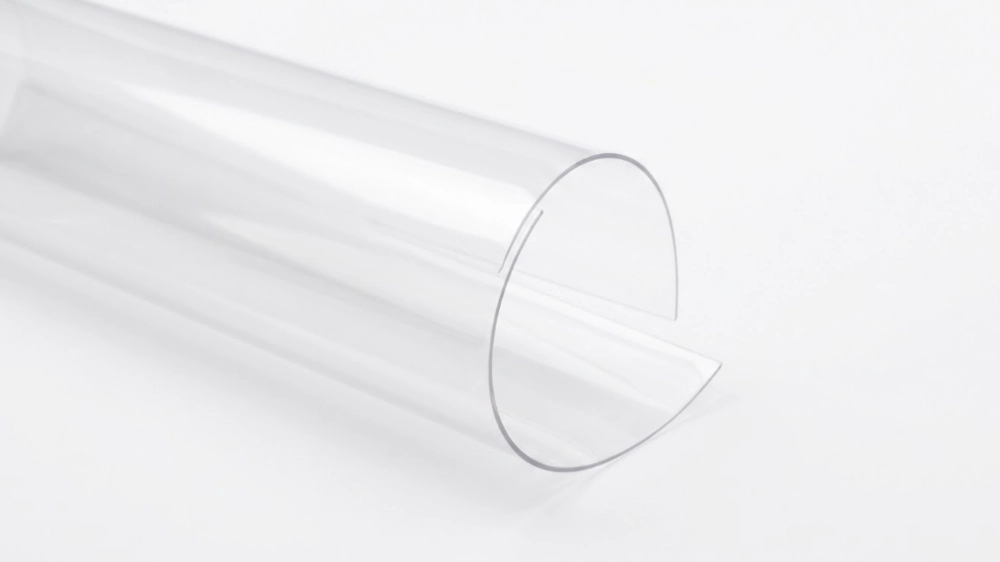
Polymer electrolytes represent the most mature technology from a manufacturing standpoint, as they can leverage existing roll-to-roll battery production lines.
PEO (Polyethylene Oxide): Typically combined with lithium salts like LiTFSI (LiN(SO2CF3)2). PEO-based systems are flexible, easy to process, and cost-effective. However, their ionic conductivity at room temperature is poor (10-6 to 10-5 S/cm). Consequently, systems utilizing PEO must operate at elevated temperatures (typically 60°C or higher) to melt the crystalline domains of the polymer and facilitate ion transport.
To understand how these different solid electrolyte materials stack up against one another, we must evaluate their physical characteristics.
Comparison of Solid Electrolyte Classes
| Material Class | Typical Ionic Conductivity (S/cm at 25°C) | Mechanical Properties | Electrochemical Stability Window | Major Advantage | Key Disadvantage |
|---|---|---|---|---|---|
| Oxides (e.g., LLZO) | 10-4 to 10-3 | Brittle, hard, high elastic modulus | Wide (up to 5.0 V) | Superior safety, dendrite resistance | High interfacial resistance, high sintering temps |
| Sulfides (e.g., LGPS) | 10-3 to >10-2 | Soft, plastic deformation under pressure | Narrow (unstable at high voltages) | Highest conductivity, excellent contact | Moisture sensitivity (H2S hazard), high raw material cost |
| Polymers (e.g., PEO) | 10-6 to 10-5 | Highly flexible, viscoelastic | Moderate (typically <4.0 V) | Seamless manufacturing integration, low cost | Requires high operating temperatures, low voltage limit |
2. Cathode Chemistry: Optimizing Solid Interfaces
The cathode stores the active lithium ions and largely determines the cell’s nominal voltage and overall energy density. While solid-state architectures can theoretically utilize standard lithium-ion cathode materials, the absence of a liquid wetting agent introduces severe interfacial resistance at the cathode-electrolyte boundary.
As the battery charges and discharges, the cathode particles undergo volume changes (expanding and contracting). In a liquid system, the fluid easily deforms to maintain contact. In a solid system, this repeated breathing can cause microscopic delamination, leading to rapid capacity decay.
High-Energy Cathode Materials
To maximize energy density, designers are pairing solid electrolytes with high-capacity cathode formulations:
- NCM (Nickel Cobalt Manganese Oxide, LiNi1-x-yCoxMnyO2): Nickel-rich variants (such as NCM 811) are preferred for their high specific capacity. However, they are prone to mechanical microcracking under high voltages, which accelerates degradation at the solid interface.
- LFP (Lithium Iron Phosphate, LiFePO4): Known for its exceptional thermal stability and long cycle life. LFP undergoes very low volume expansion during cycling, making it highly compatible with rigid solid electrolytes, albeit at a lower energy density than NCM.
- Sulfur Cathodes (S8): A holy grail for solid-state research. Lithium-sulfur (Li-S) chemistries offer a massive theoretical capacity (1675 mAh/g). In liquid systems, Li-S batteries suffer from the “polysulfide shuttle effect,” where active sulfur dissolves into the liquid electrolyte. Solid-state electrolytes physically block this dissolution, potentially unlocking highly stable, ultra-lightweight batteries.
To protect these cathodes from degrading, manufacturers apply nanometer-thick conformal coatings—such as Lithium Niobate (LiNbO3) or Alumina (Al2O3)—onto the cathode active particles. These buffer layers prevent unwanted side reactions and reduce interfacial impedance.

3. Anode Configurations: Transitioning to Metallic Lithium
The anode is where the most dramatic energy density improvements of solid-state systems are realized. Traditional lithium-ion batteries rely on graphite or silicon-graphite composite anodes, which insert lithium ions between carbon layers (intercalation). Solid-state technology permits the utilization of pure, metallic lithium anodes, which offer a theoretical capacity of 3860 mAh/g (compared to graphite’s 372 mAh/g).
Unlike traditional liquid-based configurations, the structural demands on battery anode cathode materials in solid systems are highly complex.
Key Anode Pathways
- Pure Lithium Metal Anodes: By directly plating and stripping metallic lithium on a current collector, the dead weight of the graphite host is eliminated. This can boost volumetric energy density by over 70%. However, during high-rate charging, lithium can deposit unevenly, forming dendrites that crack ceramic electrolytes or slip through grain boundaries, shorting the cell.
- Silicon-Dominant Anodes: For immediate commercialization, some manufacturers use high-content silicon anodes. Silicon holds vast amounts of lithium but expands by up to 300% when fully lithiated. Optimizing these battery anode cathode materials requires mitigating mechanical stress during volume changes. Solid-state frameworks with balanced pressure controls help restrain this dramatic breathing.
- Anode-Free (Lithium-Free) Architectures: Pioneered by industry innovators, this design features no anode material during assembly. Instead, on the first charge, lithium ions migrate from the cathode and plate directly onto a specialized copper current collector, creating a temporary, highly uniform lithium metal anode. This maximizes manufacturing simplicity and volumetric efficiency.
4. Manufacturing Processes and Material Synthesis
Transitioning from lab-scale prototypes to gigawatt-hour mass production is the single greatest hurdle facing the solid-state industry today. Selecting and refining high-purity solid-state battery materials is the foundational step, but processing them into defect-free, ultra-thin membranes at high throughput requires completely new manufacturing paradigms.
The synthesis pathways for oxide and sulfide ceramics differ significantly:
Oxide Processing (The High-Temperature Path)
Oxide ceramics require high-temperature sintering (often exceeding 1000°C) to densify the green ceramic tape into a highly conductive, low-porosity membrane.
- Challenge: High temperatures cause volatile lithium to evaporate, leading to structural defects. Furthermore, co-sintering the oxide electrolyte directly with the cathode often leads to unwanted interdiffusion and chemical degradation at the interface.
- Solution: Researchers are developing ultra-fast high-temperature sintering (UHS) techniques and low-temperature sol-gel synthesis to bypass long furnace dwell times.
Sulfide Processing (The Moisture-Controlled Path)
Sulfide ceramics are mechanically softer and can be cold-pressed at room temperature to form dense, low-resistance pathways without high-temperature sintering.
- Challenge: Extreme sensitivity to moisture requires the entire production line to operate under highly controlled ultra-dry rooms or inert argon gas environments, significantly driving up capital expenditure (CAPEX).
- Solution: Developing chemical additives that scavenge moisture or chemically passivate the sulfide surface to improve ambient air stability.
Material Synthesis and Processing Requirements
| Precursor Materials | Processing Atmosphere | Shaping Technique | Primary Manufacturing Hurdles |
|---|---|---|---|
| Oxide Ceramics• Lanthanum oxide (La2O3)• Zirconium dioxide (ZrO2)• Lithium carbonate (Li2CO3) | Ambient air or oxygen-rich environment | Tape casting, slot-die coating, high-temp sintering | • Brittle separator cracking during handling• High energy costs of high-temp ovens |
| Sulfide Ceramics• Lithium sulfide (Li2S)• Phosphorus pentasulfide (P2S5)• Lithium halides (LiCl, LiBr) | Inert Argon or Ultra-Dry Room (Dew point < -40°C) | Wet slurry coating, dry roll-to-roll pressing | • Toxic H2S gas mitigation• High cost of lithium sulfide (Li2S) precursor |
| Polymers• Polyethylene oxide (PEO)• Lithium salts (LiTFSI)• Plasticizers | Dry Room (Standard dry-room specifications) | Extrusion, solution casting, UV-curing | • Achieving mechanical strength at 60°C• Preventing polymer degradation under high voltages |
5. Technical Outlook and the Road to Commercialization
The transition to solid state is not a monolithic leap, but a staged progression. Initial commercial entries are already appearing in niche, high-value markets such as military hardware, aerospace, and premium wearables where cost sensitivity is secondary to safety and energy density.
For the mass electric vehicle market, a hybrid approach—often referred to as “semi-solid-state”—is serving as a crucial stepping stone. These cells incorporate a small fraction of gel or liquid electrolyte (typically <10 wt%) to wet the interfaces of the solid ceramic or polymer separator. This hybrid design drastically reduces interfacial resistance while retaining a majority of the safety and energy benefits of a completely dry cell.
Ultimately, the acceleration of this energy transition hinges on our ability to mass-produce reliable solid-state battery materials at a competitive cost. As gigafactories optimize their roll-to-roll processes and precursor costs decline, solid-state chemistries will unlock unprecedented range, charging speed, and safety, solidifying their position as the ultimate future of electrochemical energy storage.
FAQ
Q1: Why are solid-state battery configurations considered so much safer than conventional lithium-ion batteries?
Traditional lithium-ion batteries use liquid organic solvents (such as ethylene carbonate) as the electrolyte medium. These liquids are highly volatile and flammable. If a battery is punctured, overcharged, or suffers an internal short circuit, it can overheat, causing the liquid electrolyte to vaporize and catch fire—a dangerous phenomenon known as thermal runaway.
Solid-state systems replace this flammable liquid with solid ceramics, glasses, or polymers. These inorganic materials are non-flammable, thermally stable up to high temperatures, and possess a high shear modulus that physically resists the growth of short-circuit-causing lithium dendrites. This virtually eliminates the risk of catastrophic battery fires.
Q2: What is “interfacial resistance,” and why is it a major challenge in solid-state battery systems?
In a standard battery, the liquid electrolyte flows freely around the microscopic active particles of the anode and cathode, creating an seamless, continuous contact area for lithium ions to transfer.
In a solid-state system, two solid materials (the solid electrolyte separator and the solid electrode particles) are pressed against each other. On a microscopic scale, these solid surfaces are rough and uneven, leaving microscopic gaps and voids. This poor physical contact restricts the pathway for lithium ions to cross the boundary, resulting in high “interfacial resistance” (or impedance). This high resistance slows down ion transport, reducing the battery’s overall power output, slow down charging speeds, and causing faster capacity loss over time.
Q3: When will solid-state batteries become affordable for mainstream electric vehicles?
While semi-solid-state batteries are already entering limited production for high-end electric vehicles, fully solid-state batteries are projected to reach mass-market affordability (hitting the target cost of under $100/kWh) between 2028 and 2032.
The timeline is dictated by manufacturing and raw material supply chains. Currently, precursor materials like lithium sulfide (Li2S) are highly expensive, and producing large, defect-free, ultra-thin ceramic separators at high yields requires new equipment. As manufacturing techniques mature, dry-room operating costs decrease, and production volumes scale, costs will fall rapidly, eventually making solid-state cars cost-competitive with standard EVs.