









Which Battery Is Better for High-Safety Devices?
Release time: 2026-06-22
Table of Contents
In an era dominated by rapid technological integration, the devices we rely on have become smaller, more powerful, and increasingly integrated into critical aspects of life—from implantable medical technology and aerospace navigation to hazardous industrial monitoring. As these systems grow more complex, the demands placed on their power sources escalate. The core question for hardware engineers, product designers, and procurement specialists remains: Which battery technology truly delivers the compromise-free security required for mission-critical applications?
Choosing a high safety battery is no longer just about preventing standard failures; it is about guaranteeing absolute operational continuity under extreme thermal, physical, and electrical stress. This article explores the leading battery chemistries competing for dominance in critical applications, analyzing their safety profiles, operational limits, and future trajectories.
The Landscape of Battery Safety: Understanding the Risks
To understand which battery is best, we must first examine what makes conventional batteries inherently volatile. Traditional lithium-ion (Li-ion) batteries rely on liquid organic electrolytes. While highly efficient at conducting lithium ions, these liquid solvents are highly flammable and have a narrow thermal stability window.
Common Failure Modes in Critical Devices
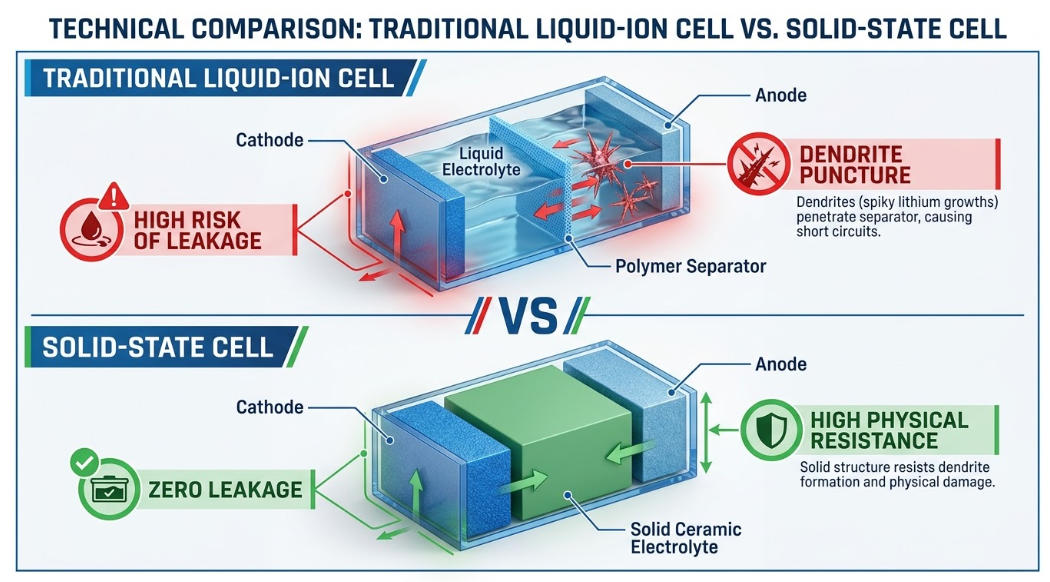
- Thermal Runaway: This occurs when an internal short circuit or external heat source causes the battery temperature to rise rapidly. The liquid electrolyte ignites, causing a self-sustaining exothermic reaction that can lead to fire or violent explosion.
- Dendrite Growth: Over repeated charge and discharge cycles, microscopic lithium fibers called dendrites can grow from the anode, piercing the separator and causing a catastrophic internal short circuit.
- Mechanical Deformity: Dropping, crushing, or puncturing a device can rupture internal battery seals, leading to immediate chemical exposure to oxygen and subsequent combustion.
For industries manufacturing medical implants, defense systems, or deep-sea exploration gear, these failure modes are unacceptable. These sectors require a specialized battery for sensitive equipment that prioritizes chemical stability over raw, unchecked energy density.
Comparing Leading Battery Chemistries for Critical Applications
When safety is the non-negotiable metric, several battery chemistries emerge as top contenders. Below, we break down the three primary technologies utilized today: Lithium Iron Phosphate (LiFePO4), Lithium Titanate (LTO), and the highly anticipated Solid-State technology.
1. Lithium Iron Phosphate (LFP)
Lithium Iron Phosphate has long been the gold standard for applications requiring enhanced safety profiles compared to standard Nickel Manganese Cobalt (NMC) chemistries.
- Why it’s safe: The strong covalent bond between phosphorus and oxygen in the PO₄³⁻ tetrahedral structure makes LFP cathode materials highly stable. It exhibits a much higher thermal runaway threshold (around 270°C) compared to NMC (around 210°C).
- Limitations: LFP suffers from lower energy density, which makes it bulkier and less suitable for highly compact wearable devices or sleek medical implants.
2. Lithium Titanate (LTO)
LTO replaces the graphite anode of a standard lithium-ion battery with lithium titanate nanocrystals.
- Why it’s safe: LTO is virtually immune to dendrite formation, meaning the risk of internal short-circuiting over time is practically zero. It can also operate safely in extreme temperatures ranging from -30°C to 55°C.
- Limitations: Its extremely low nominal voltage (around 2.4V) and low energy density limit its use to stationary storage or heavy industrial machinery rather than compact high-safety devices.
3. Solid-State Batteries: The Next Frontier
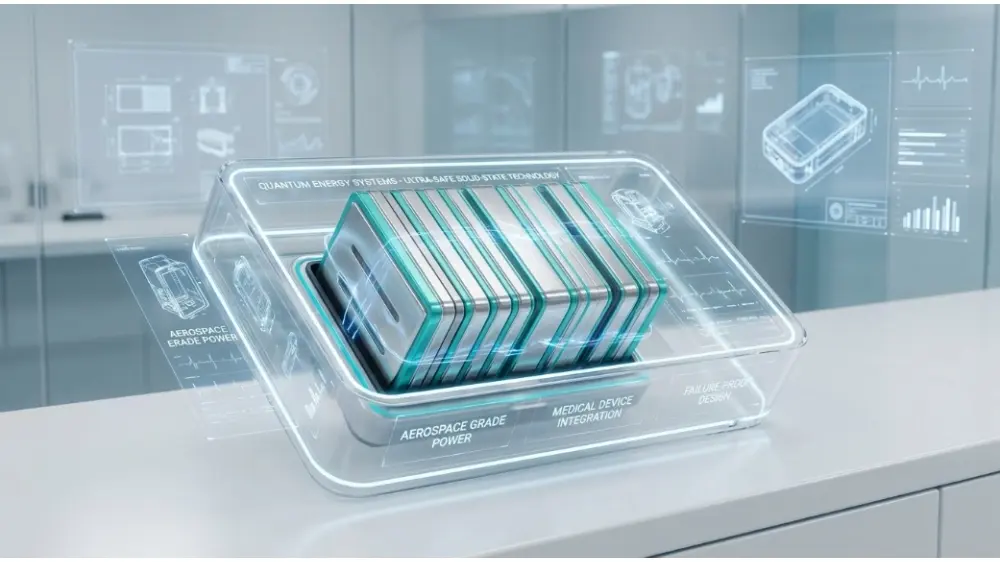
Solid-state technology is widely recognized as the ultimate evolution in energy storage. By replacing the volatile liquid organic electrolyte with a solid ceramic, glass, or polymer electrolyte, this technology fundamentally redefines safety paradigms.
Adopting a solid-state battery eliminates the primary catalyst for thermal runaway: the flammable liquid. Even under extreme physical puncture, these cells do not leak or catch fire, making them the ultimate choice for high-consequence environments.
Detailed Comparison Matrix of High-Safety Battery Technologies
To help system architects make informed decisions, the following table compares key technical specifications and safety parameters across the leading chemistries.
| Parameter | Lithium Iron Phosphate (LFP) | Lithium Titanate (LTO) | Solid-State (Ceramic/Polymer) |
|---|---|---|---|
| Electrolyte State | Liquid (Organic Solvent) | Liquid (Organic Solvent) | Solid (Ceramic, Glass, or Polymer) |
| Thermal Runaway Temp | ~270°C | ~300°C+ | No Runway (Incombustible) |
| Energy Density (Wh/kg) | 140 – 180 | 70 – 110 | 300 – 500+ (Projected) |
| Cycle Life (80% DoD) | 3,000 – 5,000 | 10,000 – 20,000 | 5,000 – 10,000+ |
| Dendrite Resistance | Moderate | High (Zero-strain anode) | Excellent (Physical barrier) |
| Risk of Leakage | Low (But possible) | Low (But possible) | Absolute Zero |
| Commercial Maturity | Fully Commercialized | Commercial (Niche) | Emerging / Early Commercialization |
Deep Dive: Why Solid-State Represents the Pinnacle of Device Security
When analyzing the ideal safer battery for devices, solid-state technology outperforms liquid-electrolyte systems across almost all critical risk vectors.
Thermal Stability Under Pressure
In conventional batteries, elevated temperatures cause the polymeric separator to melt, resulting in a massive internal short circuit. Solid-state electrolytes, particularly those made of inorganic ceramic oxides (such as LLZO) or sulfides, remain structurally stable at temperatures exceeding several hundred degrees Celsius. This ensures that even if the surrounding circuitry fails or undergoes a thermal event, the battery itself remains inert.
Eliminating the Leakage Threat
For wearable medical devices, such as pacemakers or insulin pumps, any chemical leakage can have devastating physiological consequences. Liquid electrolytes are corrosive and toxic. Because solid-state batteries contain zero liquid, there is no risk of acid leakage or toxic off-gassing, even if the outer casing of the device is physically compromised.
Engineering Considerations: Selecting the Right Battery for Your Device
While safety is paramount, engineers must balance security with practical performance metrics. Below are key factors to consider when designing high-safety electronics:
1. Form Factor and Volumetric Efficiency
For compact medical wearables or specialized military communications gear, space is at a premium. While LFP offers excellent safety, its volumetric energy density is relatively low, meaning you need a physically larger battery to achieve the same runtime as an NMC battery. Solid-state batteries promise the best of both worlds: unprecedented safety combined with high volumetric efficiency, allowing devices to be smaller and lighter.
2. Environmental Operating Range
If your device operates in extreme climates—such as aerospace telemetry or sub-zero environmental sensors—the chemical kinetics of the battery change. LTO batteries perform exceptionally well in freezing conditions but carry a significant weight penalty. Solid-state variants are currently being optimized to maintain stable ionic conductivity across wide thermal bands without sacrificing weight advantages.
3. Cost vs. Risk Assessment
Developing a highly secure device involves calculating the “cost of failure.” In consumer electronics, a battery failure results in a warranty claim. In medical or aerospace sectors, a battery failure could mean loss of life or multi-million-dollar mission failures. Investing in advanced, inherently safe chemistries mitigates catastrophic liability, easily justifying the initial higher unit cost.
Future Outlook: The Roadmap to Mass Adoption
The transition toward inherently safer battery architectures is accelerating. Driven by regulatory bodies demanding higher safety standards in aviation, medical, and automotive industries, research and development funding into solid-state manufacturing has reached historic highs.
We are currently transitioning from pilot-line production to commercial scale. Over the next three to five years, manufacturing bottlenecks—such as the high pressure required to maintain contact between solid layers and the cost of precursor materials—are expected to resolve. This will pave the way for solid-state to become the dominant power source for any premium high-safety electronic system.
Conclusion
When evaluating which battery is better for high-safety devices, the answer depends on your commercial timeline and specific engineering constraints.
If your product is launching today and requires a proven, cost-effective, and highly stable chemistry, Lithium Iron Phosphate (LFP) remains the most reliable commercial choice. However, if you are designing next-generation, ultra-compact, or highly sensitive systems where failure is absolutely not an option, solid-state technology stands out as the ultimate solution. By replacing volatile liquids with robust solid-state materials, it delivers the uncompromising safety and energy density that future technologies demand.
FAQ
Q1: Why are standard lithium-ion batteries considered risky for medical implants and sensitive military equipment?
Standard lithium-ion batteries use liquid organic electrolytes that are highly flammable. Under physical damage, high temperatures, or manufacturing defects, these batteries can experience thermal runaway, leading to severe fire, explosions, or toxic chemical leaks. For medical implants or military gear, such failures can cause physical harm or critical operational failure, which is why these industries require specialized, highly stable chemistries.
Q2: What prevents solid-state batteries from experiencing thermal runaway?
Thermal runaway in conventional batteries is primarily fueled by the volatile reaction between the liquid electrolyte and highly reactive electrode materials at elevated temperatures. Solid-state batteries replace this flammable liquid solvent with solid materials (like ceramics or polymers) that are non-flammable and possess much higher thermal melting points. Without the volatile liquid medium, the self-sustaining combustion loop of thermal runaway cannot occur.
Q3: When will solid-state batteries be widely available for commercial electronic devices?
While small-scale solid-state batteries are currently used in niche applications like low-power medical devices and specific wearable sensors, large-scale commercialization is still emerging. Industry analysts project that wider commercial availability for high-end consumer electronics, medical devices, and electric vehicles will scale significantly between 2027 and 2030, as manufacturing techniques mature and production costs decrease.