









Which Battery Is Better for New Product Development
Release time: 2026-07-12
Table of Contents
In the rapidly evolving landscape of consumer electronics, medical devices, electric mobility, and the Internet of Things (IoT), hardware engineers face a relentless demand for innovation. Processors are becoming exponentially faster, displays are growing more vibrant, and sensors are achieving microscopic precision. Yet, amidst this silicon revolution, one critical component often dictates the true limits of a device’s potential: its energy storage system.
Choosing the optimal power source is no longer merely a procurement checklist item; it is a foundational engineering decision that affects device form factor, thermal management, user safety, and ultimate market success. Navigating this complex terrain requires a comprehensive battery selection guide, ensuring that your engineering team aligns energy capacity with visionary hardware design.
For decades, the technology industry has relied on legacy liquid-chemical power units. However, a massive paradigm shift is underway. As hardware demands push traditional cells beyond their physical and chemical limits, next-generation energy solutions—specifically solid-state technology—are emerging as the definitive answer for forward-thinking creators. This article delves deeply into the mechanics, advantages, and comparative metrics of modern energy storage, highlighting why solid-state architecture represents the pinnacle of hardware enablement.
The Physics of Power: Understanding the Engineering Bottleneck
To appreciate the leap forward that modern power sources provide, one must first understand the fundamental bottleneck in hardware engineering. Every portable device requires an internal reservoir of electrons. In conventional electrochemical cells, energy is stored and released through the movement of lithium ions between an anode (negative electrode) and a cathode (positive electrode), traversing across a liquid or gel electrolyte.
While silicon chips follow Moore’s Law—shrinking in size while doubling in performance every two years—chemical energy storage follows a much slower, linear progression. Engineers are constantly forced into a game of compromises. Do you want a thinner device? You must sacrifice total energy capacity. Do you want extreme power output? You must allocate significant internal physical space for thick protective casings and thermal cooling systems to prevent catastrophic overheating.
When initiating the design phase, integrating a product development battery that relies on older, liquid-based chemistry instantly imposes rigid physical constraints on the entire architectural blueprint. The limitations of liquid electrolytes—namely their flammability and volatility—require bulky safety mechanisms that consume precious internal volume, leaving less room for innovative hardware features.
Evaluating Traditional Energy Solutions: A Retrospective
Before exploring the frontier of energy storage, it is crucial to analyze the legacy power units that have dominated the market, understanding their benefits and their inherent, fatal flaws.
1. Lithium-Ion (Li-ion) Cells
For the past three decades, standard Li-ion cells have been the workhorses of the tech industry. They utilize a liquid organic solvent as the electrolyte.
- The Advantages: They are ubiquitous, relatively inexpensive to mass-produce, and offer a functional baseline of energy density.
- The Critical Flaws: The liquid electrolyte is highly volatile and flammable. Under extreme heat, overcharging, or physical puncture, these cells are prone to “thermal runaway”—an unstoppable chemical chain reaction resulting in explosive fires. Furthermore, they are susceptible to dendrite formation. Dendrites are microscopic, needle-like metallic structures that grow from the anode during charging cycles. Over time, these needles can pierce the internal separator, causing a catastrophic internal short circuit. To mitigate this, Li-ion cells require heavy, rigid cylindrical or prismatic metal casings, severely limiting design flexibility.
2. Lithium-Polymer (Li-Po) Packs
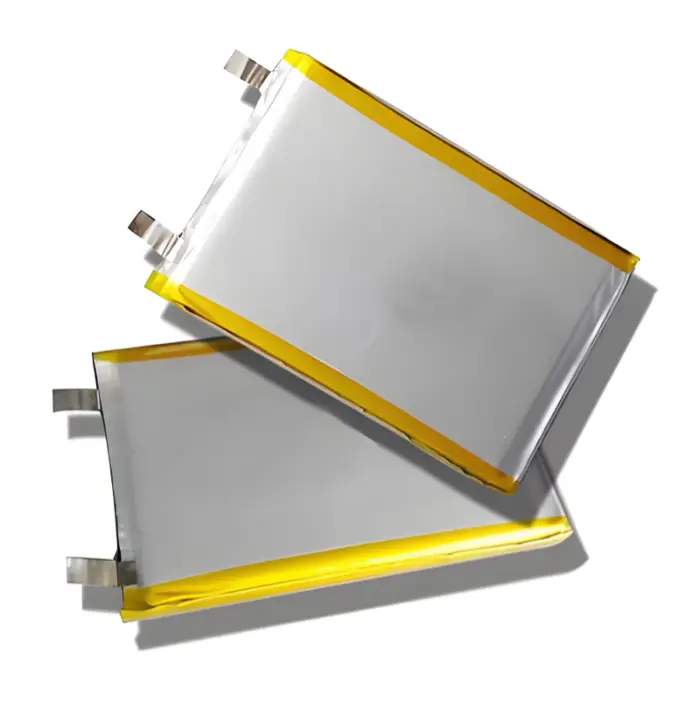
Developed as an alternative to the rigid Li-ion cells, Li-Po packs utilize a semi-solid gel polymer as the electrolyte, encased in a flexible foil pouch.
- The Advantages: Their primary benefit is physical flexibility. They can be manufactured in credit-card-thin profiles and customized shapes, making them popular in ultra-thin smartphones and tablets.
- The Critical Flaws: While they eliminate the rigid metal casing, they introduce a new problem: swelling. As Li-Po cells degrade or experience thermal stress, the gel electrolyte produces off-gassing. Because the pouch is sealed, the gas causes the entire power pack to expand dangerously. Puncturing a swollen pouch exposes volatile chemicals to oxygen, immediately resulting in a fire. Additionally, their cycle life is significantly shorter than their rigid counterparts, leading to faster degradation of user experience.
The Solid-State Revolution
The ultimate solution to the compromises forced by liquid and gel electrolytes is to eliminate the liquid entirely. Enter the hero of modern hardware engineering: the Solid-State Battery.
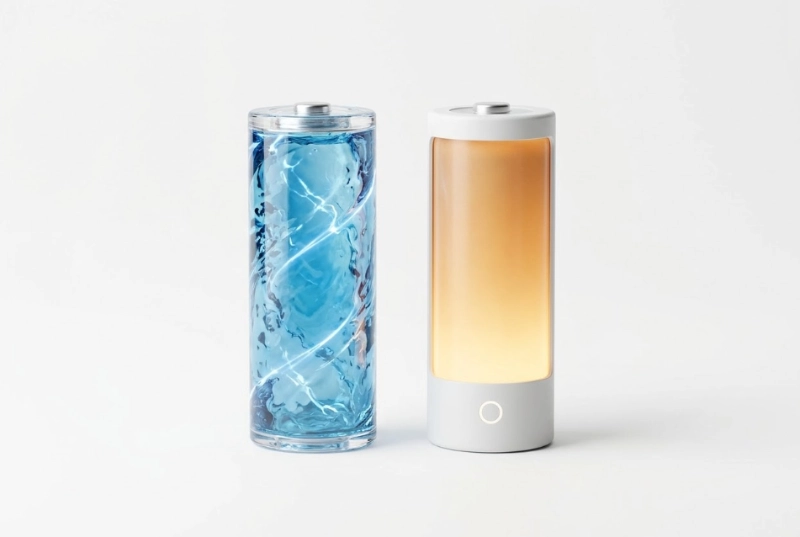
By replacing the volatile, flammable liquid solvent with a highly conductive, structurally rigid solid material—such as advanced ceramics, sulfides, or solid polymers—engineers have completely rewritten the rules of energy storage. This fundamental architectural shift unlocks capabilities that were previously considered scientifically impossible for portable power units.
Unprecedented Safety Profiles
The most significant advantage of a solid-state energy solution is absolute safety. Because there are no flammable liquids or volatile organic compounds inside the cell, the risk of thermal runaway is virtually eradicated. You can crush, pierce, or expose a solid-state cell to extreme temperatures, and it will not catch fire or explode. The solid electrolyte physically blocks the formation of dendritic needles, entirely preventing internal short circuits.
Exponential Gains in Energy Density
Energy density is measured in two ways: volumetric (energy per liter of physical space) and gravimetric (energy per kilogram of weight). Traditional cells are severely handicapped in density because they must use graphite anodes to prevent dendrites. Because solid-state technology physically stops dendrite growth, engineers can utilize pure metallic lithium for the anode. This substitution instantly multiplies the energy density. Hardware creators can either keep their device the same size and double the active usage time, or shrink the device’s footprint by half while maintaining the same power lifespan.
Unrivaled Cycle Longevity
Legacy power units degrade noticeably after 500 charge cycles, often losing 20% to 30% of their total capacity within two years of daily use. The chemical stability of a solid electrolyte significantly reduces internal degradation. Solid-state cells can easily exceed 1,000 to 5,000 charge cycles while retaining over 90% of their original capacity. This means the power source will likely outlast the mechanical lifespan of the device itself.
Comparative Data Analysis: Legacy vs. Next-Generation Power
To clearly illustrate the chasm between legacy systems and modern solid-state technology, we must look at the quantitative engineering metrics. The following matrix outlines the stark differences that hardware teams must consider during their specification phase.
| Engineering Metric | Traditional Li-ion Cells | Traditional Li-Po Packs | Solid-State Cells |
|---|---|---|---|
| Electrolyte State | Highly Volatile Liquid | Semi-Solid Volatile Gel | Stable Solid (Ceramic/Sulfide) |
| Thermal Runaway Risk | High (Explosion Hazard) | Moderate (Fire Hazard) | Zero to Negligible |
| Dendrite Resistance | Poor | Poor | Exceptional |
| Volumetric Density | ~250 – 650 Wh/L | ~300 – 500 Wh/L | 800 – 1200+ Wh/L |
| Cycle Life (to 80%) | 500 – 1,000 Cycles | 300 – 500 Cycles | 1,500 – 5,000+ Cycles |
| Form Factor Flexibility | Rigid (Cylindrical/Prismatic) | Flexible but prone to swelling | Ultra-Thin, Customizable, Stable |
| Operating Temperature | Narrow (-10°C to 45°C) | Narrow (0°C to 45°C) | Wide (-30°C to 100°C) |
| Safety Casing Required | Heavy Metal Armor | Mylar Pouch (Vulnerable) | Minimal/None Required |
Integration in Design: Unlocking Hardware Potential
When a Chief Technology Officer or Lead Industrial Designer is searching for the ideal battery for new product launches, the decision goes far beyond mere voltage and amperage. It is about unlocking architectural freedom.
In traditional hardware design, the power unit dictates the shape of the casing. Engineers must draw a large, unchangeable rectangle on their CAD software and build the motherboard, sensors, and cooling fans around it. Because liquid cells generate significant heat during rapid discharge, heavy thermal management systems—such as copper heat pipes or vapor chambers—must be installed, adding dead weight and thickness.
By transitioning to solid-state energy cells, this paradigm is inverted. The extreme thermal stability of solid electrolytes means internal heat generation is drastically reduced. Hardware teams can eliminate bulky heat sinks. Furthermore, because solid-state cells do not require heavy, explosion-proof metal armor, the raw energy-storing materials can be shaped to fit the empty cavities of the device.
This enables true miniaturization. Devices can become unimaginably thin. Wearables can conform to the human wrist perfectly. Internal space previously wasted on cooling and safety armor can now be reallocated to larger camera sensors, haptic motors, or additional processing cores.
Industry-Specific Transformations
The adoption of solid-state power architecture is not merely a specification bump; it is an industry-wide catalyst that is enabling entirely new categories of hardware across various sectors.
1. Medical and Healthcare Devices
For implantable medical hardware, such as neurostimulators and pacemakers, safety and longevity are paramount. A liquid leakage inside the human body is fatal, and surgical replacement of power units carries immense risk. Solid-state technology offers zero leakage risk, microscopic form factors, and a cycle life that can span decades, making it the only responsible choice for next-generation bio-electronics.

2. Wearables and Internet of Things (IoT)
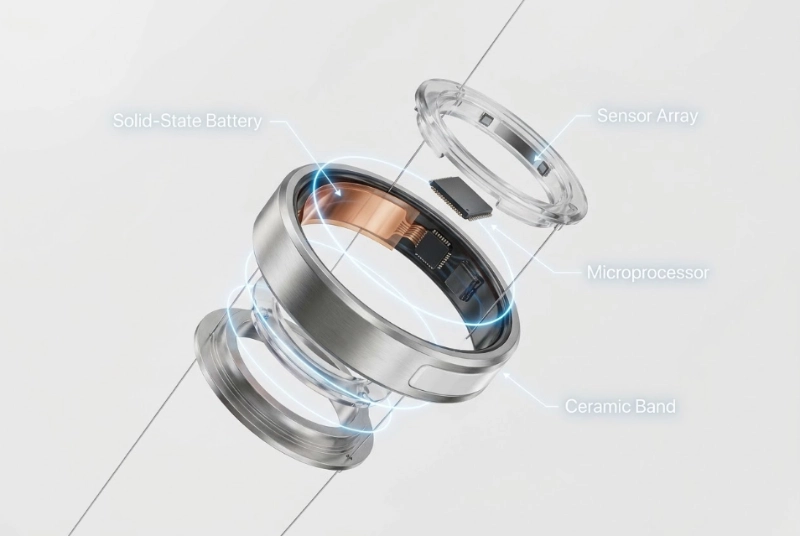
Smartwatches, augmented reality (AR) glasses, and continuous glucose monitors demand massive processing power but must remain imperceptibly light and thin. Traditional gel packs swell over time, literally popping the screens off smartwatches. Solid-state cells provide the ultra-high volumetric density required to run high-resolution AR displays for hours, without the physical degradation or thermal discomfort against the user’s skin.
3. Electric Mobility and Aerospace
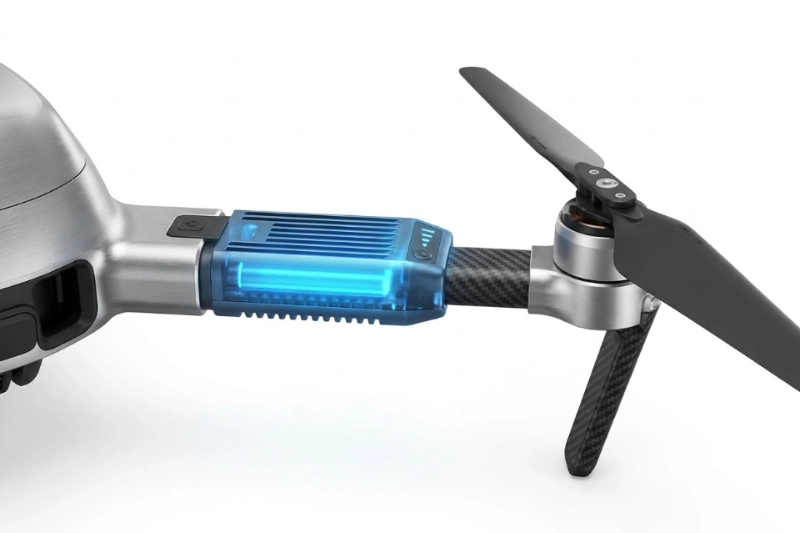
In electric vehicles (EVs) and consumer drones, weight is the ultimate enemy of efficiency. The “gravimetric density” of a solid-state energy unit means an EV can achieve a 600-mile range using a power pack that weighs half as much as a legacy liquid equivalent. Furthermore, the wide operating temperature range (-30°C to 100°C) means drones and aerospace equipment can operate reliably in high-altitude freezing conditions without the sudden voltage drops that plague traditional cells.
The Economics of Innovation: Total Cost of Ownership (TCO)
A common point of friction during the procurement phase is the initial unit cost. Currently, advanced solid-state energy modules command a premium over commoditized, decades-old liquid cells. However, sophisticated engineering teams evaluate procurement through the lens of Total Cost of Ownership (TCO) rather than raw component pricing.
When a brand utilizes a legacy liquid power source, they must factor in hidden economic liabilities. The cost of designing and manufacturing heavy thermal cooling systems adds up. The physical space required for rigid metal casings limits the appeal of the final hardware. Most importantly, the brand assumes the massive financial and reputational risk of thermal runaway. A single instance of a device catching fire can lead to multi-million-dollar global product recalls, regulatory fines, and irreparable damage to brand equity.
Conversely, integrating solid-state energy cells acts as an insurance policy. It eliminates the need for expensive cooling architectures. It drastically reduces warranty claims related to power degradation or device swelling. It allows marketing teams to boast about unprecedented device thinness, extended lifespans, and absolute consumer safety—features that allow hardware brands to command higher retail prices and vastly improve profit margins.
Conclusion: The Ultimate Verdict for Engineers
The landscape of hardware innovation has reached a critical inflection point. Relying on volatile, liquid-based chemical energy limits what your engineering team can achieve. It forces compromises in design, mandates heavy cooling systems, and introduces unacceptable safety risks into the hands of consumers.
When evaluating which power source is superior for future endeavors, the scientific and economic consensus is clear. Solid-state technology is not just an incremental update; it is a fundamental reconstruction of energy storage chemistry. By offering unparalleled safety, massive leaps in volumetric density, and extraordinary longevity, solid-state cells liberate designers from historical constraints. For any hardware brand aiming to lead the market, dominate their category, and deliver truly revolutionary products, transitioning to solid-state energy architecture is not merely an option—it is an absolute necessity.
FAQs
Q1: Why are solid-state power units considered completely safe compared to older technology?
A: The primary danger in legacy electronics comes from the liquid organic solvent used to transfer ions. This liquid is highly flammable and prone to expanding into gas under heat stress. Solid-state solutions replace this dangerous liquid with a highly stable, rigid material (like ceramic or advanced polymers). This solid layer cannot leak, cannot evaporate into flammable gas, and physically blocks internal short circuits, rendering the unit fundamentally immune to explosions or fires, even if physically damaged.
Q2: Does upgrading to solid-state technology require a complete redesign of my device’s internal architecture?
A: While it offers the freedom to redesign, it is not strictly mandatory. Solid-state energy packs can be manufactured to match the exact voltage requirements and physical dimensions of your current legacy units. However, because they do not require bulky safety armor or thermal cooling spaces, most engineering teams take advantage of the transition to redesign their hardware, making the final product thinner, lighter, and more feature-rich.
Q3: How does the extended cycle life of a solid-state energy solution impact consumer satisfaction?
A: Traditional power sources usually degrade noticeably after roughly two years of daily charging, causing the device to shut down unexpectedly or require frequent tethering to a wall outlet. Solid-state chemistry experiences drastically less chemical wear and tear. This means a device can maintain peak power capacity for many years—often outlasting the lifespan of the hardware itself. This results in vastly higher consumer satisfaction, better brand loyalty, and significantly fewer warranty replacement requests.