









Why Safety Matters in Industrial Battery Projects
Release time: 2026-06-28
Table of Contents
The global industrial landscape is undergoing a massive transformation. From subterranean mining operations and heavy-duty construction vehicles to automated warehouse robotics and industrial unmanned aerial vehicles (UAVs), electrification is rapidly replacing legacy fossil-fuel systems. This shift promises reduced carbon emissions, lower operating costs, and enhanced efficiency. However, as the scale and energy capacity of these projects grow, a critical conversation has moved to the forefront of engineering and procurement departments: the absolute necessity of rigorous safety standards.
In consumer electronics, a battery failure is an inconvenience. In an industrial setting, a battery failure can be catastrophic. The environments in which industrial equipment operates are unforgiving, characterized by extreme temperatures, intense vibrations, mechanical shocks, and continuous operational cycles. As energy storage systems scale up to meet these demands, the potential hazards scale exponentially.
This article explores the high stakes of energy storage in heavy industries, the dangers inherent in traditional technologies, and how next-generation innovations are redefining the standards for operational security and asset protection.
The High Stakes of Industrial Battery Deployments
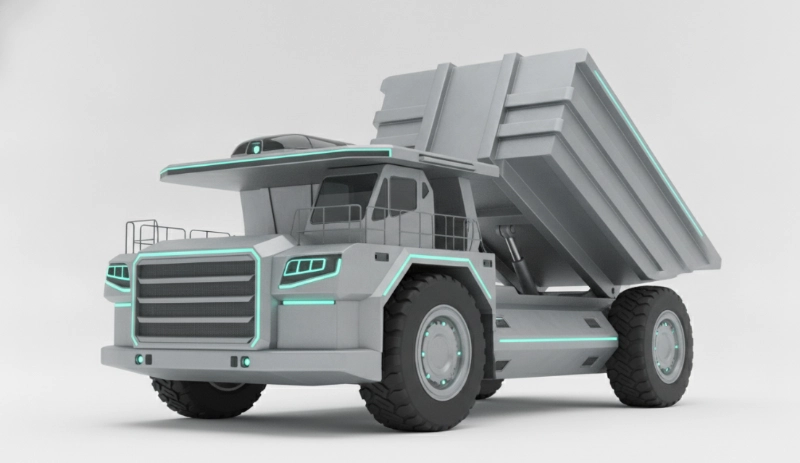
Industrial battery projects are not off-the-shelf implementations. They involve massive arrays of energy storage designed to power multi-ton machinery or sustain remote power grids for weeks at a time. The environments are inherently hazardous. A mining truck operates amidst dust, moisture, and high impact. An industrial drone surveying a pipeline battles extreme weather and fluctuating atmospheric pressures.
In these scenarios, the foundation of any successful electrification initiative must be robust battery risk management. Without a systematic approach to identifying, analyzing, and mitigating potential hazards, organizations expose themselves to severe liabilities.
When a high-capacity industrial battery fails, the consequences ripple across the entire operation:
- Operational Downtime: A single fire or failure can shut down a manufacturing facility or a mining site for days, resulting in millions of dollars in lost productivity.
- Asset Destruction: Heavy industrial equipment represents a massive capital expenditure. An uncontrolled battery fire can completely destroy the host machine and collateral assets.
- Human Safety: Above all, the protection of operators and personnel is paramount. Explosions or the release of toxic gases in confined spaces pose severe threats to life and health.
- Insurance and Liability: Insurers are becoming increasingly cautious about the risks linked to high-capacity energy storage. Demonstrating proactive safety protocols is now essential for securing coverage and avoiding premium hikes.
Core Hazards in Conventional Lithium-Ion Systems
To understand why a paradigm shift in battery technology is necessary, one must first understand the vulnerabilities of the current standard. For decades, traditional lithium-ion batteries (LIBs) with liquid electrolytes have been the workhorse of the industry. While they offer decent energy density, their chemical composition presents significant challenges in industrial settings.
The Threat of Thermal Runaway
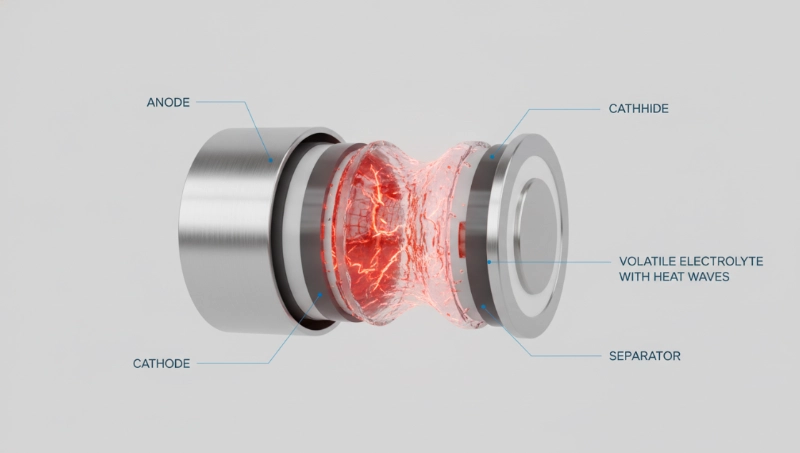
The primary danger in traditional lithium-ion systems is thermal runaway. This is an uncontrollable, self-heating state where the temperature in a battery can spike from 100°C to over 1,000°C in a matter of seconds. Thermal runaway can be triggered by internal manufacturing defects, external mechanical damage (such as a puncture or crush), overcharging, or inadequate cooling. Once initiated, the heat spreads rapidly to adjacent cells, causing a massive, uncontainable fire that generates its own oxygen and resists conventional fire suppression methods.
Dendrite Formation
During the charging and discharging cycles of liquid electrolyte batteries, microscopic, needle-like structures called dendrites can form on the anode. Over time, these metallic growths can pierce the ultra-thin separator dividing the anode and cathode. When this happens, it creates an internal short circuit, instantly triggering thermal runaway.
Leakage and Chemical Hazards
The liquid electrolytes used in conventional batteries are highly volatile, flammable, and toxic. In industrial applications where physical impacts and harsh vibrations are common, the structural integrity of battery casings can be compromised. A leak not only poses an immediate fire hazard if exposed to a spark but also introduces corrosive and toxic chemicals into the workplace environment.
The Engineering Breakthrough: Solid Electrolyte Technology
The ultimate solution to the inherent dangers of liquid-based energy storage lies in fundamentally altering the battery’s chemistry. This is where the industry is seeing a massive pivot toward advanced material sciences. By replacing the flammable liquid or gel electrolytes with stable solid materials—such as ceramics, polymers, or sulfides—engineers have unlocked a new era of energy storage.
When we evaluate solid-state battery safety, we are looking at a technology that intrinsically eliminates the root causes of the most severe industrial accidents.
Why Solid-State is Inherently Safer
- Elimination of Flammable Liquids: The most significant advantage is the total removal of the volatile liquid electrolyte. Solid electrolytes are non-flammable and possess superior thermal stability. Even if the battery casing is severely breached, crushed, or punctured, there is no flammable liquid to leak or ignite.
- Mechanical Resistance to Dendrites: The solid separator layer in these advanced batteries is mechanically robust. It acts as a physical barrier that is significantly harder for lithium dendrites to penetrate, drastically reducing the risk of internal short circuits and extending the overall lifespan of the system.
- Expanded Temperature Tolerance: Traditional batteries struggle in extreme heat or freezing conditions, requiring heavy, power-draining thermal management systems. Solid-state architectures can operate safely across a much wider temperature range (often from -20°C to above 60°C), making them ideal for harsh industrial climates.

Meeting Rigorous Demands: Powering Heavy Machinery
For fleet managers and facility operators, procuring a safe solid-state battery for equipment is no longer a luxury, but a strategic necessity. Industrial machinery demands high-rate discharge capabilities, stable voltage under immense physical load, and long endurance.
Consider the application of this technology in autonomous mining vehicles. These machines operate 24/7 in confined, highly combustible subterranean environments. A traditional battery fire here could trap workers and collapse infrastructure. The inherent solid-state battery safety profile makes it the only logical choice for future-proofing these fleets, offering peace of mind alongside superior energy density (frequently exceeding 350 Wh/kg compared to the 250 Wh/kg limit of conventional systems).
Similarly, in the realm of industrial robotics and automated guided vehicles (AGVs) used in massive warehouse fulfillment centers, safety and uptime are the metrics of success. The ability to deploy a highly durable, fire-resistant power source means warehouses can stack equipment closer together and charge vehicles faster without violating strict commercial fire codes.
Building a Comprehensive Safety Framework
Adopting cutting-edge technology is only one half of the equation. The other half is implementing the operational protocols to support it. Modern battery risk management protocols require a holistic, lifecycle approach to energy storage, from procurement to disposal.
Below is a practical framework that industrial project managers should implement to ensure maximum safety and compliance:
Table 1: Industrial Battery Risk Management Framework
| Management Layer | Focus Area | Key Actions & Protocols |
|---|---|---|
| 1. Governance | Accountability & Policy | Appoint a dedicated safety committee. Establish clear standard operating procedures (SOPs) for handling, storing, and charging energy systems based on manufacturer safety data sheets. |
| 2. Hazard Identification | Lifecycle Risk Mapping | Conduct rigorous audits covering the entire lifecycle: receiving, installation, operation, maintenance, and end-of-life disposal. Evaluate mechanical stress points in equipment. |
| 3. Engineering Controls | System Safeguards | Implement advanced Battery Management Systems (BMS) with real-time telemetry. Utilize compartmentalized storage for spare packs. Install appropriate blast-resistant barriers or thermal monitoring cameras in charging zones. |
| 4. Administrative Controls | Personnel Readiness | Conduct mandatory, routine training for all equipment operators and maintenance staff. Ensure proper signage, color-coding, and accessible emergency stops are clearly visible. |
| 5. Emergency Response | Incident Mitigation | Maintain customized fire suppression equipment suitable for electrical and chemical fires. Establish clear evacuation routes and coordinate protocols with local emergency services. |
Comparative Analysis of Battery Technologies
For procurement officers tasked with upgrading their industrial fleets, understanding the differences between available technologies is crucial. While full solid-state technology is the gold standard for safety, semi-solid hybrid batteries are also serving as an excellent, commercially scalable bridge technology in the current market.
Table 2: Technology Comparison for Industrial Applications
| Feature / Metric | Traditional Lithium-Ion | Semi-Solid Battery | Full Solid-State Battery |
|---|---|---|---|
| Electrolyte State | 100% Volatile Liquid | Solid framework with limited liquid | 100% Solid (Ceramic/Polymer/Sulfide) |
| Fire/Explosion Risk | High (Prone to thermal runaway) | Low (Greatly improved stability) | Near Zero (Non-flammable materials) |
| Energy Density | Moderate (<300 Wh/kg) | High | Very High (>350 Wh/kg) |
| Vibration & Shock Resistance | Low (Risk of casing leaks) | High | Extremely High (Structural integrity) |
| Industrial Suitability | Light-duty, highly controlled environments | Heavy-duty drones, AGVs, robotics | Extreme environments, mining, aerospace |
Implementation and Best Practices
When integrating a safe solid-state battery for equipment, engineers must still adhere to strict integration standards. While the battery itself is highly resistant to failure, the surrounding electrical architecture must be equally robust.
- Prioritize Intelligent BMS: The Battery Management System is the brain of the power unit. Even with highly stable solid-state chemistries, a BMS is required to ensure optimal charging curves, prevent deep discharging, and balance cell voltages to maximize the lifespan of the multi-million dollar investment.
- Verify Certifications: Industrial battery safety applications often require rigorous certifications. Depending on the sector, ensure the battery packs meet standards such as ATEX (for explosive atmospheres), marine classifications, or ISO quality management standards.
- Source from Reputable Manufacturers: The manufacturing process for advanced solid-state and semi-solid batteries is highly complex, requiring pristine clean-room environments. Sourcing components from proven, tier-one manufacturers guarantees that the internal construction is flawless, mitigating the risk of micro-defects.
Conclusion
As industries push the boundaries of automation, heavy-lifting, and remote operation, the energy systems that power them must evolve in tandem. Safety can no longer be an afterthought or a reactive measure; it must be engineered into the very chemistry of the power source. By transitioning away from volatile liquid electrolytes and embracing advanced solid architectures, industrial project managers can dramatically reduce their liability, protect their workforce, and ensure uninterrupted operations.
The future of industrial electrification is unarguably heavy-duty, highly efficient, and above all, unequivocally safe.
FAQ
1. How does a solid-state battery prevent thermal runaway in industrial equipment?
Solid-state batteries replace the volatile, flammable liquid electrolytes found in traditional batteries with a stable, non-flammable solid material (like ceramics or polymers). Because there is no combustible liquid to ignite, and the solid separator physically blocks the formation of short-circuiting dendrites, the risk of thermal runaway is virtually eliminated, even under mechanical stress or high temperatures.
2. Are solid-state batteries currently available for all types of heavy machinery?
While full solid-state technology is heavily deployed in aerospace and specialized military applications, mass commercialization for all heavy machinery is still in an advanced transitional phase. However, “semi-solid” batteries—which offer vastly improved safety and energy density over traditional lithium-ion—are currently widely available and actively deployed in industrial drones, robotics, and construction equipment today.
3. Do I still need a Battery Management System (BMS) if solid-state batteries are inherently safe?
Yes. While the chemical fire risk is drastically reduced, a high-quality BMS is still essential for industrial applications. The BMS protects your investment by optimizing charge cycles, monitoring state-of-health, balancing cell loads, and preventing over-discharging. It acts as an operational optimization tool rather than just a critical safety net.